United Kingdom Pub Culture
The pub is where Britain actually happens: part living room, part town square, part local museum.
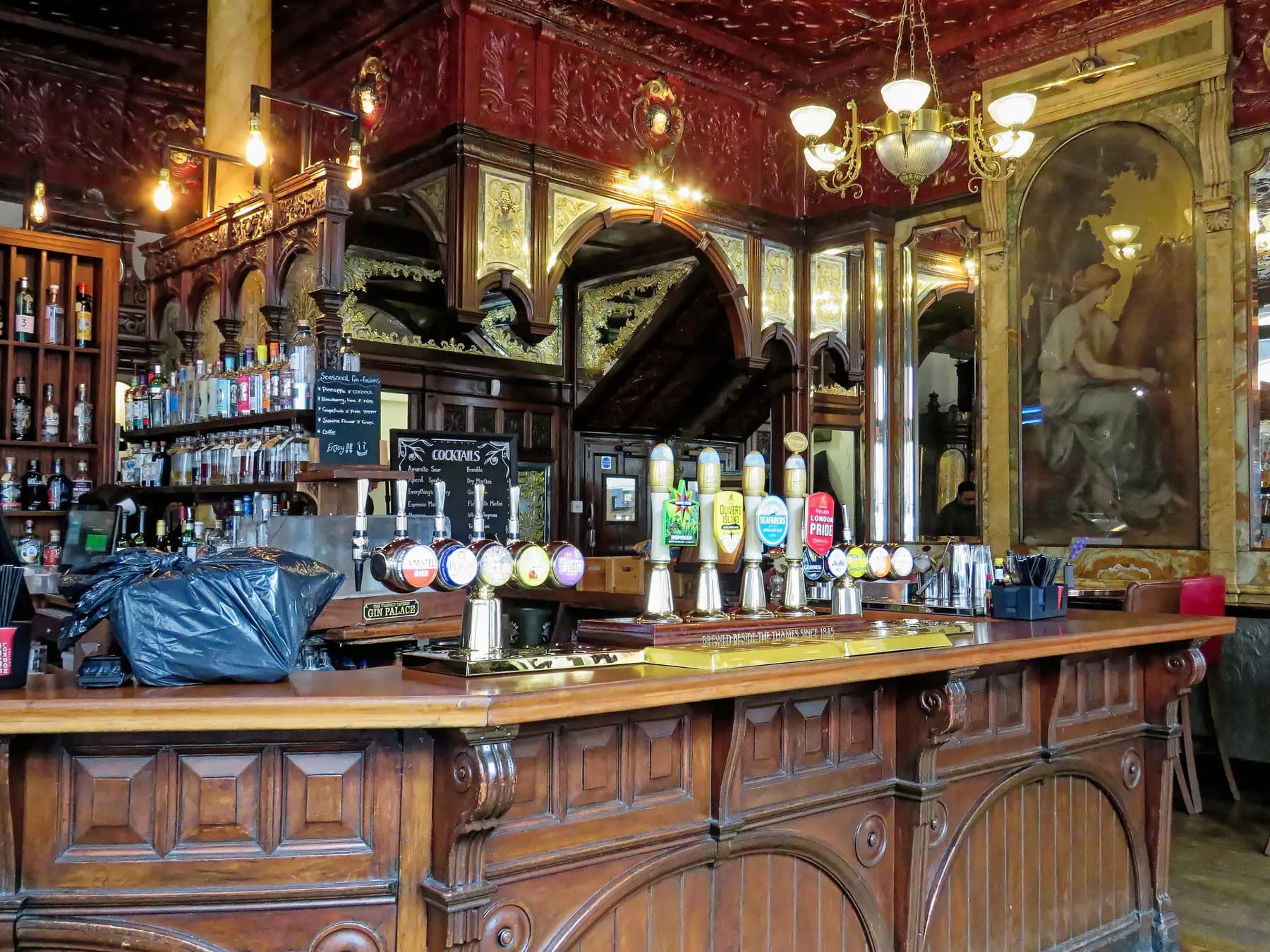
Britain has more variety of pub than almost anywhere else you will drink: tiny stone-floored locals with one cask ale and a coal fire, sprawling Victorian gin palaces with etched glass and carved mahogany, food-led gastropubs booked out weeks ahead for Sunday lunch, and modern craft bars that have quietly kept the old rituals intact underneath the new beer list. What holds all of it together is a shared set of unwritten rules: you buy your round, you go to the bar rather than wait to be served, and the pub is treated as a place you can sit for an entire evening on the strength of one drink if that is all you want.
None of this is complicated once you know it, and getting it slightly wrong will not cause offence, people are used to visitors finding their feet. But knowing the rhythm in advance means you spend your first pint enjoying the room rather than working out where to stand.
The Round
If you are drinking with two or more people, the normal pattern is to buy in rounds rather than pay for your own drink each time. Someone offers to get the first one in, and as the evening goes on, each person in the group takes a turn buying for everyone else. It is an informal bit of bookkeeping that nobody actually keeps score of, but everyone quietly tracks anyway.
The etiquette that matters most is not leaving before you have bought your round, or at least not repeatedly. If you are only staying for one drink, it is entirely normal and polite to say so upfront, so the group knows not to include you in the rotation. Rounds also flex naturally for people drinking at different speeds or on soft drinks; nobody expects a strict one-for-one exchange, just rough fairness over the course of the night.
Do
- ✓Offer to buy a round without waiting to be asked, especially if others have already bought one for you.
- ✓Say early on if you only plan to stay for one drink, so people do not expect you back in the rotation.
- ✓Keep a rough mental tally if the group is large; nobody minds if it is not exact.
Don't
- ×Do not slip away after several rounds have been bought for you without ever getting one in.
- ×Do not insist on paying for just your own drink when someone has clearly offered to buy for the table.
- ×Do not assume a round means everyone has to drink at the same pace; buying a round for someone on a soft drink is normal.
Ordering at the Bar
Most British pubs have no table service. You order and pay at the bar, and you generally take your drinks back to your table yourself. This surprises visitors used to a server appearing with a menu, but it is the default almost everywhere, from the smallest village local to busy city pubs.
There is no formal ticket system for who gets served next, so it works on a mix of eye contact, standing in roughly the right spot, and the bar staff's own sense of who arrived first. Shouting, waving, or banging on the bar to get attention is not the done thing and tends to have the opposite effect. You do not tip for drinks bought at the bar, though leaving loose change or telling the bartender to have one themselves is a friendly, optional gesture in some pubs, not an obligation.
Some pubs, particularly ones you plan to stay in for a while, will let you run a tab, sometimes holding a card behind the bar until you settle up. Table service does exist, mainly in food-led gastropubs and some larger chain pubs, where a server will take your order once you are seated; if in doubt, watch what people around you are doing.
Do
- ✓Go to the bar to order, even if you are settled at a table.
- ✓Wait patiently and make eye contact with staff rather than calling out.
- ✓Ask if you can start a tab if you know you will be ordering several rounds.
Don't
- ×Do not wave money or shout to get served faster; it will not work and stands out.
- ×Do not tip at the bar for drinks the way you might for table service or in other countries.
- ×Do not assume table service exists everywhere; check for menus or ask if you are unsure.
Cask Ale, Keg, and Cider
The bar of a proper British pub usually offers a range running from standard lagers and familiar keg beers through to cask ale, sometimes called real ale. Cask ale is unfiltered, unpasteurised beer that finishes conditioning naturally in the cask it is served from, and it is hand pulled through a lever on the bar rather than pushed out under gas pressure like keg beer.
Served correctly, cask ale is cool rather than fridge cold and noticeably flatter than a keg lager or stout, with a softer, more natural carbonation. This is by design, not a fault, and it can catch out visitors expecting the same fizz and chill as a bottled beer back home. The Campaign for Real Ale, CAMRA, has spent decades championing cask beer and the pubs that keep it well, and a pub with a changing guest ale list is usually a sign of a landlord who takes the beer seriously.
Cider is its own strong tradition, particularly in the West Country, where counties like Somerset, Devon, and Herefordshire have long histories of orchard cider, ranging from mass-produced brands to farmhouse cider that is much drier and more tannic than many visitors expect.
Last Orders and Closing Time
British pubs traditionally worked to a fairly early closing time in the evening, with the bar calling last orders shortly before, giving you one final chance to get a drink in, followed by a call of time when the bar itself stops serving. After that comes drinking-up time, a short window where you can finish what is already in front of you before glasses are collected.
Licensing rules have loosened considerably since the strict old hours, and how late a pub actually runs now depends entirely on its individual licence. City centre pubs and bars, especially in places with a strong nightlife, often stay open well beyond the traditional hour, while quiet village locals may still wind down early, particularly midweek. Rather than assuming a fixed national closing time, it is worth simply checking with the pub or looking at the hours posted at the door.
The Sunday Roast
The Sunday roast is one of the most enduring rituals in British pub life: roast meat, usually beef, chicken, pork, or lamb, alongside roast potatoes, seasonal vegetables, gravy, and a Yorkshire pudding, which despite the name turns up on roast plates across the whole country, not only in Yorkshire.
Good food-led pubs, often described as gastropubs, treat Sunday lunch as a serious event, and the best-regarded ones can book out well in advance, so it is worth reserving a table rather than turning up and hoping. Other pubs are what is sometimes called wet led, meaning drinking rather than food is the main business, and Sunday there might mean nothing more than crisps and pork scratchings behind the bar. Neither kind of pub is lesser than the other, they are simply doing different jobs, and part of the fun of British pub culture is learning to tell which one you have walked into.
How Pubs Vary Around the Country
A London gastropub near a smart residential square, with a chalkboard wine list and a kitchen turning out food you would happily pay restaurant prices for, is a genuinely different experience from a small stone-built local in the Yorkshire dales, where the same handful of regulars have been propping up the same corner of the bar for years and the conversation matters more than the menu. Both are unmistakably British pubs, but they serve very different roles in their communities.
In the Scottish Highlands and on the islands, the pub is often attached to the only hotel for miles, doubling as the social hub, the place to get a hot meal after a long walk, and sometimes the only source of a phone signal or a lift into town. Scotland's cities also have a strong tradition of dedicated whisky bars, standalone from the pub scene, with serious drams lists that reward slow drinking and genuine curiosity rather than speed.
In Wales, the valleys towns have pubs that grew up around mining and industrial communities and still carry that close, communal feel, often with strong rugby loyalties on match days, while Welsh market towns tend toward solid, unpretentious locals built around farming life and livestock market days. None of this is a checklist of stereotypes to tick off, it is simply that pubs, like the places they sit in, take on the character of the people who actually drink in them.