National Parks and the Outdoors
Fifteen national parks, three nations, one very good pair of walking boots required.
Britain packs an astonishing range of wild and semi-wild landscape into a small space: glacial lakes and knife-edge fells, heather moorland, limestone dales, ancient Caledonian pine forest, and some of the finest coastal walking anywhere. None of it is wilderness in the sense you might find in North America or the Highlands of a century ago; these are lived-in landscapes, farmed and grazed for generations, which is part of their character rather than a flaw in it.
Getting the most out of them means understanding a few basics before you go: which park suits the kind of trip you want, where to base yourself, how the rules of access differ depending on whether you are in England, Wales, or Scotland, and how to stay safe on hills that are lower than the Alps but no less capable of turning nasty in an afternoon.
The Parks
Great Britain has fifteen national parks in total: ten in England, three in Wales, and two in Scotland. Unlike national parks in some other countries, these are not uninhabited wilderness areas owned by the state; they are protected landscapes where people live, farm, and run businesses, with planning controls and conservation bodies working alongside that everyday life. Beyond the fifteen parks there is also a wider network of Areas of Outstanding Natural Beauty, renamed National Landscapes in 2023, and, in Scotland, National Scenic Areas, which protect other stretches of coast and countryside that never quite got full national park status.
Each park has its own character, and picking the right one matters more than people expect. Somewhere like the Lake District rewards a week of exploration; somewhere like the South Downs is better suited to a day or two.
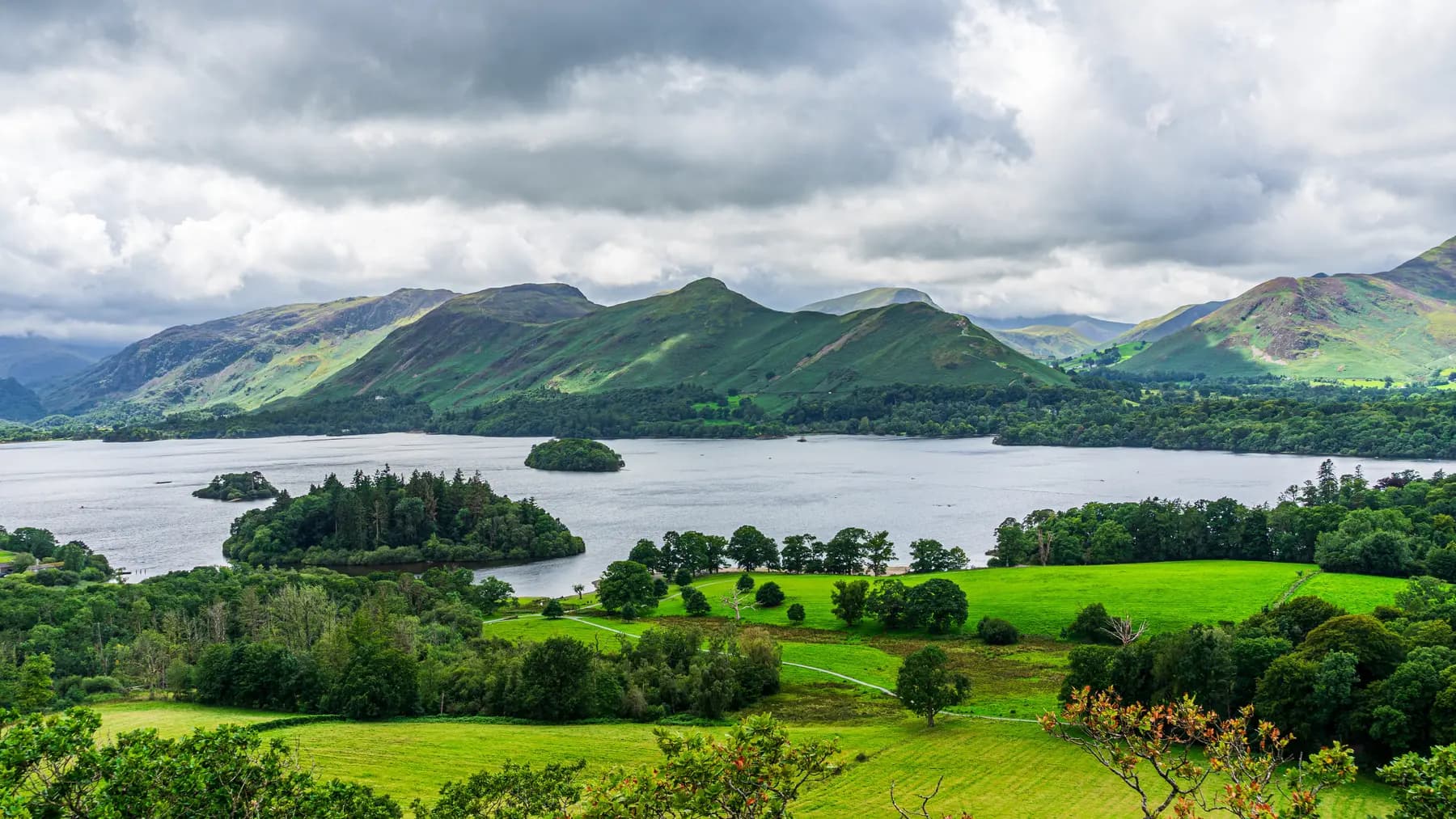
- •The Lake District (England): the biggest and best known of the English parks, all glacial lakes and high fells, with a literary pedigree from Wordsworth and the Romantic poets that still shapes how visitors see it.
- •Snowdonia, known in Welsh as Eryri (North Wales): home to the highest peaks in England and Wales, capped by Yr Wyddfa (Snowdon), plus slate-mining heritage and excellent walking for all abilities.
- •The Cairngorms (Scotland): Britain's largest national park by area, a high sub-arctic plateau with ancient Caledonian pine forest, reindeer, and some of the harshest weather in the country.
- •Loch Lomond and the Trossachs (Scotland): lochs, forest, and munros within easy striking distance of Glasgow, making it the most accessible taste of the Highlands for a short trip.
- •The Peak District (between Manchester and Sheffield): the first national park designated in Britain, split between gritstone edges in the north and gentler limestone dales in the south.
- •The Yorkshire Dales and the North York Moors: dry stone walls, hay meadows, and stone villages in the Dales; wide heather moorland and a heritage steam railway on the Moors.
- •The Pembrokeshire Coast (Wales): the only British national park designated primarily for its coastline, built around the long distance Pembrokeshire Coast Path.
- •The Brecon Beacons, now officially known by its Welsh name Bannau Brycheiniog (South Wales): rounded sandstone uplands, waterfalls, and dark skies good enough for stargazing.
- •The South Downs, Dartmoor, and Exmoor (southern England): rolling chalk downland, wild granite tors and wild ponies, and a smaller heather-and-coast moorland respectively, all within reach of London and the south west.
Which Base Town
Most parks have one or two obvious towns that work well as a base, usually because they sit at a hub of roads, buses, or trains and have enough guesthouses, gear shops, and pubs to support visitors without feeling overrun. In the Lake District, Windermere and Bowness are the easiest to reach by train and bus and suit a first visit, while Keswick, further north, puts you closer to quieter fells and Derwentwater and suits a return trip.
In Snowdonia, Betws-y-Coed is the classic choice: a village built almost entirely around walkers and climbers, with good transport links into the rest of North Wales. For the Cairngorms, Aviemore is the obvious hub, with a mainline railway station and easy access to both the high plateau and Speyside's distilleries. In the Peak District, Bakewell suits a gentler, food-and-market-town style visit, while Castleton sits right under the gritstone edges and show caves and suits a more active one.
The general rule is to match the town to the trip: a bigger base town with a railway station if you want flexibility and do not want to hire a car, a smaller village right in the hills if you want to be walking from the front door.
Right to Roam: a Real Legal Difference
This is one of the few points where the law genuinely changes as you cross from England or Wales into Scotland, and it is worth understanding before you set off across a field that looks inviting. In England and Wales, your right to walk is built around public rights of way, meaning footpaths and bridleways marked on the map, plus designated open access land (moor, heath, down, and some registered common land) created under the Countryside and Rights of Way Act. Off those paths and away from open access land, most countryside is private, and wandering across a farmer's field because it looks scenic is technically trespass, even if it is rarely treated as a serious matter.
Scotland works differently. The Land Reform (Scotland) Act created a much broader statutory right of access, commonly called the right to roam, which allows you to walk, cycle, wild camp, and paddle across most land and inland water for recreation, whether or not there is a marked path, as long as you do so responsibly. That responsibility is spelled out in the Scottish Outdoor Access Code: keep a sensible distance from houses, close gates, control dogs around livestock, avoid land during activities like lambing or harvest where reasonable, and leave no trace.
In practice this means a Scottish walking holiday can be more improvised, since you are not tied to a fixed network of paths, while a walk in the Lake District or Snowdonia means checking the map for rights of way and open access boundaries before you plan a route off the beaten track.
Getting There and Staying Safe
A car gives the most freedom, especially for reaching trailheads early or getting to quieter corners of a park, but it is not essential for most of these places. Windermere, Betws-y-Coed, Aviemore, and Bakewell (via a connecting bus from the nearest station) are all reachable by train, and once you are there, local bus networks and dedicated walkers' bus services often cover the popular routes well, particularly in summer.
British mountains are modest by world standards, with nothing over the height of a decent Alpine foothill, but do not let that fool you. The weather changes fast, cloud can drop onto a summit within minutes, and even a low, rounded hill like those in the Peak District or the Cairngorms plateau can become genuinely dangerous in poor visibility, wind, or an unexpected drop in temperature. People die on these hills most years, usually from a combination of underestimating them and being underprepared.
Tips
- •Wear proper walking boots with ankle support and grip, not trainers, on anything beyond a flat valley path.
- •Dress in layers and always carry a waterproof, even on a day that starts sunny; British weather can turn within the hour.
- •Carry a paper map and compass as well as a phone, and know how to use them; phone signal and battery cannot be relied on in the hills.
- •Check the mountain weather forecast for the specific area, not just the general town forecast, before setting out.
- •Tell someone your route and expected return time, and turn back early if the weather closes in rather than pushing on.