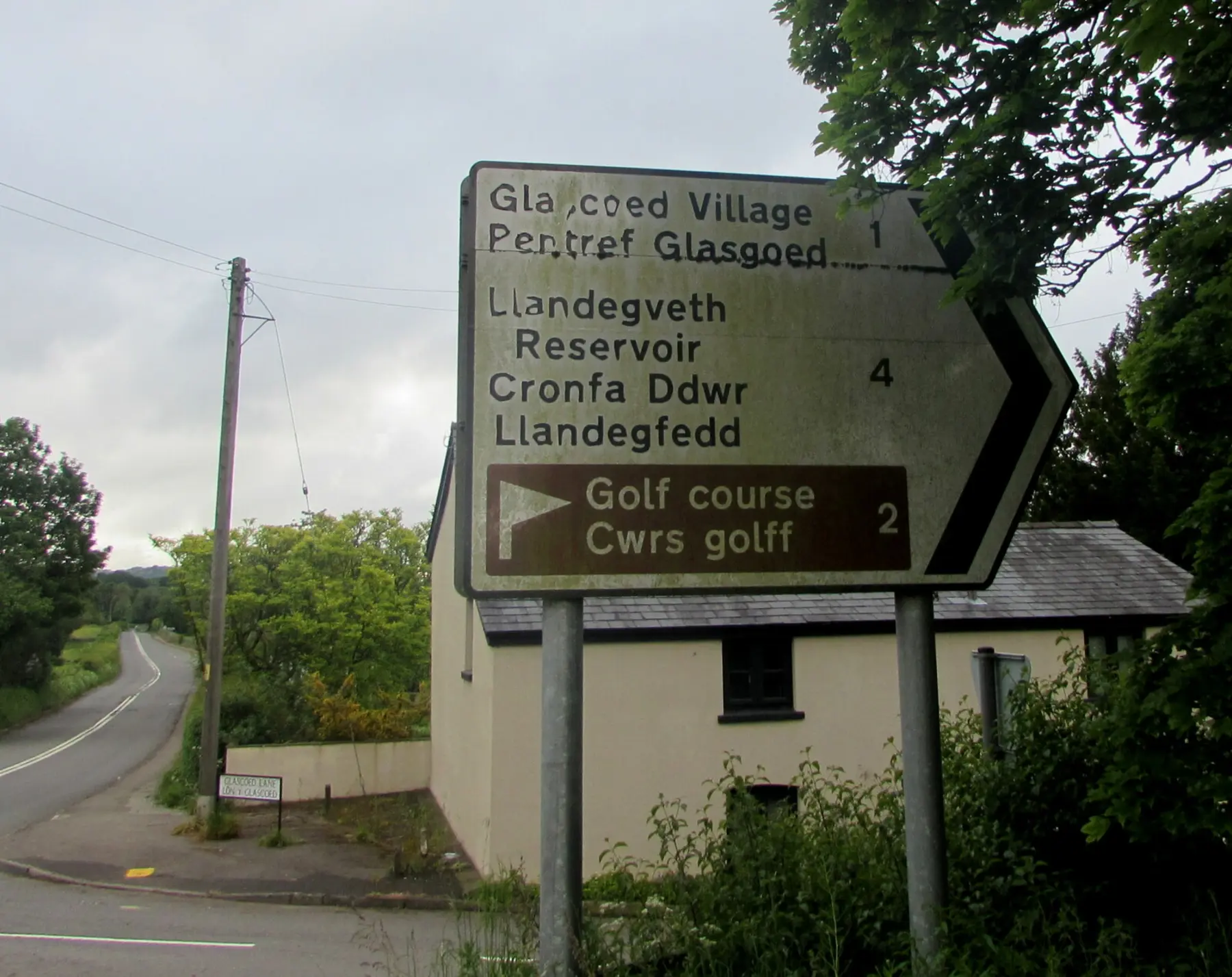
Language and Place Names in Britain
One country, several tongues: read the signs, understand the map, and hear the UK properly.
The United Kingdom, in the sense used here, spans England, Scotland, and Wales, and while English will get you everywhere, it is not the only language you will meet, and it does not sound the same twice. A market trader in Newcastle, a farmer in the Brecon Beacons, and a ferryman in the Outer Hebrides are all speaking English, and yet a first time visitor could be forgiven for wondering. None of this is a barrier. It is one of the pleasures of travelling here.
This primer is not about grammar drills or phrasebook survival lines. It is about making the map and the signage make sense: knowing that Llan at the start of a Welsh town name means church, that Inver in a Highland village name means a river mouth, and that a Scots word like wee or aye is not slang but part of a distinct, long standing tongue. Welsh and Scottish Gaelic are living, official languages with their own bilingual road signs, broadcasters, and schools, and they deserve to be treated as such rather than as quaint decoration.
English, and the Accents That Come With It
English is spoken everywhere in the UK and you will always be understood, but the accent and even the vocabulary can shift noticeably within a single train journey. Geordie in Newcastle, Scouse in Liverpool, the lilting cadences of the Welsh valleys, and the distinct rhythms of Highland or Aberdeenshire speech are all English, just shaped by centuries of local history. Regional dialect words survive too, so a bread roll might be a bap, a barm, or a cob depending on where you are standing.
Do not treat this variety as an obstacle. Slow down, listen, and if you genuinely cannot follow something, it is completely normal and welcome to ask someone to repeat it. Most people are used to visitors needing a moment, and nobody expects you to arrive already fluent in the local cadence.
Welsh (Cymraeg)
Welsh is a Celtic language with an unbroken history stretching back well over a thousand years, and it is very much alive today: spoken as a first language by a substantial number of people, taught in schools, used in broadcasting, and given equal legal status alongside English. It is strongest in the north and west of Wales, in areas such as Gwynedd and Anglesey, though bilingual road signs and place names appear across the whole country.
You do not need to speak a word of Welsh to travel comfortably in Wales, but learning to recognise a handful of common place-name elements turns a baffling road sign into something legible, and it is a small courtesy that is always appreciated. One sound worth listening for is the Welsh double L, ll, a breathy, unvoiced sound with no real English equivalent; it is worth asking a local to say it for you rather than guessing, since the closest attempts in English tend to miss it entirely.
- •Aber: river mouth or confluence, as in Aberystwyth
- •Llan: church or parish, as in Llandudno
- •Pen: head, top, or end, as in Pembroke
- •Cwm: valley, especially a steep sided one
- •Caer: fort, as in Caernarfon
- •Bryn: hill
- •Afon: river
Scottish Gaelic and Scots: Two Different Languages
It is worth being clear from the start that Scotland has two distinct minority languages, and they are not the same thing. Scottish Gaelic (Gaidhlig) is a Celtic language closely related to Irish, historically the language of the Highlands and Western Isles. It has fewer daily speakers than Welsh does in Wales, but it has official recognition, bilingual signage across the Highlands and islands, and a real presence in broadcasting and education, and it shows up constantly in place names right across Scotland, far beyond the areas where it is still spoken day to day.
Scots is something else entirely: a Germanic tongue, closely related to English and descended from a shared older root, historically spoken across the Lowlands and still heard in everyday speech, poetry, and song from Robert Burns onward. It is not a dialect of Gaelic and it is not simply English with an accent; it has its own vocabulary, grammar, and long literary tradition.
- •Inver: river mouth, as in Inverness
- •Ben or Beinn: mountain, as in Ben Nevis
- •Loch: lake or sea inlet
- •Kil: church or cell
- •Dun: fort
- •Strath: broad valley
- •Glen: narrow valley
- •Ard: height or promontory
- •Scots words you may hear: wee (small), aye (yes), ken (know), bonnie (pretty or fine)
Everyday Words and Courtesies
British English has its own set of everyday words and small courtesies that can catch a visitor out, mostly because they are friendly rather than literal. Learning a handful in advance will help conversations flow, and will help you recognise warmth where you might otherwise expect formality.
None of these require a considered reply. They are social lubricant, said and answered in half a second, and the sooner you relax into that rhythm the more natural your interactions will feel.
Tips
- •Cheers can mean thanks, goodbye, or a toast, depending entirely on context.
- •You alright? is a casual greeting, not a genuine enquiry after your wellbeing; the expected reply is simply yeah, you alright?, not a detailed answer.
- •Lovely and brilliant are all purpose words of approval, used for everything from a cup of tea to a piece of good news.
- •The loo is the toilet, and it is the polite, everyday term rather than slang.
- •Queue means a line of people waiting, and joining one properly, at the back, is taken seriously.