Money and Practicalities in United Kingdom
Sterling, tipping, tap water, plugs, and the practical details worth knowing before you land
The United Kingdom, meaning England, Scotland, and Wales for the purposes of this guide, is a genuinely easy place to manage your money. Cards and contactless payment are accepted almost everywhere, from grand city hotels to farm shops and market stalls, and the currency does not change as you cross from one nation to the next. Sterling is sterling whether you are in a Cornish tea room or an Edinburgh whisky bar.
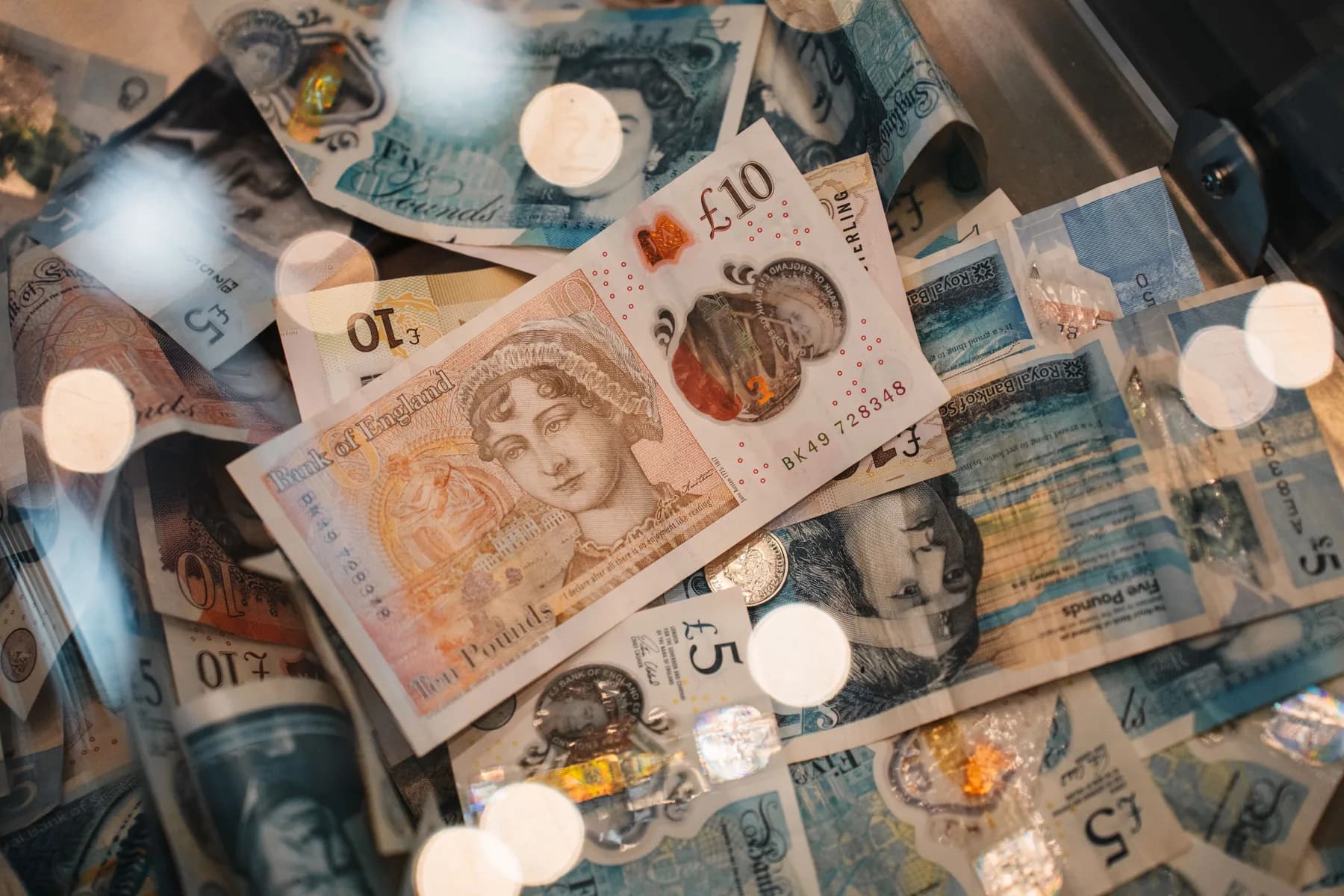
There is one wrinkle worth knowing before you go: Scotland has its own sterling banknotes, issued by Scottish clearing banks, which look different to the Bank of England notes used in England and Wales. They are entirely valid currency anywhere in the country, though a shop or taxi south of the border may occasionally hesitate before accepting one. Beyond that, the practicalities below apply the same whether you are in Cardiff, Glasgow, or London.
Currency and Cards
The currency is the pound sterling, written as GBP or simply £. Card and contactless payment are the default for almost every transaction, from a coffee to a week's shop, and most visitors get through a trip using a card for nearly everything. Contactless is fast and near universal; only above a certain amount will a terminal ask you to enter your PIN instead.
Cashpoints, as ATMs are usually called here, are common in towns and cities of any size, though they thin out in small villages and remote stretches of Scotland and Wales. One quietly useful fact for visitors used to tax being added at the till: the price on the shelf or the menu already includes VAT, so what you see is what you pay, with no surprise addition at the register.
Tips
- •If a card terminal offers to charge you in your home currency instead of pounds, decline it and pay in sterling; the exchange rate offered by your own bank is almost always better.
- •Carry a small amount of cash for rural pubs, market stalls, and the odd small business that still prefers it, or in case a card machine goes down.
- •Scottish banknotes are valid sterling anywhere in the country; Bank of England notes are the safest bet if you want to avoid any confusion.
Tipping
Tipping here is genuine but low key, nothing like the obligation it can feel like in the United States. In a sit-down restaurant with table service, 10 to 12.5 percent is a generous and well-received tip. The important thing is to check the bill first: many restaurants, especially for larger groups, already add a service charge, and you do not need to tip again on top of it.
At the bar in a pub, tipping is not expected at all; you pay for your round and that is the end of it. For taxis, rounding up the fare or leaving loose change is normal and appreciated, but far from mandatory.
Do
- ✓Tip 10 to 12.5 percent for good service in a sit-down restaurant, if a service charge has not already been added
- ✓Check the bill for an already-included service charge before adding your own on top
- ✓Round up a taxi fare or leave the small change as a simple thank you
Don't
- ×Do not tip at the bar when ordering drinks in a pub
- ×Do not feel obliged to tip for counter service, takeaway coffee, or a quick cafe lunch
- ×Do not assume the tip prompt on a card machine is compulsory; it is just software offering a suggestion
Costs and Budgeting
London runs to proper capital city prices, and it is worth budgeting accordingly for accommodation, eating out, and evening drinks in the centre. Beyond the capital, costs are noticeably more reasonable across the rest of England, Scotland, and Wales, and a pint in a village pub or a northern city will cost visibly less than the same drink in central London.
Accommodation is the line that moves most from place to place and season to season, so it pays to book city centre hotels well ahead of summer travel, particularly in London and in Edinburgh during its August festival season, when rooms fill up early.
Tips
- •Compare prices for the same chain hotel in a city centre versus just outside it; the difference can be significant for only a short extra journey.
- •Lunch deals and midweek menus are usually the best value way to eat out well without spending like it is a special occasion.
- •If your trip includes both London and smaller towns, expect your daily budget to flex quite a bit between the two.
Tap Water and Plugs
Tap water is safe to drink everywhere in England, Scotland, and Wales, so there is no need to buy bottled water out of caution. Bring a refillable bottle and top it up as you go, it will save money and is better for the environment.
Plugs are the three pin Type G socket, running on 230 volts at 50 hertz, the same standard used in Ireland. Visitors from continental Europe only need a simple plug adapter, since their devices already run on a compatible voltage. Visitors from North America will need both an adapter and to check that their device is dual voltage, otherwise a voltage converter is needed as well, or the device risks damage.
Tips
- •Ask for tap water in a restaurant or pub; it is free and perfectly safe everywhere in the country.
- •Pack one universal adapter rather than buying several country specific ones, since England, Scotland, and Wales all use the same Type G socket.
- •Check the small print on your charger or appliance for '100 to 240V'; if it says that, an adapter alone is all you need, whatever country you are travelling from.
Staying Safe and Connected
For a genuine emergency, dial 999, the primary number, though 112 also connects to the same emergency services and works as a backup if you are used to it from elsewhere in Europe. For anything that needs medical advice but is not an emergency, NHS 111 is a free number staffed by trained advisers who can point you to the right care. Pharmacies, often called chemists, are a good first stop for minor ailments and will give sound over the counter advice without an appointment.
One genuine difference worth knowing between the nations: prescriptions issued and dispensed in Scotland or Wales are free of charge, while England applies a fixed prescription charge regardless of what is being dispensed, and an English prescription dispensed in Scotland or Wales is still charged. Mobile coverage is generally good in towns and cities across all three nations but gets patchier in the Scottish Highlands, on some islands, and in other remote rural areas, so do not rely on it completely if you are heading off the beaten track.
Travel insurance is worth having regardless of where you are from. Some visitors from European countries can use a GHIC or EHIC card for access to state healthcare, though this is not a substitute for full travel insurance and does not cover everything a policy would.
Tips
- •Save NHS 111 in your phone for non-emergency medical questions, and reserve 999 or 112 for genuine emergencies.
- •If you need a prescription filled, remember the charge differs: free when issued and dispensed in Scotland or Wales, a fixed charge in England.
- •Download offline maps before heading into the Scottish Highlands or other remote areas where mobile signal can disappear.