Getting Around United Kingdom
Trains, coaches, contactless, and whether you actually need a car
Britain runs on its railways more than almost anywhere else in Europe, and for a visitor that is good news: England, Scotland, and Wales share one National Rail network, so a single search and a single ticket take you from a London terminus to a Highland village without you ever needing to know which company runs the train. London has its own layer on top, a tap-and-go system that is the easiest urban transport in the country once you understand it. Coaches fill in the cheaper and the rail-free gaps, and a car only really becomes necessary in the national parks and the deep countryside.
This page is the country-level primer. Each town and city page has its own practical Getting Here section for the final mile.
Rail
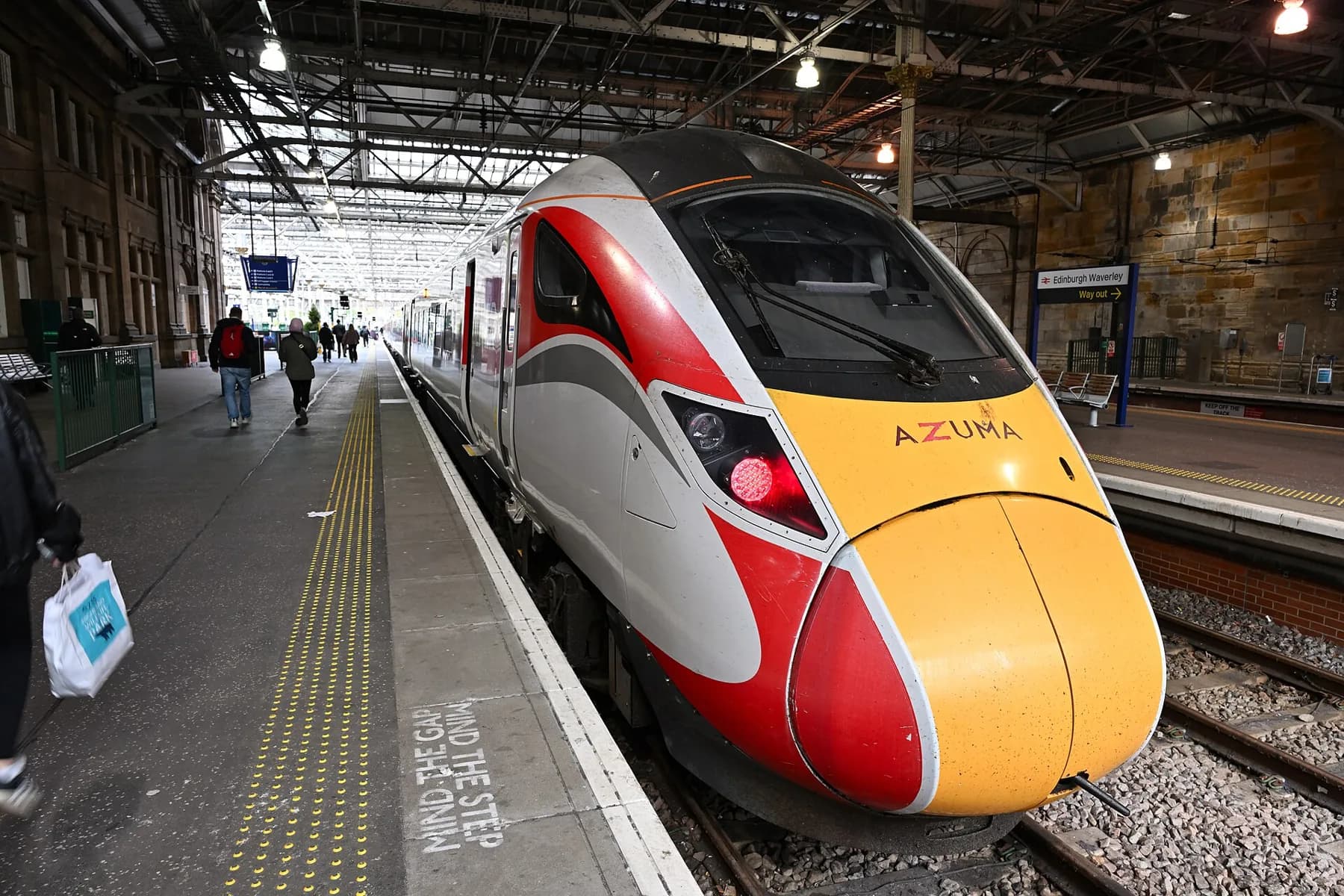
Great Britain's railway is one connected network across all three nations. You will see different brands on the trains, LNER up the East Coast to York and Edinburgh, Avanti West Coast to the North West and Glasgow, Great Western to Bath, Bristol, and South Wales, ScotRail within Scotland, and Transport for Wales across Wales, but they sell into one national system. Plan and buy on National Rail Enquiries or an app like Trainline and you never have to think about who operates the service. The government is bringing the operators into public ownership under Great British Railways, but for a traveller the ticketing and the network are unchanged.
Intercity journeys are fast and frequent on the main lines. London to Bath is about 1 hour 20, London to York about 2 hours, London to Cardiff about 2 hours, London to Manchester about 2 hours, and London to Edinburgh about 4 hours 20 on the direct LNER service. The fares, not the trains, are the thing to learn: an Advance ticket for a specific train booked ahead is a fraction of the walk-up Anytime fare for the same seat.
Tips
- •Book Advance tickets as early as you can (usually up to 12 weeks out). Walk-up Anytime fares on intercity routes are among the most expensive in Europe.
- •If you will make more than a couple of trips, buy a Railcard (around 35 pounds a year for a third off most fares). The 16-25, 26-30, Two Together, Family and Friends, Senior, and Network cards each pay for themselves within a journey or two.
- •Off-Peak fares avoid the weekday morning and late-afternoon price jumps. If your plans are flexible, travel mid-morning or after the evening peak.
- •For long or awkward journeys, a split-ticketing app can find a cheaper combination of tickets for the exact same train.
Coaches and Intercity Bus
Long-distance coaches are the budget alternative to rail and reach plenty of towns the train does not. National Express runs the widest network across England and Wales, FlixBus competes hard on price on the busy corridors, and Scottish Citylink is the main operator north of the border, including the Highlands and the ferry-port towns. Megabus withdrew from routes wholly within England at the end of 2024 and now mainly serves Scotland and a handful of cross-border corridors, so check it still runs your specific route before assuming it is the cheapest option. Fares booked ahead can undercut rail dramatically, though journeys are slower and subject to traffic.
Coaches are especially useful for airport-to-city hops and for reaching national-park gateways and rural towns with thin rail service. For the Scottish Highlands and islands in particular, Citylink plus the ferry network covers a lot of ground that has no railway at all.
Tips
- •Book a few days ahead for the cheapest fares; walk-on coach prices are much higher.
- •Megabus and FlixBus are cheapest on the London to Oxford, Bristol, Manchester, and Edinburgh corridors.
- •For the Highlands, Scottish Citylink is often the only public-transport option beyond the rail line; check timetables carefully as rural services can be sparse.
Airports
London has six airports. Heathrow (LHR) is the main international gateway, connected to central London by the Elizabeth line and the faster Heathrow Express. Gatwick (LGW) has frequent trains and the Gatwick Express. Stansted (STN) and Luton (LTN) serve mostly budget carriers with their own rail and coach links, and London City (LCY) sits in the Docklands on the DLR. Unlike Dublin, almost every major British airport has a proper rail or metro link, so you rarely need a taxi into town.
Regionally, Manchester (MAN) is the biggest hub outside London with its own railway station, and Edinburgh (EDI), Glasgow (GLA), Birmingham (BHX), Bristol (BRS), Newcastle (NCL), and Leeds Bradford (LBA) all serve their regions well. Edinburgh, Manchester, and Birmingham have direct rail or tram links into the city centre; Bristol and Glasgow rely on frequent airport buses.
Tips
- •From Heathrow, the Elizabeth line is much cheaper than the Heathrow Express and only a little slower; both accept contactless.
- •Edinburgh Airport connects to the city by tram, Manchester and Birmingham by direct train. Factor the onward leg into your fare, not just the flight.
- •For the West and South West, flying into Bristol can beat flying into London and taking the train down.
Driving and Car Hire
Drive on the left, and note the single biggest difference from Ireland and the Continent: speed limits are in miles per hour, not kilometres. The usual limits are 30 mph in towns, 60 mph on single-carriageway roads, and 70 mph on dual carriageways and motorways. Most motorways (the M-roads) are free, a pleasant contrast to Ireland's tolled routes; the main exceptions are the M6 Toll near Birmingham, the Dartford Crossing east of London (Dart Charge, paid online, no barrier), and the Mersey Gateway near Liverpool.
City driving is where the charges bite. Central London has both the Congestion Charge (a daily fee to drive into the middle of the city) and a London-wide Ultra Low Emission Zone (ULEZ) that charges older, more-polluting vehicles every day. Several English cities including Birmingham, Bristol, Bath, Bradford, Sheffield, and Newcastle run Clean Air Zones, and Scotland has Low Emission Zones in Glasgow, Edinburgh, Dundee, and Aberdeen; most target older or commercial vehicles rather than a typical modern hire car, but the rules differ by city. Hire cars are reasonably priced outside school holidays; book ahead, a manual is cheaper than an automatic, and confirm the insurance excess before you leave the desk.
Tips
- •Speed limits and distances are in miles, not kilometres. A national-speed-limit sign (white circle with a black diagonal) means 60 mph on a single carriageway, 70 on a dual carriageway.
- •Most motorways are free. Watch for the M6 Toll, the Dartford Crossing (pay online by midnight the next day, there is no toll booth), and the Mersey Gateway.
- •Before driving a hire car into any city, check the vehicle on the government's ULEZ, Clean Air Zone, and Low Emission Zone checkers. Non-compliant vehicles are charged or, in Scotland's LEZs, banned.
- •Do not drive into central London if you can avoid it. Park at an outer Tube station and take the train, or skip the car entirely for a London trip.
Cycling
Britain has a good and growing network of traffic-free routes under the National Cycle Network, and some of the best are destinations in their own right: the Camel Trail in Cornwall, the Bristol and Bath Railway Path, and the Coast and Castles route along the Northumberland coast all offer long, flat, car-free riding. Cities vary: London, Cambridge, Bristol, and Edinburgh are the most cycle-friendly, with a mix of segregated lanes and quiet routes, and London's Santander Cycles hire scheme is easy for visitors.
Taking a bike on the train depends on the operator. Folding bikes travel free at any time; full-size bikes usually travel free but need a (free) reservation on long-distance services and are barred at peak times. Check the specific operator before you rely on it.
Getting Around London: Oyster and Contactless
London is the one place with its own self-contained system, and it is the simplest urban transport in the country. Just tap a contactless bank card or a phone on the yellow readers as you enter and leave the Underground, Overground, Elizabeth line, DLR, and trams, and tap on when you board a bus or tram. The system automatically charges the right fare and applies a daily and a weekly cap, so you can never pay more than a Travelcard would have cost. If you do not have a contactless card, buy a pay-as-you-go Oyster card instead; it works identically. Buses and trams are a single flat fare with a Hopper that lets you change buses free within an hour.
The London habit increasingly works beyond London too. Contactless pay-as-you-go has been rolling out across commuter stations in the South East, in Surrey, Sussex, Kent, and beyond, with more stations added through 2026, so on many day trips from London you can simply tap in and out at both ends.
Tips
- •Use one card or one device per person for the whole journey, and do not let two people tap through on the same card; the fare logic breaks and you get overcharged.
- •To get the weekly cap, use the exact same card or device Monday to Sunday.
- •Keep a backup payment card. A card that fails to read on exit can land you a maximum fare.
Do You Need a Car
For most trips, no. London, Edinburgh, Glasgow, Manchester, York, Bath, Bristol, Cardiff, Oxford, Cambridge, Brighton, and the whole spine of rail-connected towns are easier and cheaper without one, and parking in any of them is a headache you do not need. Add coaches to the mix and you can reach the great majority of the towns in our guides on public transport alone.
A car starts to matter in the countryside and the national parks: the Lake District beyond the main gateway towns, the Scottish Highlands and the islands (the North Coast 500, the back roads of Skye), the Cotswold villages, rural Pembrokeshire and the Snowdonia backroads, and the North York Moors. If your trip is city-based or hops between rail-connected towns, skip the car. If it is a multi-day rural drive, hire one for that leg only.
Accessibility
Step-free access is good on the newest infrastructure and patchy on the oldest. National Rail publishes step-free status for every station, and Passenger Assist provides free help getting on and off trains: book it through the operator or the national Passenger Assist app ahead of travel, though Turn Up and Go assistance is also available. On the London Underground many deep-level Tube stations are not step-free, but the Elizabeth line, the DLR, and most of the Overground are, and TfL publishes a dedicated step-free map.
Blue Badge holders (including many overseas equivalents) get parking concessions, though the rules vary between England, Scotland, Wales, and central London, where some boroughs do not recognise the badge. Historic buildings, older pubs, and hillside towns often have steps without ramps, so check with the venue directly. Each city guide's Local Essentials section carries the specific accessible facilities we have verified for that town.