Irish Drinks
The Guinness pour, the whiskey revival, poitin, and an Irish coffee done properly
Drinking in Ireland is social before it is anything else, and the drinks themselves carry a surprising amount of craft and history. A pint of stout is poured with a ritual and a wait; the whiskey scene has gone from near-death to one of the fastest-growing spirits in the world; and the country's oldest spirit was illegal until the late 1990s. This page is about what is in the glass. For how the room around it works (rounds, sessions, last orders), see the Pub Culture page.
You do not need to drink alcohol to enjoy an Irish pub, and non-drinkers are entirely normal company. But if you are ordering, a little knowledge makes the experience better and marks you out as someone who is paying attention.
The Guinness Pour
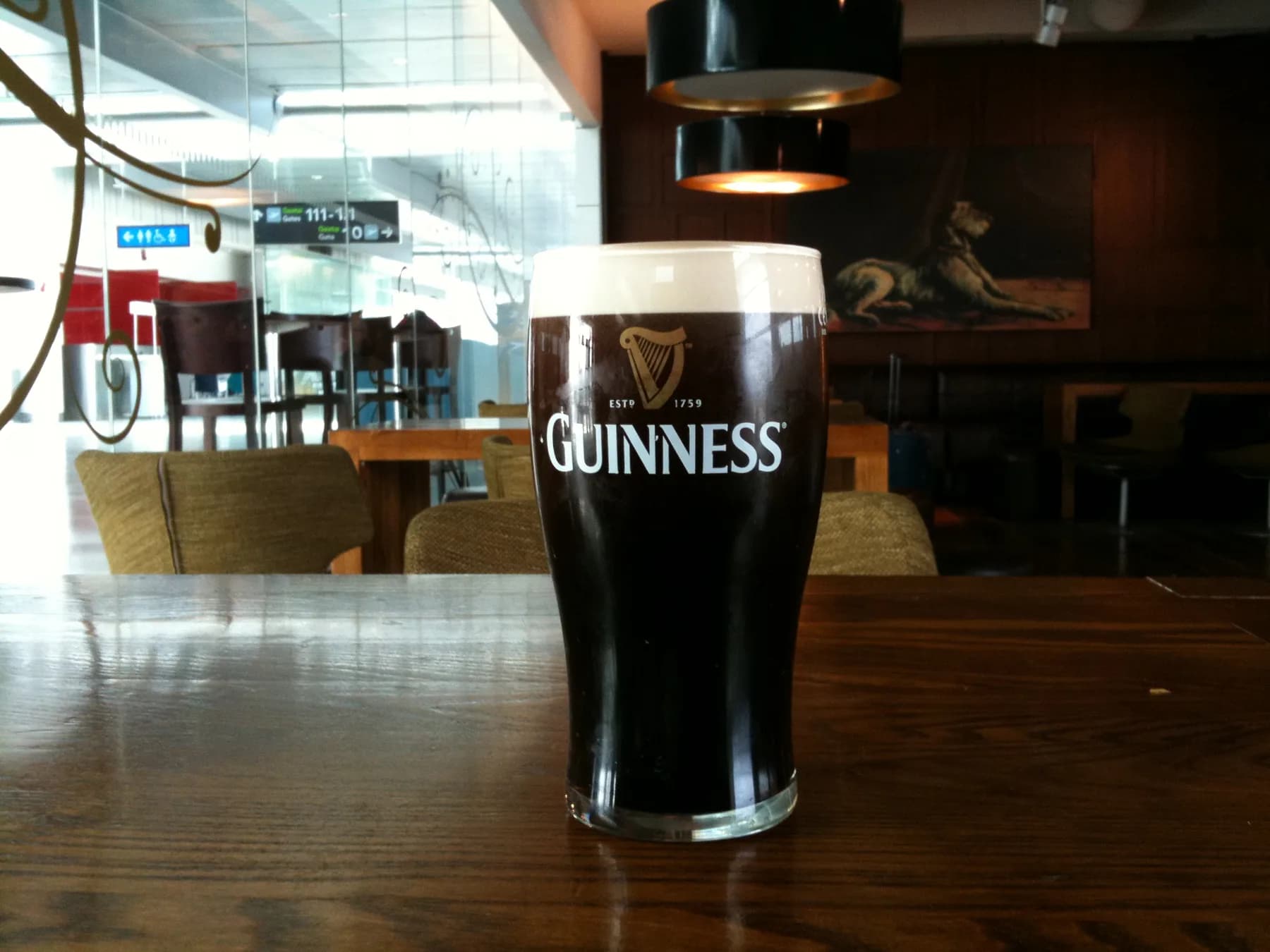
A pint of Guinness is not poured in one go, and the wait is not the barman being slow. It is a two-part pour that takes around 120 seconds. The glass is filled to about three-quarters at a 45-degree angle, then left to settle while the nitrogen works, then topped up to a proud, domed, creamy head. The famous cascade you watch during the settle is nitrogen bubbles surging down the sides of the glass and rising through the middle.
That texture is the whole point: Guinness is pushed with a nitrogen-heavy gas blend rather than straight carbon dioxide, which is what gives it the smooth, dense head and soft mouthfeel instead of a sharp fizz. It is served cool, not ice cold, and it genuinely is worth letting it finish settling before you lift it. A rushed pint is a worse pint.
Do
- ✓Let the pint settle fully before drinking; the barman will top it and present it when it is ready.
- ✓Order your Guinness first if you are getting a round, so it settles while the rest are poured.
- ✓Judge a pub partly on its pour; a good house takes the two minutes.
Don't
- ×Do not grab the glass mid-settle; you will get a mouthful of unfinished head.
- ×Do not ask for it colder or with ice; that is not how it is served here.
Irish Whiskey
Irish whiskey is typically triple-distilled, which tends to make it smoother and lighter than a lot of Scotch, and it is spelled with the 'e'. The style that is genuinely Ireland's own is single pot still, made from a mash of both malted and unmalted barley in a pot still; it gives a spicy, oily, full character you will not find elsewhere. Redbreast and the Spot range (Green Spot, Yellow Spot) are the classic examples to ask for.
The industry's story is a comeback. Irish whiskey nearly died out across the twentieth century, down to a bare handful of distilleries, before a revival from the 1990s turned it into one of the fastest-growing spirits in the world, with dozens of distilleries operating again today. Big names to know: Jameson and Redbreast from Midleton in Cork, Powers, Bushmills in County Antrim (among the oldest licensed distilleries anywhere), and newer Dublin distillers like Teeling.
Tips
- •Unlike Scotland, Ireland is not carved into formal whiskey regions; think by distillery and style rather than by map.
- •If you like it smooth, start with a triple-distilled blend; if you want the distinctive Irish character, ask for a single pot still.
- •Many distilleries run tours and tastings; they are a good rainy-day plan and most are bookable ahead.
Poitin
Poitin (pronounced 'pot-cheen') is Ireland's oldest spirit and its most notorious: a clear, high-strength pot-distilled drink historically made in secret from grain or potatoes, and outlawed for roughly three centuries. It was legalised for sale only in 1997, and later granted protected Geographic Indication status by the EU, which puts the old moonshine on the same official footing as Irish whiskey.
The modern, legal versions are a world away from the dangerous backyard stuff of legend: properly distilled, quality-controlled, and increasingly found behind good bars and in craft cocktails. It is strong, so it is treated with respect, but it is a genuine piece of Irish drinking heritage worth trying once from a reputable maker.
Tips
- •Only drink commercially produced, legally sold poitin; the historical warnings about home distillate are not folklore.
- •Try it from a bartender who can talk you through it; a good bar will have a decent bottle.
Irish Coffee
An Irish coffee, done right, is a small piece of engineering: hot coffee, a measure of Irish whiskey, brown sugar stirred through, and lightly whipped cream floated on top over the back of a spoon so it sits as a distinct layer. You drink the hot, sweet, whiskey-laced coffee through the cool cream; you do not stir the cream in.
The drink was invented in Ireland, at the flying-boat terminal in Foynes, County Limerick, in the 1940s, reputedly to warm up cold transatlantic passengers on a miserable night. It travelled from there to San Francisco and around the world. Ordered in a good Irish bar on a wet evening, it remains one of the great uses of the country's weather.
Tips
- •The cream should float, not sink; a good bar builds it in layers, and you sip through it.
- •It is a proper after-dinner or cold-evening drink, not an all-day coffee substitute.
Beyond the Stout
Guinness is not the only game. Ireland has a strong craft brewing scene now, and most decent pubs carry local pale ales, reds, and stouts alongside the big brands; ask what is brewed nearby. Irish cider is a category of its own: Bulmers, made in Clonmel in County Tipperary and sold abroad as Magners, is the household name, best over ice on a rare warm day.
For the designated driver or the off-duty evening, the pub is still yours. Non-alcoholic stouts and beers have improved enormously and are widely stocked. And if you want the truly Irish soft option, ask for red lemonade, a distinctly Irish fizzy drink that locals grew up on and outsiders never quite see coming.