Getting Around Ireland
Trains, buses, the Leap Card, and whether you actually need a car
Ireland's public transport covers most of what visitors want to do. Dublin has the DART, Luas, and a dense bus network. Intercity trains connect the bigger cities and Belfast in the north. Bus Eireann and a handful of private operators fill in almost everywhere else. Beyond that, a hire car starts to matter, mostly in the west and south-west.
This page is the country-level primer. Each city page has its own practical Getting Here section for the final mile.
🚆 Live on the Irish Rail network
Rail
Iarnrod Eireann runs intercity services from Dublin Heuston to Cork, Galway, Limerick, Waterford, Tralee, and Westport, and from Dublin Connolly to Sligo, Rosslare, and Belfast via the cross-border Enterprise service. Journey times are reasonable once you are on board. The Dublin to Galway service takes around 2 hours 30 minutes; Dublin to Cork is 2 hours 30 minutes to 3 hours.
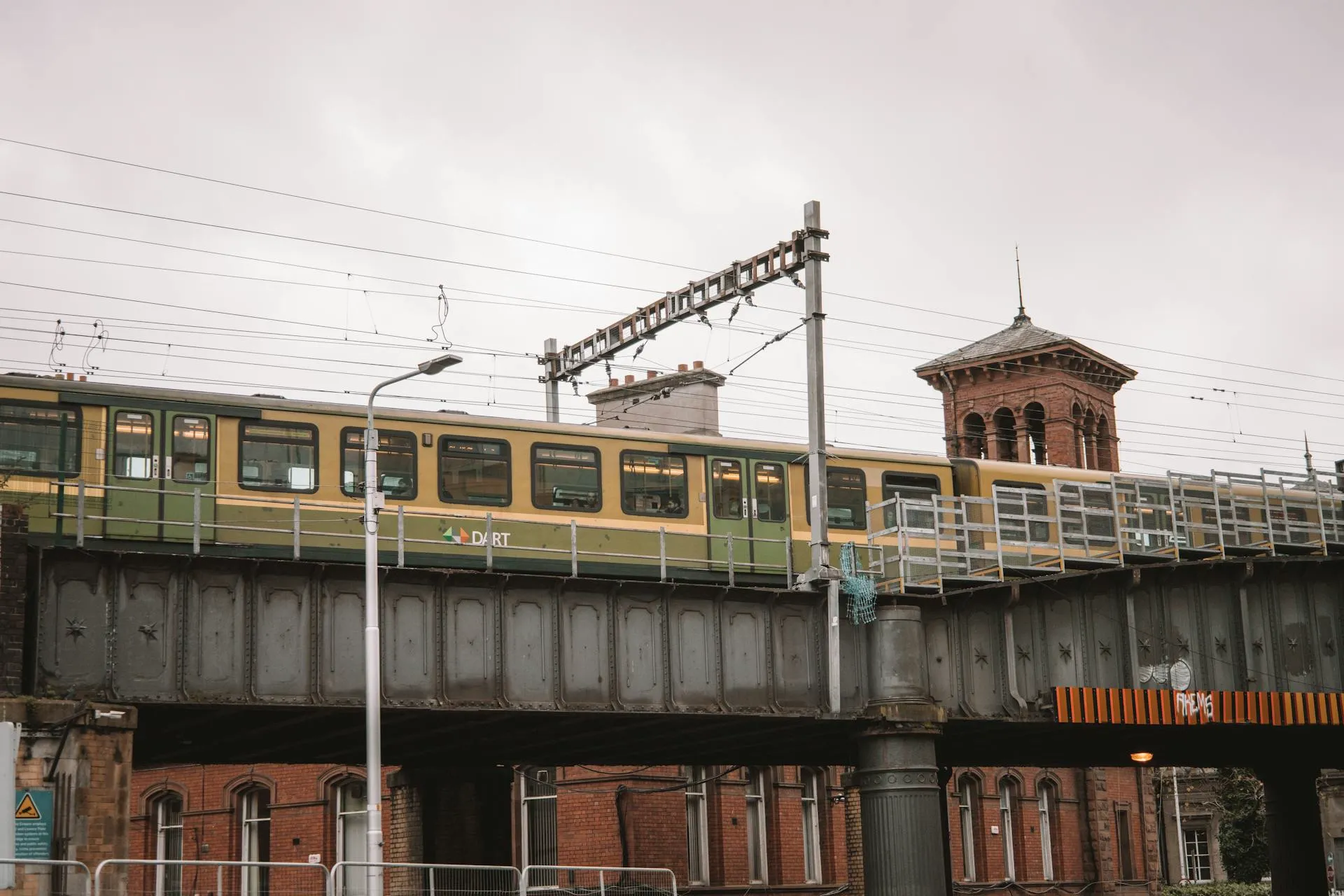
Commuter rail extends out of Dublin along the east coast. The DART serves the full stretch from Malahide and Howth in the north down through the city centre to Bray and Greystones. North of Malahide and south of Greystones you switch to commuter diesel services. DART and commuter lines use the same stations and tickets; the rolling stock is different.
Tips
- •Book intercity tickets a few days ahead for the best fares, especially on Friday afternoons and Sunday evenings when prices spike.
- •Seat reservations are included on most intercity routes. Use them on busy days; standing for two hours is not enjoyable.
- •The Dublin Heuston-Cork service has a cafe carriage. The shorter services do not.
Intercity Bus
Bus Eireann is the national operator and covers almost every town that rail does not, plus plenty that rail does. Private competitors like Citylink, Aircoach, and Dublin Express run the Dublin to Galway, Dublin to Cork, and Dublin Airport to Belfast corridors, usually at lower fares than Bus Eireann and often with faster journey times. GoBus was absorbed into Citylink in 2022 and no longer operates as a separate brand.
Bus Eireann's Expressway network links Dublin to Donegal, Derry, and the south-west when rail does not reach. Regional services cover towns that have no train station; timetables thin out considerably at weekends and in the evening.
Tips
- •Citylink and GoBus run Dublin to Galway roughly every hour; both are cheaper than the train and usually quicker door-to-door from the city centre.
- •Aircoach and Dublin Express run direct Dublin Airport to Cork and Belfast services; worth checking before defaulting to rail with a change in Dublin.
- •Sunday evening services on rural routes are thin. Plan your return trip before you go.
Airports
Dublin Airport (DUB) handles the great majority of international arrivals and is the easiest gateway for the east coast. Shannon (SNN) is the best option for the west and south-west, with good onward links to Galway, Limerick, and the Wild Atlantic Way. Cork (ORK) is useful for Kerry and West Cork. Knock/Ireland West (NOC) serves Mayo, Sligo, and north Connemara. Kerry (KIR) is a small regional option near Tralee. Belfast International (BFS) and Belfast City (BHD) cover Northern Ireland.
Dublin Airport has no rail connection. The fastest way into Dublin city is the Airlink 747 or Dublin Express coach (30-45 minutes). Shannon, Cork, and Knock all rely on bus or car onward; none have a rail link.
Tips
- •Rent a car at the airport if you are heading anywhere beyond the intercity rail corridor. Pick-up is faster at Shannon and Cork than at Dublin.
- •The Airlink 747 is cheaper than a taxi from Dublin Airport and drops at Connolly, O'Connell Street, and Heuston; time it with your onward train.
- •Dublin Airport has two terminals. Ryanair uses Terminal 1; most other carriers use Terminal 2. The walk between them takes about 10 minutes.
Driving and Car Hire
Drive on the left. Motorways (M-roads) are toll roads on several routes out of Dublin (M50, M1, M3, M4, M6, M7, M8); tolls are cash, card, or video-pay eFlow. National roads (N-roads) are often single carriageway, slower than the sat-nav predicts, and can feel narrow to visitors used to wider lanes.
Hire cars are reasonably priced outside of July and August. Book ahead for a manual (cheaper than automatic) and confirm the insurance cover before you leave the desk; the default excess is high. EV charging is good along the main motorways and around Dublin, thinner on rural routes in the west and north-west.
Tips
- •The M50 eFlow toll between junctions 6 and 7 in Dublin has no barrier; you must pay online within 24 hours or face a fine. Hire cars usually have this handled; confirm at pick-up.
- •Irish speed limits are signed in km/h. A white sign with black numbers at a town entrance is the new limit, not a warning.
- •Fuel stations are every 20-30 km on motorways and national roads; less frequent on R-roads in rural areas. Fill up before heading west of Galway or into inland Donegal.
Cycling
Ireland is cyclable but has more weather than infrastructure. Dedicated greenways are excellent where they exist: the Great Western Greenway (Mayo), Waterford Greenway, and the Royal Canal Greenway (Maynooth to Cloondara) all offer long traffic-free stretches. Urban cycling is strongest in Dublin, Galway, and Cork, where there is a mix of segregated lanes and shared-road cycle routes.
Bikes travel free on intercity trains outside peak hours, with space bookable in advance. DART and commuter rail accept bikes outside peak hours too. Bus Eireann is less bike-friendly; check per service.
Leap Card
The Leap Card is a reusable contactless travel card used on DART, Luas, Dublin Bus, commuter rail, and Bus Eireann city services in Cork, Galway, Limerick, and Waterford. Fares are 20-30% cheaper than cash tickets, and daily/weekly caps protect you from overpaying on multiple journeys.
Visitors can buy a Leap Visitor Card valid for 24, 72, or 168 hours, giving unlimited travel on most services in Dublin and selected regional operators. The visitor version is sold at Dublin Airport, major rail stations, and tourist offices, and also online.
Tips
- •Tap on and off for rail and Luas; tap on only for buses.
- •Top up at Payzone shops, Spar/Centra/Londis, DART and Luas ticket machines, or online via the Leap Card app.
- •The Visitor Card is cheaper than single tickets if you are making more than four journeys in 24 hours, or any reasonable amount of travel over 72 hours.
Do You Need a Car
Short answer: probably not, unless you are going west of the rail line. Dublin, Cork city, Galway city, Limerick, Waterford, and the coastal corridor north and south of Dublin are all workable on public transport. Add buses and trains into the mix and you can reach Belfast, Kilkenny, Wexford, Westport, Tralee, Killarney, and most of Donegal without a car.
A car starts to matter on the Wild Atlantic Way coastal drives, inland Connemara, the Beara and Dingle peninsulas, rural Donegal, and anywhere that 'the nearest bus is three times a day' is a real answer. If your trip is multi-day and rural, hire a car. If it is city-based or rail-connected, you will spend more time parking than driving.
Accessibility
Accessibility is improving but is not consistent. DART, Luas, and intercity rail have step-free stations and boarding assistance, though you should book assistance 24 hours in advance via Iarnrod Eireann. Bus Eireann Expressway coaches have wheelchair spaces; rural buses vary.
Major cities have reasonable kerb cuts and accessible taxis via FreeNow (filter for wheelchair-accessible). Older pubs, restaurants, and historic buildings often have step access without ramps; check with the venue directly. AccessibleIreland.com is the most comprehensive visitor-facing resource.