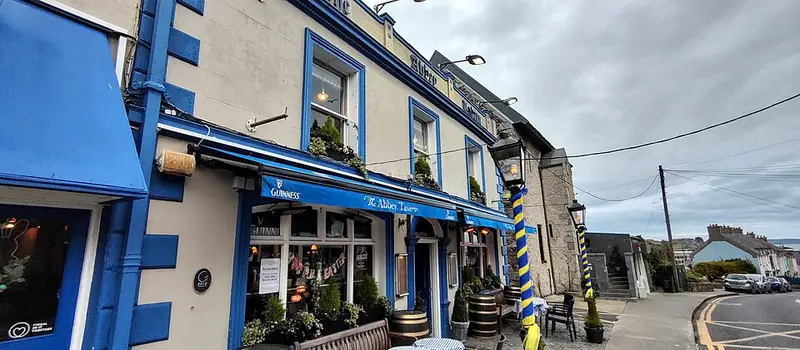
Ireland Pub Culture
Rounds, trad sessions, and the small things that mark a visitor out
Irish pubs are not just bars. They are the country's most reliable social infrastructure: wake rooms, match-day venues, first-date territory, and occasionally the only warm building in a village at nine on a wet Tuesday. Visitors are welcome almost everywhere, and the bar staff are patient with people who have not done this before. A few conventions are worth knowing before you walk in.
Rounds
If you are drinking with a group of three or more, you buy rounds. Someone gets the first, someone else the second, and it continues until everyone has bought one or the group breaks up. Leaving early without buying a round is noticed, especially in smaller pubs. If you need to leave, say so before the round before yours, or buy a round earlier than you otherwise would have.
If you are on a different drink (half-pints, soft drinks, spirits with mixers), that is fine; buy what you want in your round. No one counts exact costs. The point is that everyone takes a turn.
Do
- ✓Buy your round without being asked.
- ✓Say thanks when someone buys for you; it is expected but appreciated.
- ✓Ask what everyone is having before you go up; do not guess.
Don't
- ×Do not try to pay separately when someone else has offered to go up.
- ×Do not forget whose round it is. The group will remember.
Trad Sessions
A trad session is musicians playing Irish traditional music, usually on acoustic instruments (fiddle, flute, bodhran, accordion, tin whistle, guitar), usually in a corner of the pub, usually unpaid and unticketed. Sessions can be regular weekly fixtures or spontaneous; both follow the same etiquette. The musicians are not a covers band. They are playing for themselves and for each other. You are welcome to listen.
Applause between tunes is normal; cheering over a solo is fine; requests are generally not. Do not ask for specific songs and do not expect a sing-along unless the room is leading one.
Do
- ✓Sit nearby, listen, enjoy.
- ✓Buy the musicians a pint or two if you are staying the session.
- ✓Keep the volume down if you are nearby, especially during slow airs.
Don't
- ×Do not record with flash or intrusive camera rigs; a discreet phone video of a set is fine.
- ×Do not talk loudly through the music next to the players.
- ×Do not request 'Wonderwall' or 'Fairytale of New York'. Sessions are trad, not pub covers.
Last Orders and Closing Time
Pub closing hours are regulated nationally but enforced locally. Standard closing times are Monday to Thursday 11:30pm, Friday and Saturday 12:30am, and Sunday 11pm. Last orders are called about 15 to 20 minutes before closing, followed by drinking-up time (30 minutes by law).
In practice, rural pubs can be more relaxed about closing times; Dublin pubs are stricter, especially in the city centre. Late-bar licences extend some venues to 2:30am, typically for venues with music or a restaurant element. Nightclubs operate separately.
Ordering at the Bar
You order at the bar, not from a table. Wait your turn; the bar staff will notice who is next. No need to wave or shout. Tip the change or a euro if you want, but tipping is not standard in Irish pubs for drinks.
Food is different. Where food is served at the table, a 10-12% tip is reasonable for good service; lower if service is incidental. Many gastropubs now include an optional service charge on the bill.
Conversation
Strangers talk to each other in Irish pubs more than in most other countries. Sitting at the bar is an open invitation; sitting in a booth or at a table less so. Politics and religion are rarely off-limits but pick your moment; sport, weather, travel, and music are easier openers.
If a local asks where you are from, they are probably genuinely curious and also working out whether they know someone from there. If you are American, expect questions about ancestry (whether you have them answers or not).
Dublin Versus Rural
Dublin pubs in the city centre skew younger, louder, and more tourist-oriented. Prices are higher (a pint of Guinness is 6.50-7.50 euro in most Dublin centre pubs versus 5.00-6.00 in rural towns). Trad sessions in Dublin are usually advertised and scheduled; they are more likely to be spontaneous outside the capital.
Rural pubs often double as shops, post offices, or off-licences during the day. Many have a lounge and a bar (the lounge is carpeted, the bar is not). Older regulars tend to sit in the bar. The lounge is more neutral territory.
No-Phones and Old-Style Pubs
A small but growing number of Irish pubs enforce no-phones policies, either formally with a sign or informally through a glance from the barman. These tend to be older pubs with a committed regular clientele who are there to talk, not scroll. Examples include Grogan's in Dublin, The Long Hall on South Great Georges Street, and many rural pubs where a phone on the table is simply not done.
'Traditional' pubs with snugs (small private rooms originally for women, clergy, or private conversations) are worth seeking out. Kehoe's, Mulligan's, and The Stag's Head in Dublin all still have them. Outside Dublin, look for pubs whose interior is listed as a protected structure on the National Inventory of Architectural Heritage, the mechanism that actually safeguards historic pub interiors in Ireland.