SpringMarch - May
The quietest good season. Longer light on the cliffs, the coast path drying out, and the town still working at its own pace before the summer coaches arrive.
Spring is when the Cleveland Way north and south of the town is at its best: the path underfoot has dried out from winter, the cliff colonies are noisy again, and you can walk to Robin Hood's Bay without queuing at a stile. Whitby Abbey's opening hours lengthen through the spring, and the museum in Pannett Park is a genuinely good wet-afternoon fallback rather than a consolation prize. The spring edition of Whitby Goth Weekend falls around the early May bank holiday and fills the town for a long weekend, so check its dates before booking if you would rather avoid it, or before booking if you would rather not miss it. Sea fret can still take the temperature off a bright day with no warning at all, so bring a layer you would not need inland.
SummerJune - August
Peak season and genuinely crowded. The fish and chip queues on Pier Road are real, the car parks fill by mid-morning, and August carries both the Regatta and Folk Week.
July and August are Whitby at maximum. Whitby Sands under the West Cliff is the beach everyone means, the harbour trip boats run all day, and the steam trains come in off the North Yorkshire Moors Railway. It is also when the queue outside the Magpie on Pier Road becomes a landmark in its own right, when the marina car parks are full by late morning, and when the swing bridge opening turns a five-minute walk into fifteen. August carries two very different crowds back to back: Whitby Regatta over its August weekend, which is a sea town's own event with rowing races and fireworks, and Whitby Folk Week later in the month, which fills every pub back room with sessions. Book accommodation for either well ahead. If you want the coast without the crush, walk out on the Cleveland Way for twenty minutes and the numbers drop away almost immediately.
AutumnSeptember - November
The town's own season. Illuminated Whitby lights the abbey ruin in late October and the autumn Goth Weekend lands on the Halloween weekend, so late October is busy in a way that has nothing to do with the beach.
Autumn is when Whitby's darker reputation earns its keep, and unlike a lot of Halloween tourism it is built on something real: Bram Stoker did stay in the town in 1890, did take the name Dracula from a book in the local library, and did put the wreck of a real Russian ship on Tate Hill Sands into the novel. English Heritage lights the abbey ruin for Illuminated Whitby across the last week of October, and the autumn edition of Whitby Goth Weekend takes the Halloween weekend itself. Both sell out accommodation across the town, so late October is the one time of year to book months rather than weeks ahead. Outside those dates, autumn is a good, quiet season for the jet workshops on Church Street, the Ghost Walk from the Whalebone Arch, and the abbey without a queue. Days shorten fast on this coast and the cliff paths get slippery, so start walks early.
WinterDecember - February
Cold, dark and properly local. Some independents drop to shorter hours or close for a winter break, the Captain Cook museum shuts entirely, and the harbour goes back to being a workplace.
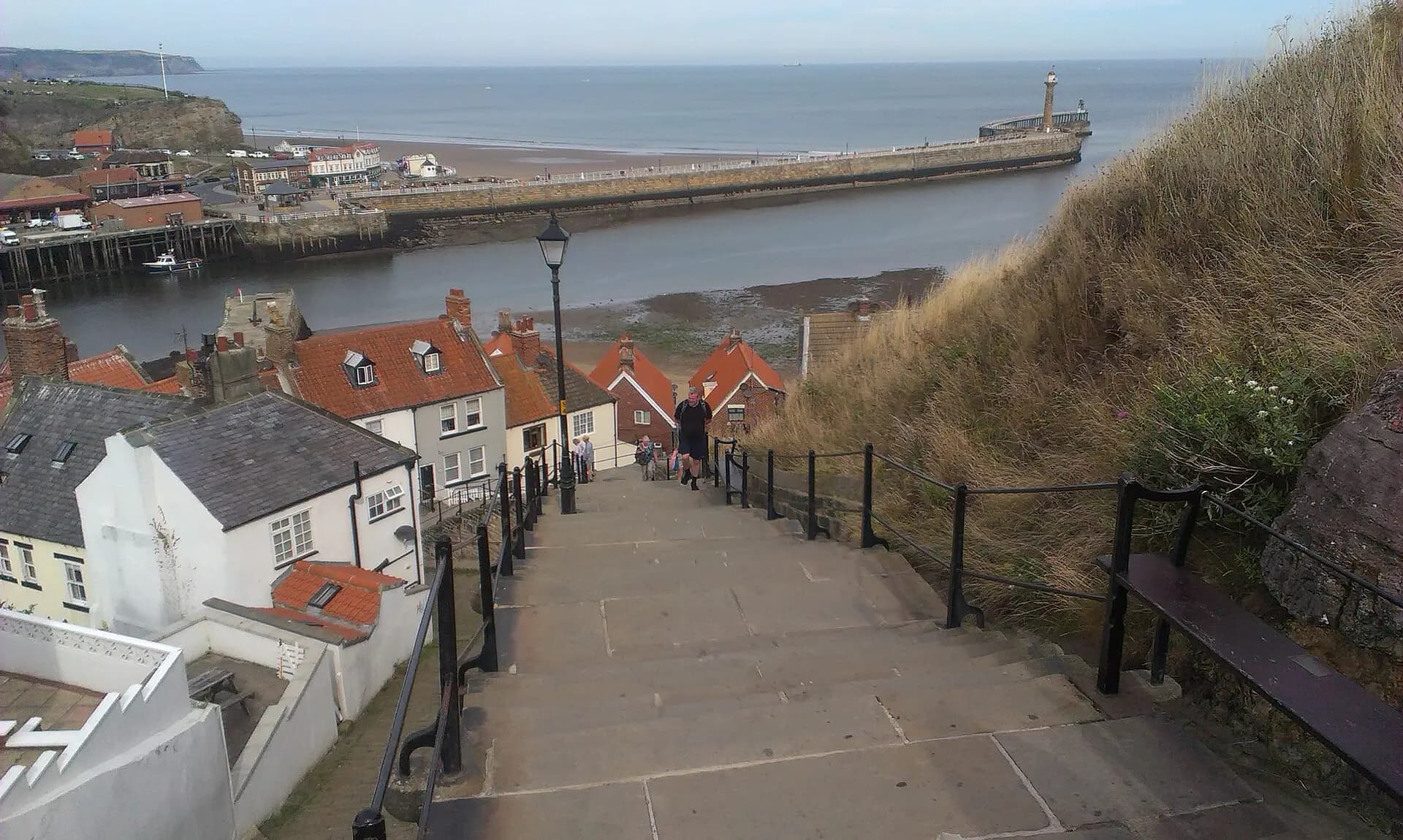
Winter here is the version of Whitby that residents get. The Captain Cook Memorial Museum closes from December until February half term, Whitby Museum keeps its shorter week, and a number of the smaller Church Street shops take a break, so check before making a specific trip for one place. What stays open is the good part: the fish and chip restaurants, the pubs on Church Street with the fire on, and the abbey headland in flat winter light with nobody else on it. The North Sea wind on the East Cliff in January is not a metaphor, and the 199 steps are genuinely slippery in frost, so take the road up rather than the stairs if the weather has turned. Rail services on the Esk Valley line thin out further in winter, so a car or the coastal bus is the more reliable way in.