Drink
York Gin
York's own distillery: an awarded shop at 12 Pavement with free tasters and a refill station, plus gin school sessions at Middletons Hotel.
Known for: York Gin London Dry
Hours: Shop daily 10:30-17:30.
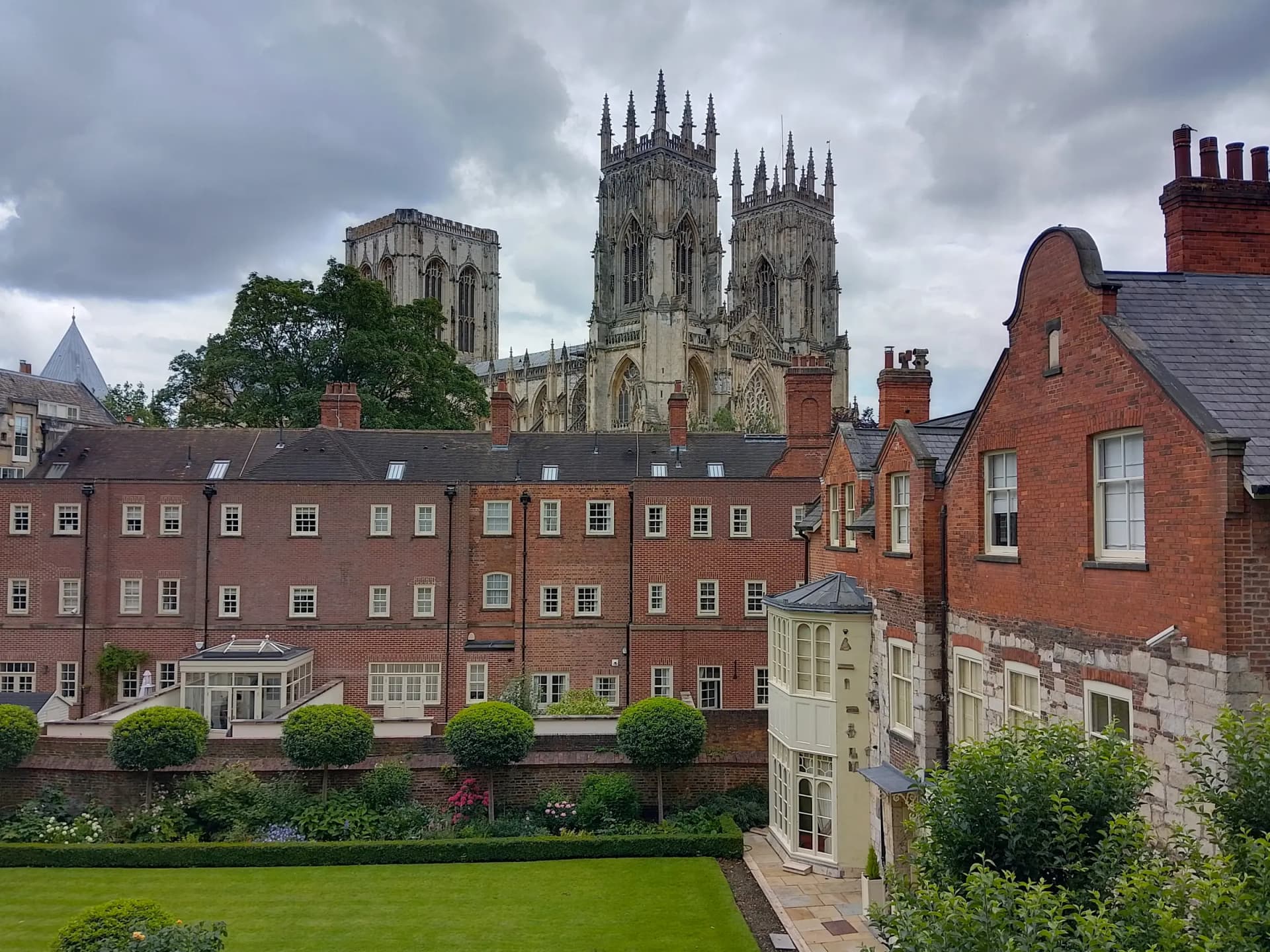
Everything you need to know before you head out: weather, what to pack, the best seasons, and useful links.
Half-day highlights, full-day explorer, rainy day plan, and weekend escape: all mapped out step by step.
York sits inland in the Vale of York, a broad flat plain between the Pennines and the Wolds, so it is drier than the west of Britain and a touch more continental: warm summer days, cold clear winter snaps, and morning mists off the two rivers in autumn. The city's defining weather story is water from elsewhere, since heavy rain on the Dales and Moors comes down the Ouse days later, and riverside paths and cellars around King's Staith flood most winters.
Local producers, markets, and makers worth a stop before you leave York.
York's own distillery: an awarded shop at 12 Pavement with free tasters and a refill station, plus gin school sessions at Middletons Hotel.
Known for: York Gin London Dry
Hours: Shop daily 10:30-17:30.
A working chocolate factory, cafe and shop on Castlegate: single-origin bars made on site and daily bookable workshops.
Known for: Single-origin chocolate bars made on site
Hours: Daily 09:00-17:00.
York's flagship craft brewery on Walmgate: 40-tap beer hall, riverside garden on the Foss, weekly tours and YUZU street food.
Known for: Fresh-hopped and fruited craft beers from the Walmgate brewhouse
Hours: Beer hall daily 12:00-23:00; taproom Mon-Thu 16:00-23:00, Fri-Sun 12:00-23:00.
Daffodil season on the wall ramparts is a genuine local event, the Museum Gardens fill on the first warm weekends, and the racecourse opens its season in May before the summer crowds build.
Spring is when York looks after the people who live here. The grass banks under the city walls turn briefly gold with daffodils, planted in their thousands along the ramparts, and walking the circuit from Bootham Bar in late March or April is the prettiest free thing the city does all year. The Museum Gardens come into bloom around the ruins of St Mary's Abbey, and the first meetings of the flat racing season at the Knavesmire in May bring the racecourse to life without the full Ebor-week crush. It is also a sensible season for the big indoor sights: the Minster, the Castle Museum and Jorvik are all far easier to book before half-term and the summer holidays arrive.
Peak season. The Shambles and Stonegate get properly crowded by late morning, so walk the walls or the snickelways early, get on the river, and book the destination restaurants well ahead.
Summer York is busy in a way that surprises people who think of it as a sleepy heritage town; the Shambles by midday is shoulder to shoulder. The trick is timing and edges: walk the walls or the Shambles before 10am, then spend the crowded middle of the day on the river with a cruise from King's Staith, in the cool of the Minster, or out at the free National Railway Museum, which absorbs crowds better than the medieval streets do. Evenings are the reward, with long light on the Ouse, beer gardens along the river, and the ghost tours setting off as the streets finally empty. Roots and Skosh both need booking well ahead in high summer, and Ebor week in August fills the whole city, so book accommodation months out if your visit touches it.
The Food and Drink Festival takes over Parliament Street for ten days in September, the crowds thin after half-term, and the chocolate and museum side of the city suits the shortening days.
Autumn opens with the York Food and Drink Festival, ten days across Parliament Street and the city in late September that play to the city's real strength, since Yorkshire's producers turn up in force and the restaurants run festival menus. After it ends the city exhales: October and early November are quieter, mistier and arguably York at its most atmospheric, when an evening ghost walk through the snickelways feels right rather than staged. It is the season to take the indoor city seriously, the Minster in low light, the Castle Museum's Victorian street, the chocolate story the city too rarely brags about, and to watch the river, because autumn rain upstream is when the Ouse starts testing the cellar doors on King's Staith.
The St Nicholas Fair runs from mid-November to just before Christmas and is the busiest the city gets outside Ebor week; January and February are the quiet, local months, ending with the Viking Festival in February.
Winter splits in two. From mid-November to the last posting date the St Nicholas Fair fills Parliament Street and St Sampson's Square with alpine chalets, and the city is as busy as August; book beds early and expect queues at Bettys. Then January arrives and York goes back to the locals: quiet pubs with fires, the Minster almost empty at evensong, cheap-as-it-gets hotel rates, and the kind of cold, clear days that suit a walls walk with a hot chocolate at the end. February ends the quiet season with the Jorvik Viking Festival, when re-enactors camp in the city and the whole place leans into its Norse past for a week. The river floods most winters, which locals treat as routine; the King's Arms on King's Staith even marks the high-water lines on its wall.