About York
The history, geography, and character of York.
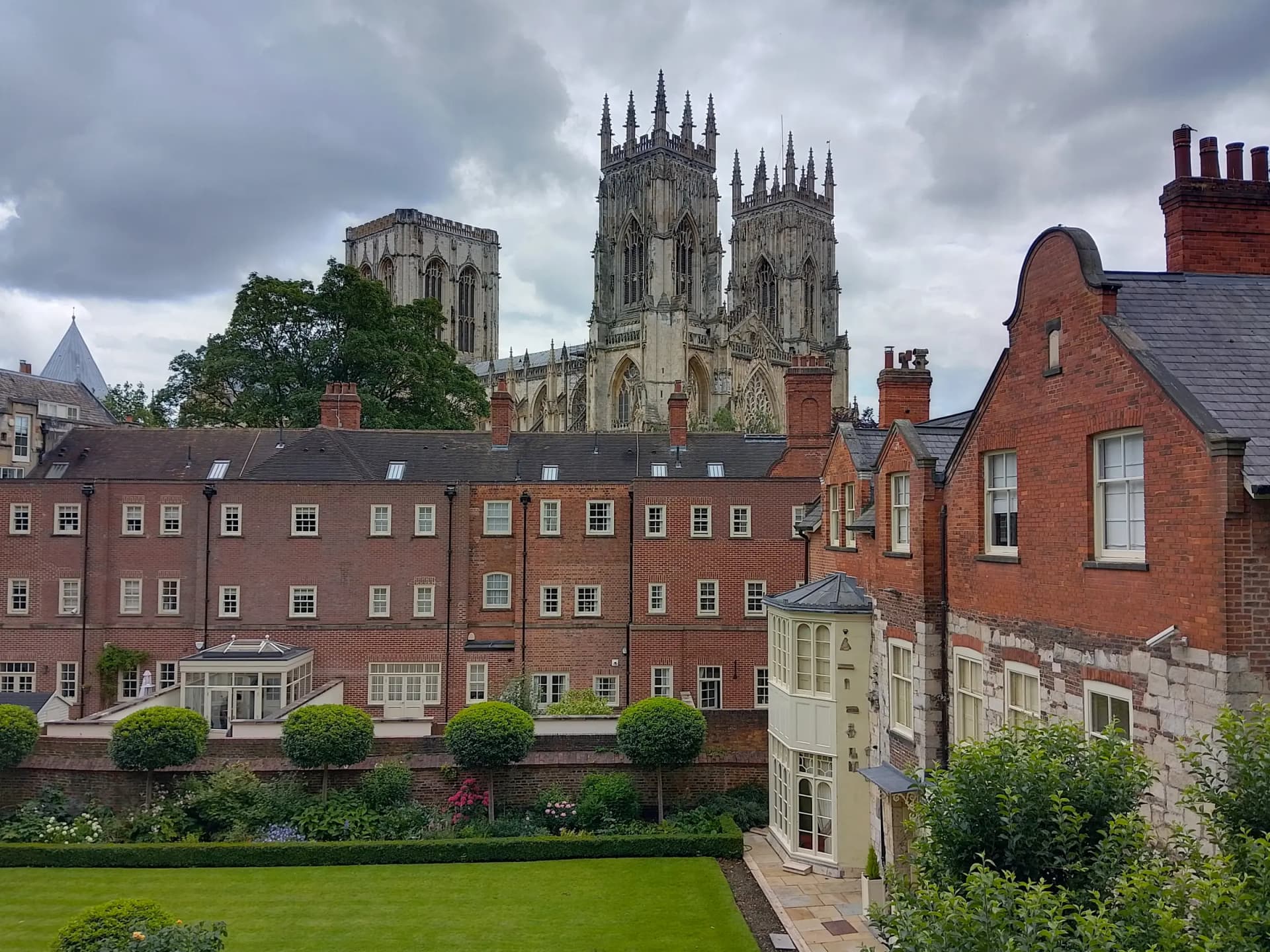
York has been a capital of somewhere for most of two thousand years, and the layers are all still on show. The Romans founded Eboracum in AD 71 as the fortress of the Ninth Legion, and Constantine the Great was proclaimed emperor here in AD 306; the Multangular Tower in Museum Gardens still stands from that fortress, and the Undercroft of the Minster walks you down through the Roman headquarters building itself. The Vikings took the city in 866 and made it Jorvik, the trading capital of the Danelaw; the waterlogged ground under Coppergate preserved their streets and workshops so completely that the 1976-81 dig transformed public understanding of the Vikings. The medieval city built on top of both gave York the Minster, the largest Gothic cathedral in northern Europe, finished in 1472, and the longest circuit of town walls in England, still walkable for 3.4km. Then the modern city added two more identities: railway capital of the north under George Hudson, with the free National Railway Museum keeping the world-record-holding Mallard, and England's chocolate city, where the Quaker firms of Rowntree and Terry invented the KitKat and the Chocolate Orange. Around 200,000 people live in the wider city today, and the walled centre is small enough to cross on foot in twenty minutes.
History & Heritage
Highlights
The Minster, northern Europe's largest Gothic cathedral, with a 275-step tower climb and free-entry evensong; the free 3.4km Bar Walls circuit, the longest town walls in England, past all four medieval gateways; the Shambles, the overhanging medieval butchers' street, with the daily 75-stall Shambles Market beside it; the free National Railway Museum with Mallard and a Shinkansen; Jorvik Viking Centre on the exact Coppergate dig site; Clifford's Tower's roof-deck view; a food scene running from Tommy Banks's Michelin-starred Roots to Bettys' queue and the tiny Edwardian Blue Bell; and a calendar anchored by the Ebor Festival in August, the Food and Drink Festival in September, the St Nicholas Fair before Christmas and the Viking Festival in February.
Streets are gates, gates are bars
The local saying goes that in York the streets are called gates, the gates are called bars, and the bars are called pubs, and it is literally true. "Gate" comes from the Old Norse gata, street, so Stonegate, Fossgate, Coppergate and Goodramgate are Viking street names still in daily use; the gateways in the walls are the Bars, Bootham, Monk, Walmgate and Micklegate; and the pub stock inside the walls runs from a medieval hall on Stonegate to the tiny Edwardian Blue Bell on Fossgate. Add the snickelways, the web of narrow medieval alleys named and mapped by local author Mark Jones in 1983, and the street plan itself becomes the city's best free attraction.
Wildlife & Nature
Mammals
Otters on the city's rivers
Otters have returned to the Ouse and Foss as water quality improved and are occasionally seen even inside the city, usually at dawn or dusk. An unpredictable sighting rather than a promised one.
Dawn and dusk, year-round
Birdlife
Peregrine falcons on York Minster
Peregrines have made the Minster's towers their crag for years, and their calls carry over Dean's Park; watch for them hunting over the city centre and Museum Gardens.
year-round; most active and vocal in spring
Kingfishers and herons along the Ouse and Foss
Both rivers hold kingfishers and grey herons surprisingly close to the centre; the quieter Foss around Rowntree Park and the riverside path toward Fulford are the reliable stretches, and river-cruise commentaries point them out.
Early morning, year-round
Flora
Daffodils on the wall ramparts
The grassy banks below the city walls turn gold with massed daffodils for a few weeks each spring, a planting tradition that has become one of York's signature sights.
Late March to mid-April
Tansy and the tansy beetle on the Ouse banks
The riverbanks around York are the national stronghold of the tansy beetle, an iridescent green leaf beetle now so rare it is mostly confined to about 45km of the Ouse corridor, living on stands of its food plant, tansy. Local conservation groups plant and protect tansy along the riverside paths.
Summer, on tansy stands along the riverside paths