Drink
Dungarvan Brewing Company
Dungarvan's craft brewery, makers of Black Rock Stout and Copper Coast Red.
Known for: Black Rock Irish Stout
Everything you need to know before you head out: weather, what to pack, the best seasons, and useful links.
Half-day highlights, full-day explorer, rainy day plan, and weekend escape: all mapped out step by step.
Dungarvan has a mild maritime climate on the south Waterford coast, sheltered somewhat by the Comeragh Mountains to the north. Expect changeable, breezy weather year-round. Temperatures range from 4-9°C in winter to 14-20°C in summer.
Local producers, markets, and makers worth a stop before you leave Dungarvan.
Dungarvan's craft brewery, makers of Black Rock Stout and Copper Coast Red.
Known for: Black Rock Irish Stout
Main Street sourdough bakery, naturally leavened breads and pastries.
Known for: Naturally leavened sourdough bread
West Waterford cheese, bread, eggs and honey
Thursday producers' market in Grattan Square, running since 2004.
Known for: West Waterford cheese, bread, eggs and honey
Hours: Thursdays 9:30-14:00
Spring belongs to the food festival in late April; book accommodation and tables early, and ride the Greenway before the summer crowds arrive.
Spring is when Dungarvan gets its first big crowd of the year, and it has a date on it: the Waterford Festival of Food, held across town and west Waterford every April, with 2026 landing around 24 to 26 April. Over 150 events run across the long weekend, and on the Sunday, Grattan Square is given over entirely to a vast outdoor producers' market with a stage and music all day. It is the single best weekend to see the food town firing on all cylinders, but it books out, so plan accommodation early. Beyond the festival, spring is the smart time to ride the Greenway, before the summer peak fills the trail: the surface is dry, the days are lengthening, and you can have the Durrow tunnel almost to yourself on a weekday. The open-water swimmers start appearing off Ballinacourty and Clonea around now, in cold water and good spirits. The castle's free-tour season opens roughly in May, so a late-spring visit catches it. Book your festival-weekend table the moment dates are confirmed.
Peak season for swimming and the Greenway; book bikes ahead, plan water around the tide, and start early to beat the crowds.
Summer is the bay's season, and Dungarvan leans into it. Clonea Strand, the long Blue Flag beach about 5km east, gets its lifeguards and its crowds, and it is the default for a proper swim, a bit of surf, and a day on the sand. The Cunnigar becomes a daily walk for half the town, best timed to a falling tide when the sand stretches right out into the bay past the oyster beds. The Greenway is at its busiest now, so hire bikes ahead and expect company on the trail, especially over the Durrow-to-Dungarvan coastal stretch and bank holiday weekends; an early start beats the heat and the rush. This is also the time to make the An Rinn loop and finish at Helvick Head with the bay laid out below you, and to take advantage of the long evenings for a late dinner after a day outdoors. The Thursday market in Grattan Square is in full swing for picnic supplies. Tides matter more than the clock for everything involving water, so check them and plan around them. Sunscreen and a windbreak, not an umbrella, are the right summer kit here.
Quieter, cheaper, and arguably the prettiest season; the Comeragh colour and emptier Greenway are the draw, and tables are easier to get.
Autumn quiets Dungarvan down, and a lot of people who know it think this is the best time to come. The summer crowds thin out, the Greenway empties, and the trail through the river valleys and over the viaducts takes on real colour as the trees turn. The Comeragh Mountains behind An Rinn are at their most dramatic now, worth the drive out to Helvick Head on a clear, cold day. The sea swimmers carry on later than you would expect, and the water is still relatively warm into October even as the air sharpens. The town's restaurants are easier to get into than at festival time, which makes autumn a quietly good window to eat your way around, including a table at the Tannery before its final restaurant year runs out. Storms start rolling in off the bay, so pack for weather and keep an eye on conditions before any beach or water plans. The castle's free-tour season winds down around September, so a very early-autumn visit still catches it. The Thursday market keeps going year-round, smaller now but still local. Days shorten quickly, so front-load anything outdoors into the morning.
Low season and weather-dependent, but the bay, the empty Greenway, the winter swimmers, and the pubs make a cosy off-season break; always check the forecast.
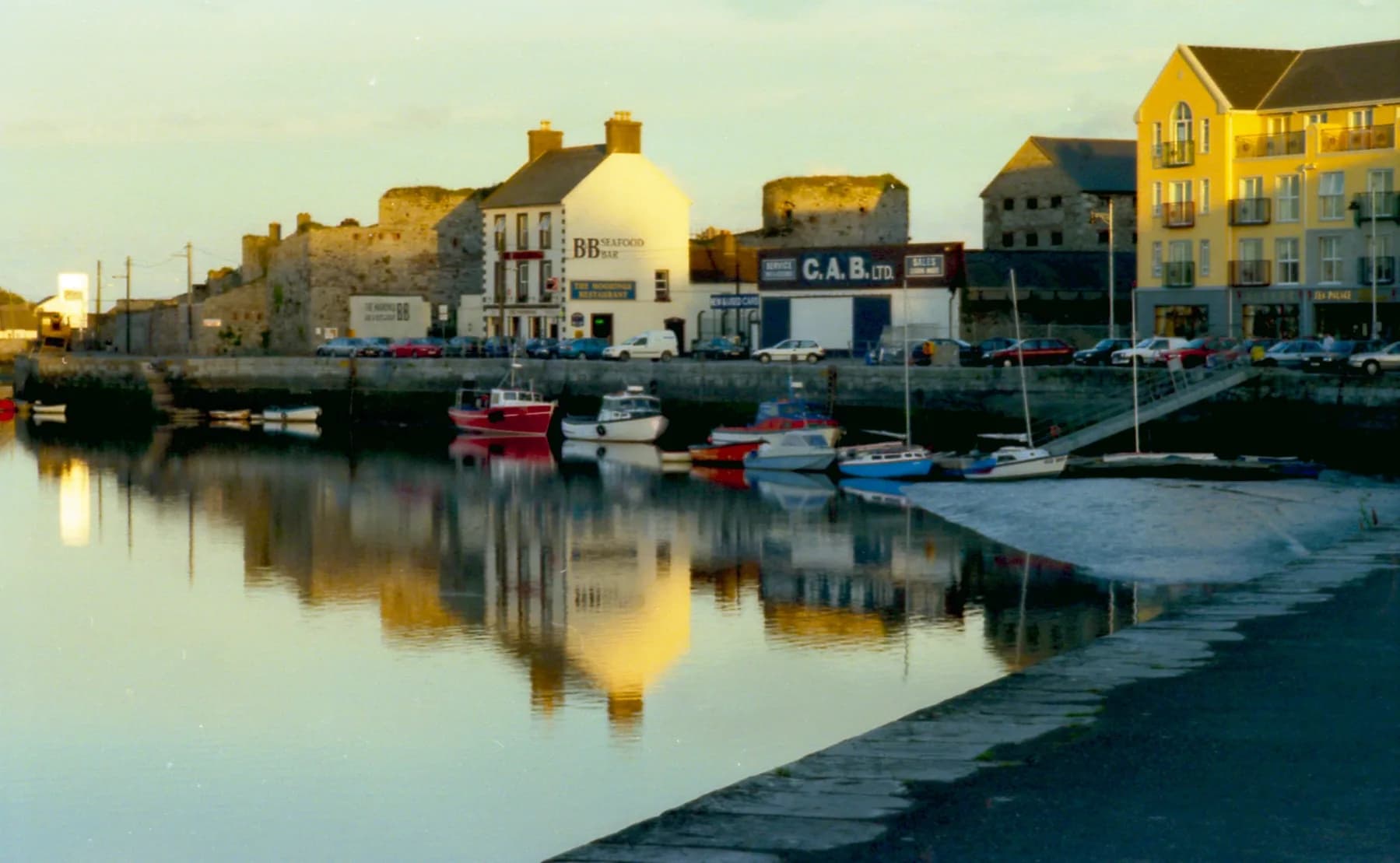
Winter strips Dungarvan back to what it is underneath the tourism: a working harbour town that gets on with its life around a wide, grey, often beautiful bay. The Greenway is open and the walkers have it largely to themselves, wrapped up against the wind off the coast, and a short out-and-back to the Durrow tunnel is a bracing way to spend a cold morning. A surprising number of locals keep swimming through the winter off Ballinacourty and Clonea, the hardy core of the open-water crowd, and there are usually a few in the water on any reasonably calm day. The real winter pleasure here is the indoor one: the town's traditional pubs come into their own when it is dark by five, and Dungarvan has a genuinely good run of them, with music in several at weekends and a pint of locally brewed beer to hand. The Thursday market still fills part of Grattan Square. Days are short and storms frequent, so check the forecast before any water or beach plan and have a warm pub as plan B. The bay at dusk in winter, with the lights of the town reflected and the Cunnigar a dark line across the water, is the image of the place most visitors miss.