SpringMarch - May
TedFest, the Aran Celtic Music Festival and the Ceili Weekend all cluster into March, the island's liveliest spring stretch outside summer, and Aran Island Ferries steps up from its winter timetable through April and May.
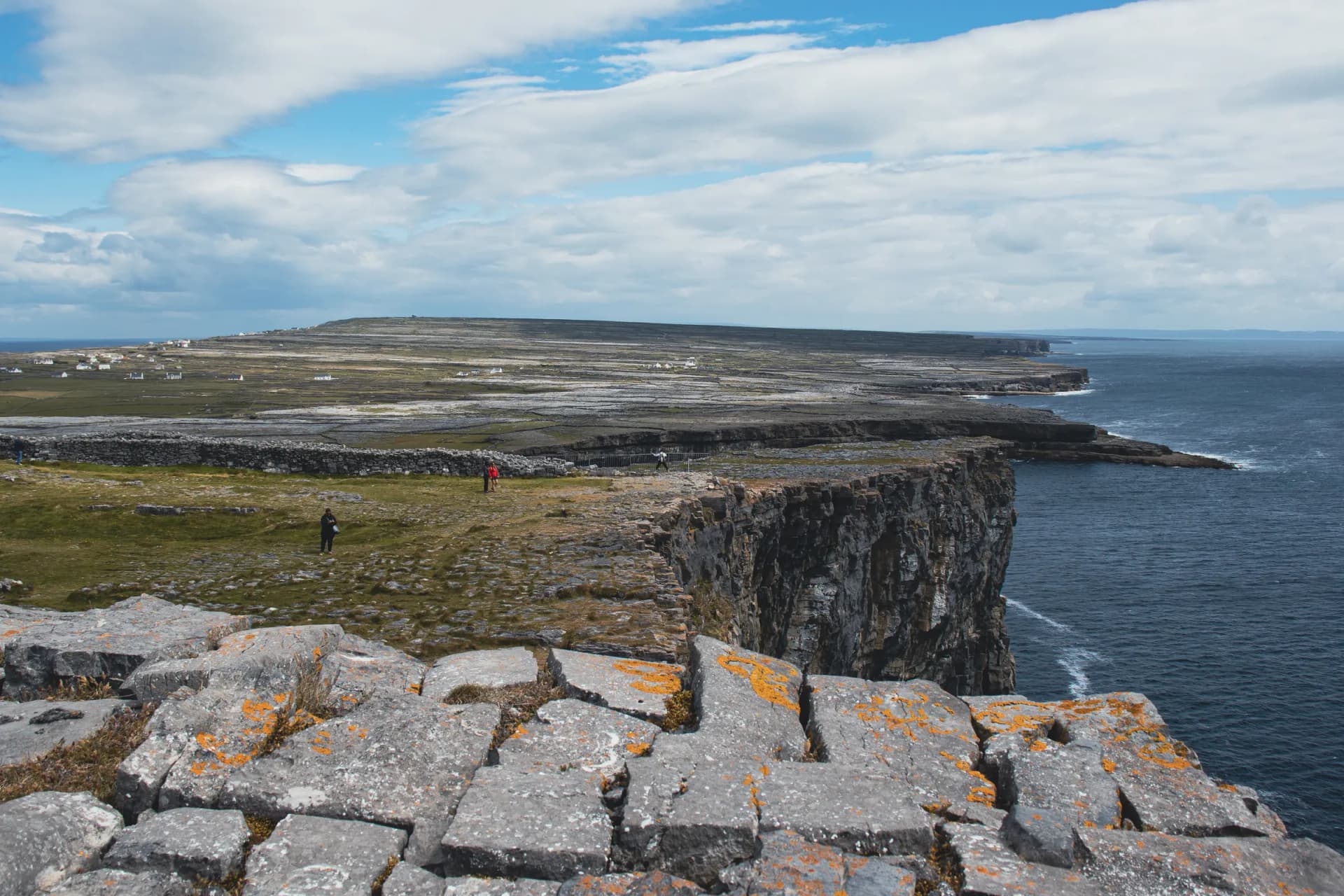
Spring on Inis Mór starts quiet and gets loud fast. Ferry sailings from Rossaveal expand from the single daily winter crossing to a fuller spring timetable through April and May, and the Doolin seasonal service resumes around late February. Early March is genuinely the island's busiest single week outside summer, when TedFest fills Cill Rónáin's limited beds for the Father Ted festival, the Árann Ceilteach traditional music weekend runs largely out of Tí Joe Watty's, and the Aran Islands Hotel hosts its Ceili Weekend. By April the crowds thin and the wildflowers start on the limestone pavement, giving Dún Aonghasa and the coast road toward Cill Mhuirbhigh some of their quietest, clearest days of the year. Pack for wind regardless of the calendar; the island sits fully exposed to the Atlantic.
SummerJune - August
Peak season: up to four Rossaveal sailings a day in July and August plus the full Doolin timetable, every bike-hire desk at the pier working flat out, and Kilmurvy's Blue Flag water at its best. Book a bike and a bed ahead.
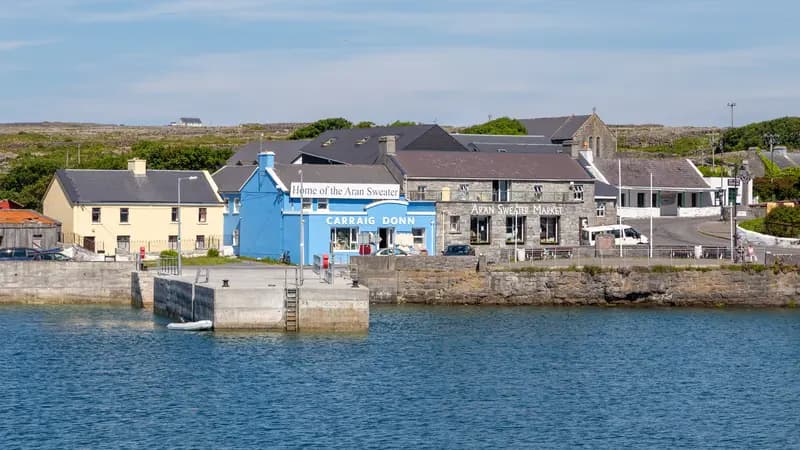
June to August is Inis Mór at full capacity. Aran Island Ferries runs up to four sailings a day from Rossaveal, Doolin Ferry Co. adds three more from Clare, and day-trippers off both routes fill Cill Rónáin's pier road by mid-morning. This is also when the island is at its best: Kilmurvy's Blue Flag beach is swimmable, the coast road out to Dún Aonghasa is at its most reliably dry underfoot, and the evening light on the cliffs runs long into a bright night. The trade-off is real: bike-hire desks and the handful of beds on the island can sell out on a fine July day, so book accommodation and, if you want one, a bike or a trap tour, ahead rather than assuming you will find one at the pier. Arriving on an early sailing and heading straight for the fort beats the midday crowds at Dún Aonghasa's visitor centre.
AutumnSeptember - November
Féile na mBád Árann, the revived Galway Hooker regatta, brings traditional sail racing back to the harbour in late summer. From September the day-trip crowds thin and the Doolin ferry's season starts winding down toward its early-November finish.
Late August brings Féile na mBád Árann, a Galway Hooker and currach regatta off Cill Rónáin harbour that was revived after a lapse of several years, racing traditional turf boats that once supplied the islands from Connemara, with a skippers' dinner afterwards in Tí Joe Watty's. Beyond that one weekend, autumn is Inis Mór easing back to its working pace: the day-trip ferries thin from September, the Doolin seasonal crossing runs down toward its early-November finish, and Dún Aonghasa's opening hours contract in October ahead of the winter schedule. It is a good stretch for the quieter sites, Dún Dúchathair's cliff-edge fort and the Wormhole near Gort na gCapall, without the midday coach crowds, though the Atlantic weather turns properly changeable and a calm crossing is no longer a given.
WinterDecember - February
The Doolin ferry stops running for the winter; Aran Island Ferries keeps a single daily Rossaveal sailing running year-round, weather allowing. A small, quiet, working-island season rather than a tourist one.
Winter strips Inis Mór back to its resident population and its working rhythm. The Doolin seasonal ferry does not run at all between early November and late February, so Rossaveal, with its single daily winter sailing, becomes the only way on or off the island; sailings are cancelled outright in bad weather, so build slack into any winter visit. Dún Aonghasa keeps shorter winter hours and closes over Christmas week. Most restaurants and cafés outside Cill Rónáin's core pubs go quiet or shut for the season, and the pony-trap and minibus operators largely stand down until spring. What is left is genuinely the island as islanders live it: bare limestone under winter light, empty coast roads, and a couple of pubs with a fire lit. It suits a traveller who wants Inis Mór without the crowds far more than one chasing a full itinerary.