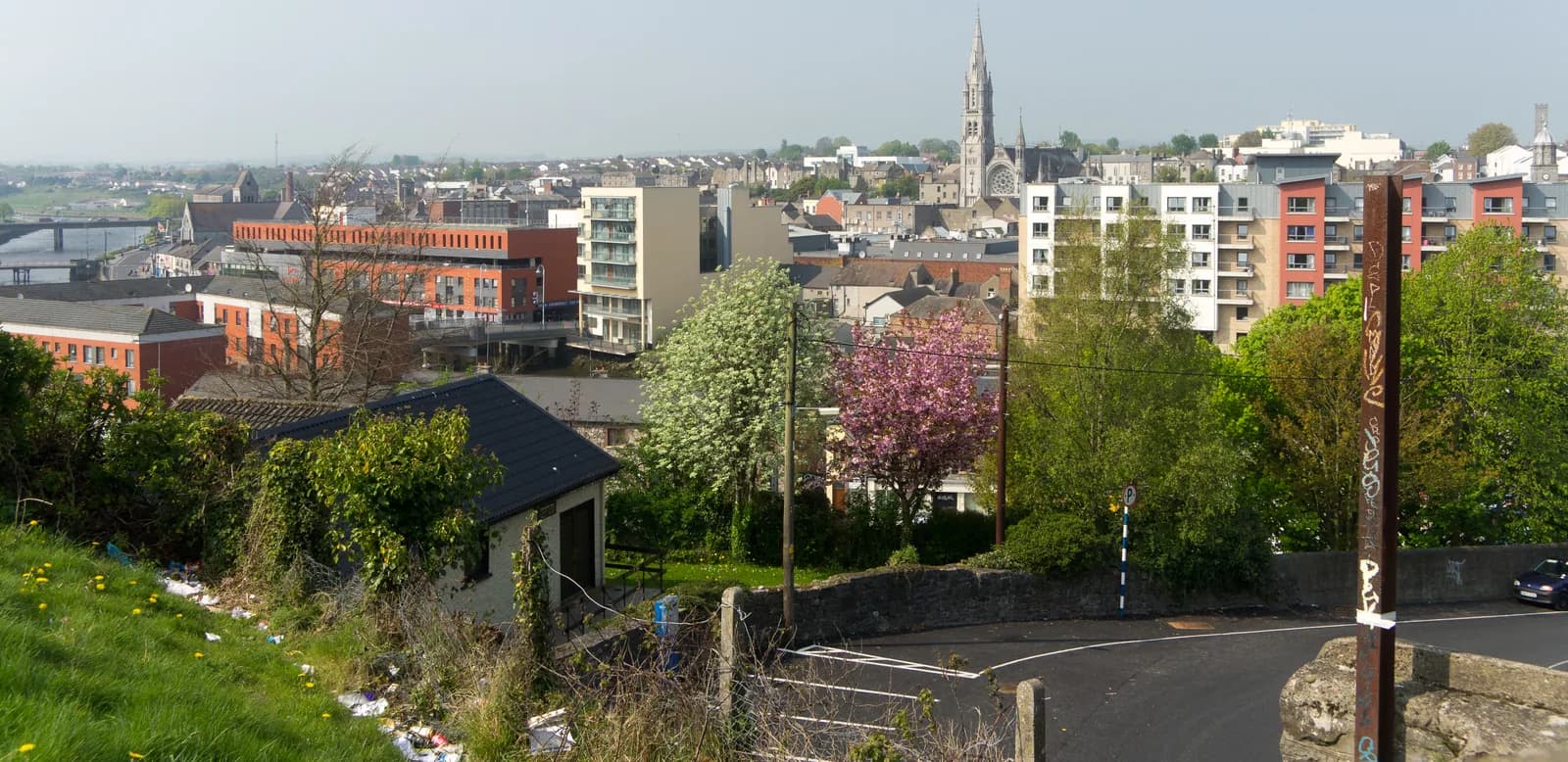
Two Days in Drogheda: How to Plan It
A practical two-day plan for Drogheda that gets both banks of the Boyne, the medieval town on foot, and the Boyne Valley upriver, with the timings that actually constrain the day.
Drogheda rewards two days more than one, and the reason is geography rather than a long list of attractions. The town sits on both banks of the River Boyne at the last bridging point before the sea, the medieval streets and the shops are on the north side, and the railway station, the bus station, Scotch Hall and Millmount are all on the south. A single afternoon means picking a bank. Two days means you get both, plus the Boyne Valley upriver, which is what most people actually travelled for.
Arriving, and where to sleep
Coming from Dublin, the train is the easy answer. Drogheda MacBride is on the Dublin to Belfast line, the Northern Commuter runs frequently, and Dublin Connolly is typically well under an hour away. It is a through-station rather than a terminus, so check the direction on the board rather than assuming everything is heading south. The station is on the south bank, roughly fifteen minutes on foot from the town centre across the river and mostly downhill on the way in. Bus Eireann's 101 runs 24 hours a day from Dublin city centre via Dublin Airport to Drogheda Bus Station on Donore Road, which makes the airport connection genuinely simple without a car.
For a base, Scholars Townhouse Hotel off King Street puts you on the north side within five minutes' walk of West Street, St Laurence's Gate and the shrine, in a red-brick Victorian building that spent its first century as a Christian Brothers monastery. The d hotel at Scotch Hall is the south-bank alternative, right on the river with the boardwalk outside, the shopping centre attached and the bus station close by. If you are driving and want space, the Boyne Valley Hotel sits in sixteen acres on the Dublin Road with a pool, though at the time of writing it is running bed and breakfast only while it refurbishes, so evening dining is not available there.
Day one: the town on foot
Give the first day to Drogheda itself and do not use the car. Start on St Laurence Street. Highlanes Gallery occupies the former Franciscan church of St Francis, holds the Drogheda Municipal Art Collection of more than a hundred works, and is free to walk into, Tuesday to Saturday, 10:30am to 5pm. The Five Good Things cafe shares the building and has its own door onto the street, which makes lunch a matter of stepping sideways rather than planning. Two minutes further down the same street is St Laurence's Gate, the 13th-century barbican with traffic still passing under the arch, and the single most striking piece of what was one of the largest walled towns in medieval Ireland.
Walk west from there through Laurence Street into West Street, past the Tholsel of 1770 at the top of Shop Street, which now houses the tourist office and is where to pick up the free Drogheda Walks map. St Peter's, the tall Gothic church halfway along West Street, holds the national shrine of St Oliver Plunkett, and the preserved head of the archbishop who was executed at Tyburn in 1681 is in a gilded case beside the north aisle, along with other relics and the door of his cell in Newgate. It is a working parish church with daily Mass, so the signs asking for quiet are meant. Be aware that Drogheda has two St Peter's churches: this Catholic one on West Street, and the Church of Ireland one on the hill off Magdalene Street, whose predecessor burned during the siege of 1649. Name the street when you ask directions.
Finish the day by crossing the river and climbing Congress Avenue to Millmount. The climb is short and steep. At the top is the Anglo-Norman mound raised by Hugh de Lacy before 1186, the Martello tower on it, and the Old Drogheda Society's museum around its base, with guild banners, an industrial room and a folk kitchen. Timing matters here more than anywhere else in the town: the tower closes at 4:30pm and last tours run an hour before the museum shuts. Admission is €6 for an adult, €3 for a child, student or over-65, and €12 for a family. The view from the top, straight down the Boyne to the viaduct, is the thing that makes the whole shape of the place clear.
Day two: upriver
The second day belongs to the Boyne Valley, and it needs one decision made weeks in advance. Newgrange cannot be driven to. Every visit runs through the Bru na Boinne Visitor Centre at Donore, about 7km west in Co. Meath, by shuttle bus and guided tour, and every ticket has to be booked ahead. The booking window is thirty days between 1 April and 1 November and seven days the rest of the year, with tickets released online at midnight Irish time. If you have tickets, give it the morning. If you do not, the visitor centre exhibition alone needs no booking and is worth an hour.
Either way, put the Battle of the Boyne site at Oldbridge into the afternoon. It is closer, about 4km upriver on the Meath bank, and it needs no advance planning. The grounds, the walled garden and the battlefield walks are free, and at present the exhibition is free too from the stable yard while Oldbridge House is closed. This is where William III and James II met on 1 July 1690 with 36,000 men against 25,000.
Dinner, and the pint
Book D'Vine on Dyer Street for one of the two evenings. It has been the town's best-known restaurant since 2006, it is Mediterranean in style and serious about wine, and its last bookings are earlier than you might expect, so do not leave it until nine. Scholars is the other option and the more formal one. Afterwards, walk up to Clarke's on Peter Street, which sells drink and conversation and nothing else, and has the original spirit-grocer shopfront to prove how long it has been at it.
Keep Reading
Eating and Drinking in Drogheda
Where to eat and drink in a town of forty thousand people rather than a tourist stop: the two rooms to book, the daytime addresses, the pubs, and what Drogheda still makes.
WalkingWalking Medieval Drogheda: The Walls, the Gate and Millmount
A four-kilometre circuit through one of medieval Ireland's largest walled towns, from St Laurence's Gate over the river to Millmount, with what survives and what happened where.
Planning a trip?
Explore restaurants, activities, accommodation, and more.