House-made pâtés and terrines, alongside French farmhouse cheeses
Food
On the Pig's Back
English Market deli for French and Irish farmhouse cheese and charcuterie.
Known for: House-made pâtés and terrines, alongside French farmhouse cheeses
Everything you need to know before you head out: weather, what to pack, the best seasons, and useful links.
Half-day highlights, full-day explorer, rainy day plan, and weekend escape: all mapped out step by step.
Cork has a mild, damp maritime climate. The city sits inland on the Lee estuary, so it is sheltered from the worst Atlantic wind but sees frequent rain year-round. Temperatures range from around 4-9C in winter to 14-20C in summer.
Local producers, markets, and makers worth a stop before you leave Cork.
House-made pâtés and terrines, alongside French farmhouse cheeses
English Market deli for French and Irish farmhouse cheese and charcuterie.
Known for: House-made pâtés and terrines, alongside French farmhouse cheeses
Red Earl whiskey sausage
Fourth-generation Cork sausage maker with 50+ varieties in the English Market.
Known for: Red Earl whiskey sausage
Organic sourdough breads
English Market bakery with one of Ireland's widest ranges of handmade bread.
Known for: Organic sourdough breads
Marinated olives and extra-virgin olive oils
English Market institution for olives, oils and Mediterranean deli foods.
Known for: Marinated olives and extra-virgin olive oils
St Patrick's Festival builds to the parade on 17 March, and Cork World Book Fest takes late April.
Spring in Cork starts with the St Patrick's Festival, which runs for several days around the parade on 17 March from the city centre at 1pm. Late April brings Cork World Book Fest, a free literary festival run by the city libraries across the Central Library and Triskel Arts Centre. The indoor draws carry this stretch: the English Market, the museums at Fitzgerald Park and the City Gaol, the Glucksman at UCC. Days lengthen quickly, and by April the Marina walk out to Blackrock is back in play on a dry afternoon. Hotel rates are lower than the autumn festival peak, so spring is a good-value window for a city break.
Cork Midsummer Festival takes ten days of June across the city.
June belongs to the Cork Midsummer Festival, ten days of theatre, dance, music and street arts across around thirty venues, with a large free programme. The long evenings suit the Marina promenade and the walk out to Blackrock Castle, and the Shandon tower climb pays off best on a clear summer day. The English Market is busiest mid-morning; go early or wait until the lunch rush at the Farmgate Café eases. Cork sits inland on the Lee estuary, so summer days are mild rather than hot, and a light rain jacket earns its place in any month. Accommodation fills around the Midsummer weekends, so book ahead if you are timing a trip to the festival.
The Guinness Cork Jazz Festival packs the city over the October bank holiday. Book accommodation early.
Autumn in Cork is festival season. The Cork Folk Festival opens early October with trad sessions across the pubs, and the Guinness Cork Jazz Festival takes the October bank holiday weekend, the single biggest event in the city's calendar, with hundreds of musicians across dozens of venues and a free Music Trail through the pubs. That weekend is peak demand for hotels, so book well ahead or plan around it. Outside the festivals the light sharpens and the crowds thin, which makes the Marina walk and the Shandon view at their best. November brings the Cork International Film Festival, Ireland's oldest, across the city-centre screens.
Spiced beef, Tanora and the Holly Bough are the Cork Christmas. The city centre lights up from mid-November.
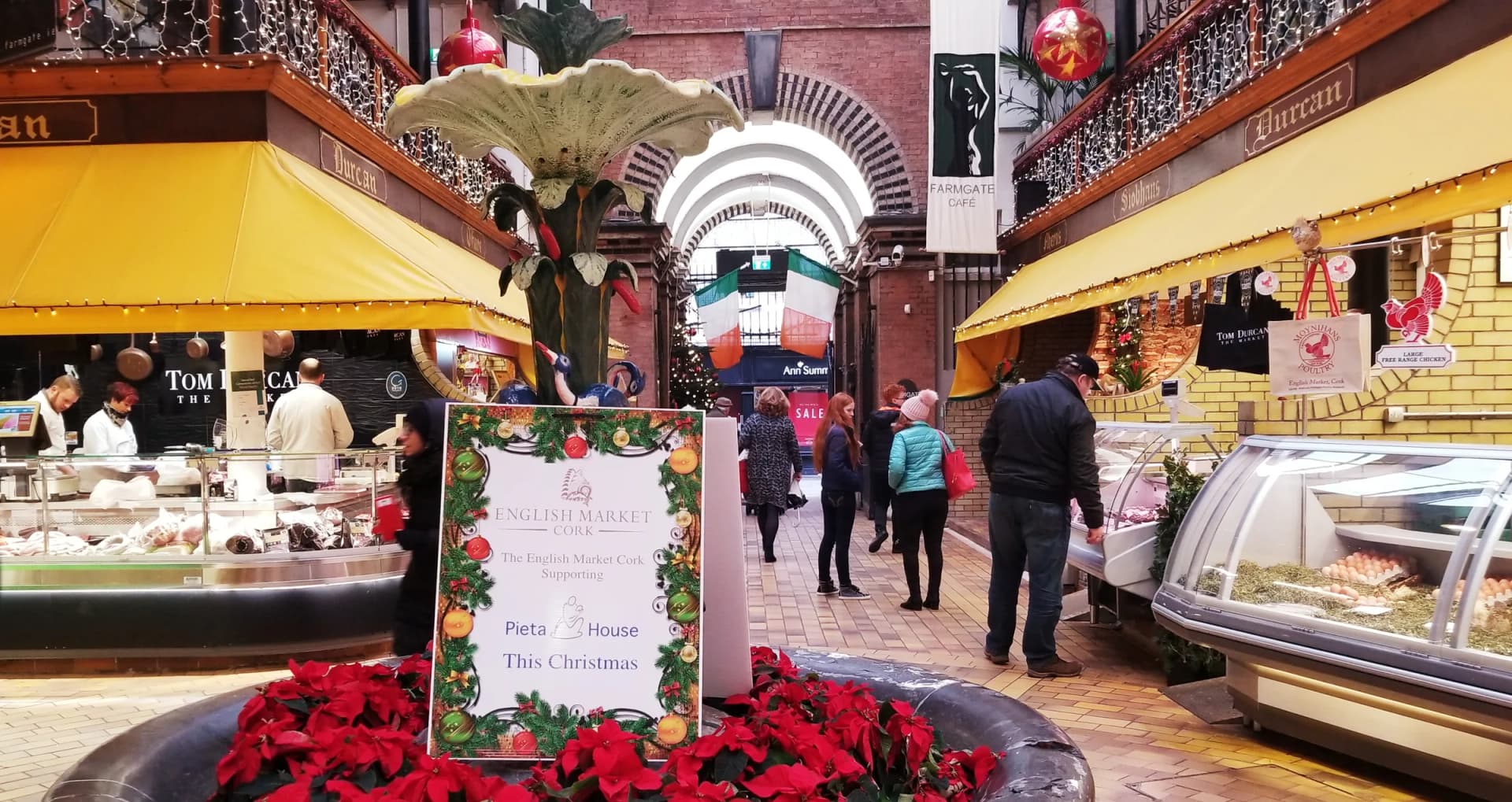
Winter is when Cork's indoor food culture earns its keep. The English Market does its busiest trade before Christmas, when spiced beef and the local tangerine drink Tanora sell hardest, and the Evening Echo's Holly Bough annual has marked the Cork Christmas since 1897. The city-centre Christmas programme lights up Grand Parade and Emmet Place from mid-November. Short days and frequent rain push you indoors, which is no hardship in a city this fond of its stout: the Franciscan Well brewpub and the city's pubs are the winter draw, alongside the museums and galleries. Pick a clear, crisp day for the Marina walk or the Shandon climb and dress for the wind off the river.
Check Met Eireann for the latest Cork forecast before you head out.
Met Eireann
Plan your train journey to Cork. Check live departures, fares, and route options on the national Irish Rail network.
Irish Rail
Plan your journey to Cork by train, bus, or car.
Transport for Ireland
Detailed transport options for reaching Cork by train, bus, car, taxi, or bicycle.
TravelPlan.guide