SpringMarch - May
The St Ives Food & Drink Festival runs on Porthminster Beach in mid-May, the town is markedly quieter than summer, and the light is often at its clearest before the summer haze sets in.
Spring is when St Ives shows its light at its best without the summer crowds. The turquoise water is still cold enough to keep casual swimmers out, but the clarity that drew the modernist painters here is often sharpest in April and May, before summer haze softens it. The St Ives Food & Drink Festival takes over Porthminster Beach in mid-May, billed as the UK's only beach food festival, with chef demonstrations and a food village against the sea. Tate St Ives and the Barbara Hepworth Museum are both comfortable, unhurried visits at this time of year, and Fore Street's galleries and studios are open without the queues that build by August.
SummerJune - August
Peak season. Porthmeor and Porthminster get genuinely busy, the St Ives Bay branch line runs its fullest timetable, and the town's narrow streets and limited car parks fill early. Book restaurant tables ahead and expect the harbour car parks to be full by mid-morning.
June to August is St Ives at its busiest and, for the water, at its best: Porthmeor's surf schools run full days, Porthminster's calmer sand suits families, and St Ives Boats' Seal Island trips run their fullest schedule from Smeaton's Pier. The trade-off is real crowding, both beaches fill by mid-morning in August and the town's handful of pay-and-display car parks go with them, so arriving by the St Ives Bay branch line from St Erth, or parking at the Lelant Saltings park-and-ride, beats trying to drive into town. Book a table at Porthminster Beach Café or Porthminster Kitchen well ahead, and treat an early swim at Porthmeor, before the crowds and the surf lessons arrive, as the best hour of a summer visit.
AutumnSeptember - November
St Ives September Festival fills the town with two weeks of music and arts from mid-September, and the coast path to Zennor is at its clearest and least crowded once the summer season eases.
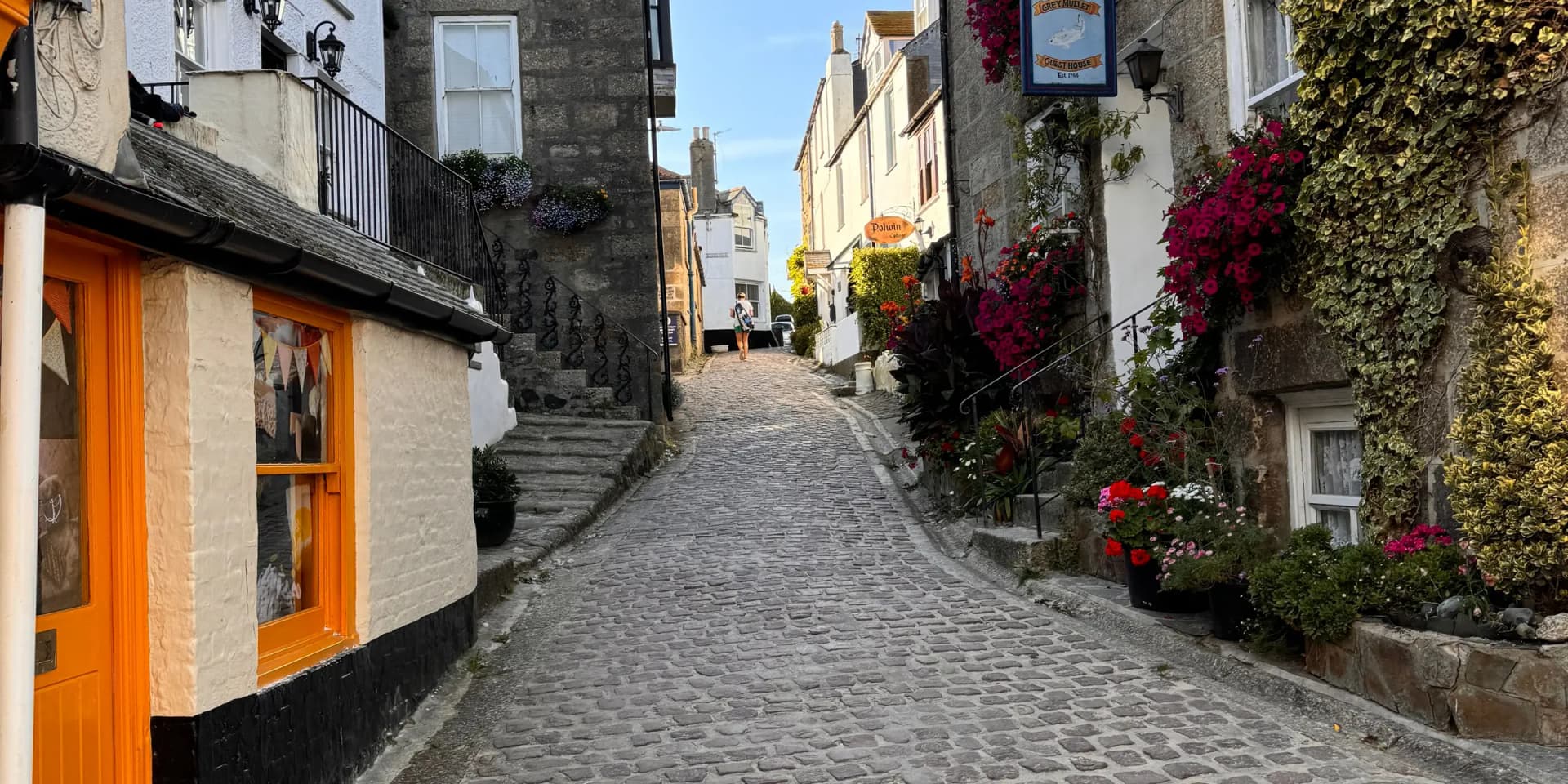
Autumn brings St Ives September Festival, a two-week programme of music, open studios and free Saturday street entertainment that has run since 1977 and turns the town properly cultural rather than just scenic. It is also the best stretch for the coast path west to Zennor: the gorse and heather along Clodgy Point and Zennor Head are still colourful into October, the path is drier than in winter, and the crowds that fill Porthmeor in August have thinned. St Ives Museum, seasonal and open only until the end of October, is worth catching before it closes for the winter, and the granite streets of Downalong are noticeably calmer for a slow wander.
WinterDecember - February
The St Ives Christmas lights switch-on brings a lantern procession and Santa's arrival by lifeboat in early December, and St Ives Feast, with the Mayor hurling a silver ball down to the beach, follows in February when the town is at its quietest.
Winter has two distinct moods. Early December brings the Christmas lights switch-on, a lantern procession along the Wharf and Fore Street with Santa arriving by lifeboat, a genuinely local, unstaged event rather than a manufactured winter market. Then, in February, comes St Ives Feast: a centuries-old custom marking the 1434 consecration of the parish church, where the Mayor hurls a sterling silver ball to the crowd on the beach and children carry it through town for a reward, followed by an evening rugby match. Both events fall when St Ives is at its emptiest and most local, the harbour pubs like the Sloop Inn are the better bet than any beach café, and a fire-lit afternoon with a pasty from St Ives Bakery suits the season better than a swim.