About St Ives
The history, geography, and character of St Ives.
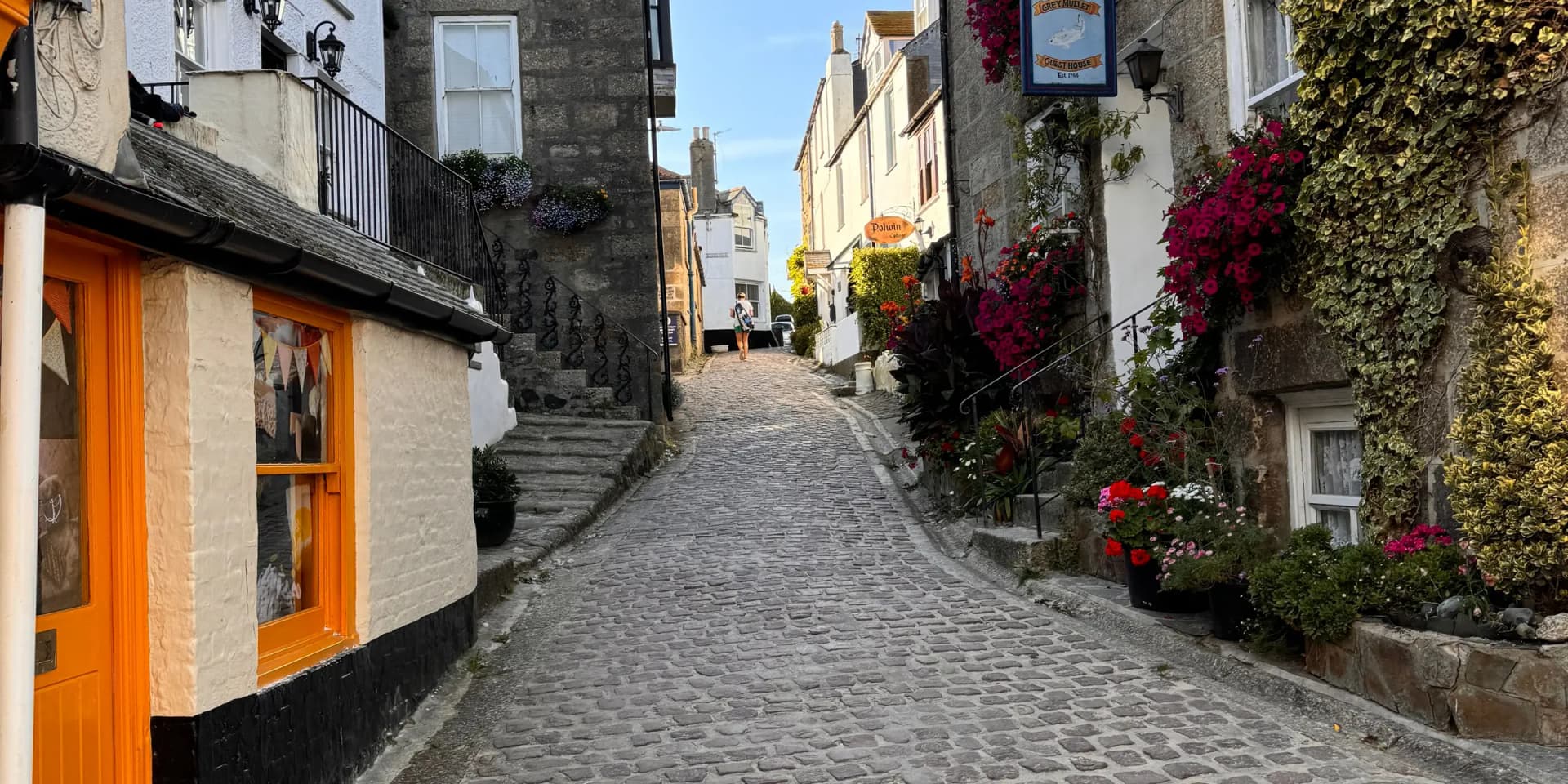
St Ives: a working Cornish harbour town that became Britain's best-known art colony. St Ives sits on a small peninsula at the western tip of Cornwall's north coast, its granite streets wrapped around a working fishing harbour on one side and three sandy, turquoise-watered beaches on the other.
History & Heritage
From fishing port to art colony
Fishing, pilchards especially, built St Ives through the nineteenth century. When the industry declined, cheap studio space and the town's unusually clear coastal light drew a wave of modernist artists from the 1920s onward, among them the potter Bernard Leach and, from 1939, the sculptor Barbara Hepworth and painter Ben Nicholson. The Leach Pottery, founded 1920, is the birthplace of British studio pottery, and that legacy is now held by Tate St Ives and the Barbara Hepworth Museum & Sculpture Garden, both a short walk from the harbour.
Downalong and a working harbour
St Ives still divides, in genuine local usage, into "Downalong", the old fishing quarter between the harbour and Porthmeor Beach, and "Upalong", the rest of the town, a distinction that goes back to when fishing families and mining families lived largely separate lives. The town remains a working harbour today, not a museum piece, with boats landing mackerel and crab at Smeaton's Pier and a February custom, the Feast and Hurling the Silver Ball, that predates the art colony by five centuries.
Three beaches and the coast path
Three distinct beaches sit within walking distance of the harbour: Porthmeor for surf, Porthminster for families, and nearby Carbis Bay for a quieter alternative. West of town, the South West Coast Path continues toward Zennor, a rockier, quieter stretch of coastline beyond St Ives' beaches.
Wildlife & Nature
Marine Life
Atlantic grey seals
Regularly seen hauled out at Seal Island (the Western Carracks) on boat trips from the harbour.
Not seasonally specified in current research; boat trips run through the main visitor season (see _research.json)
Basking sharks
Seen offshore in Cornish coastal waters in some summers, though sightings are not guaranteed and not specific to St Ives Bay alone.
Summer, on boat trips or from headlands; sightings are not guaranteed in any given year
Common and bottlenose dolphins
Occasionally spotted from the coast path or on boat trips, though sightings are opportunistic rather than reliable.
No fixed season confirmed; sightings are opportunistic rather than reliable (see _research.json)
Birdlife
Herring gulls
A constant and assertive presence around the harbour and Fore Street; visitors are commonly warned not to eat food outdoors unguarded.
Present year-round around the harbour
Oystercatchers and other waders
Seen on the tideline at Porthminster and Carbis Bay.
Not seasonally specified in current research; best looked for on the tideline (see _research.json)
Gannets and other seabirds
Visible offshore, particularly from headlands on the coast path toward Zennor.
Not seasonally specified in current research (see _research.json)
Flora
Gorse and heather
Line the coast path headlands toward Clodgy Point and Zennor Head.
Late summer and early autumn, when at their most colourful