Getting to Rye
How to reach Rye by train, bus, car, or bicycle.
Train
Rye railway station (station code RYE) sits on the Marshlink line, a single-track through line running between Ashford International in Kent and Hastings, continuing on to Eastbourne on the East Coastway line, with services roughly hourly. There is no direct train from London to Rye. The practical route from London is to change at Ashford International, which has a fast Southeastern high-speed service on the HS1 line to London St Pancras International in around 37 minutes; the Ashford-to-Rye leg on the Marshlink line, operated by Southern, takes roughly 30 to 35 minutes on top of that, so allow around an hour and a half door to door and check the connection before you travel. An alternative is to change at Hastings for services toward Eastbourne and on to Gatwick or Victoria. Rye station is part-time staffed, has ramp access to trains but no step-free access between the two platforms, and sits a level five to ten minute walk from the town centre and the Landgate.
- Station
- Rye station (RYE), Station Approach, TN31 7AB, on the Marshlink line between Ashford International and Hastings
- From London
- No direct service; change at Ashford International for the HS1 high-speed line to London St Pancras (about 37 minutes Ashford-London, plus roughly 30-35 minutes Ashford-Rye)
- Alternative
- Change at Hastings for East Coastway services toward Eastbourne, Lewes and on to Gatwick or London Victoria
- Walk To Town
- A level 5 to 10 minute walk from the station to the Landgate and the old town
Tips
- •There is no direct London train: change at Ashford International for the fastest journey via HS1 to St Pancras.
- •The station is part-time staffed and has no step-free access between platforms; plan ahead if this affects you.
- •Buy tickets before travelling where possible. The Ashford-to-London St Pancras leg is run by Southeastern; the Marshlink line itself (Ashford to Rye, Hastings and on to Eastbourne) is run by Southern, per National Rail's own Rye station page as of 2026. Some secondary sources still list Southeastern as the Marshlink operator, which looks out of date; go by National Rail's listing.
Bus
Stagecoach South East runs the main bus routes through Rye. The key long-distance corridor is the 100/101, which links Rye to Hastings, Tenterden and Tunbridge Wells roughly half-hourly, and the same 100 corridor continues from Rye out to Camber, Lydd and New Romney, which makes the bus a genuine alternative to walking or driving for a Camber Sands day out. Confirm current route numbers and times with Stagecoach before travelling, since bus networks are revised more often than rail lines.
- Operator
- Stagecoach South East
- Main Route
- 100/101: Hastings to Tenterden and Tunbridge Wells via Rye, roughly half-hourly
- To Camber
- The 100 corridor continues from Rye to Camber, Lydd and New Romney
- Fares
- Contactless accepted on Stagecoach buses; check the current fare and timetable online before travelling
Tips
- •The 100 bus is a straightforward car-free way to reach Camber Sands from Rye.
- •Services are roughly half-hourly on the main corridor, but always check the live timetable before relying on a specific bus.
- •Bus routes and operators change; reconfirm before you travel.
Driving & Parking
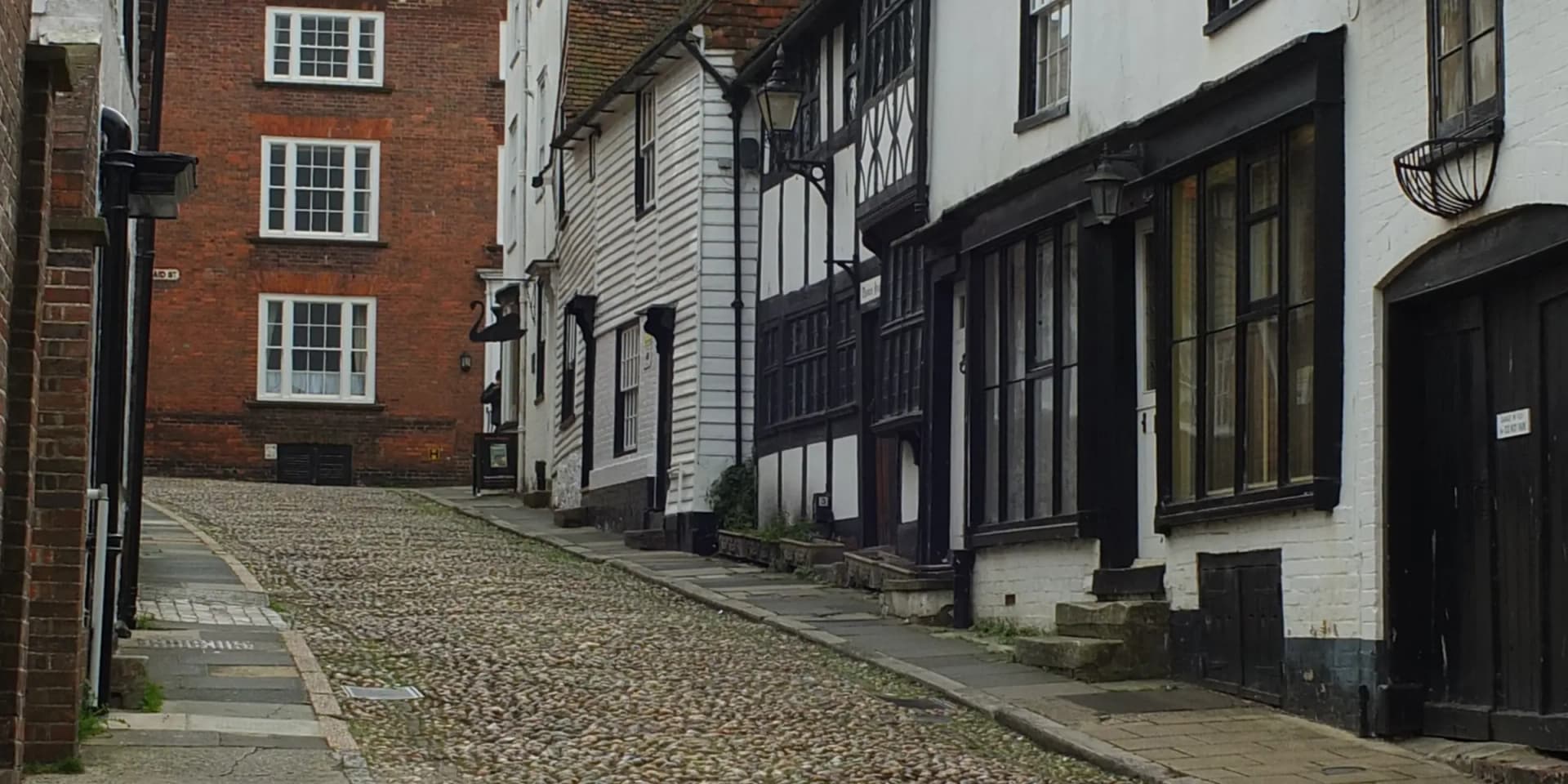
Rye's old town has narrow, cobbled medieval streets that are genuinely difficult to drive and park in, so the sensible approach is to park at the edge of the old town and walk in. Rother District Council runs several pay-and-display car parks close to the centre, including Bedford Place, Cinque Ports Street and the flat-rate Gibbet Marsh car park, all metered through RingGo. There is no dedicated park-and-ride scheme for Rye. Confirm current tariffs with Rother District Council before you travel, since rates are reviewed periodically.
- Car Parks
- Bedford Place / Lucknow Place, Cinque Ports Street / The Strand, and Gibbet Marsh (flat all-day rate) are the main pay-and-display options close to the old town; Rye Sports Centre car park is a short walk further out
- Approach
- Off the A259 coast road, with the A268 and A28 also feeding into the town; roughly an hour and a half to two hours' drive from central London depending on traffic
- Advice
- Park at the edge of the old town and walk in; the historic core's cobbled streets are difficult and largely unsuited to driving and parking
Tips
- •Confirm current RingGo car park tariffs with Rother District Council before you travel; they are reviewed periodically.
- •Don't attempt to drive into the old town itself; park on the edge and walk the cobbled streets on foot.
- •Arrive early on summer weekends and festival days, when the town-centre car parks fill.
Cycling
Rye's old town is best explored on foot, but the flat marsh and coast roads around it suit cycling well, particularly National Cycle Network Route 2 over Monk Bretton Bridge and beside Camber Road to Camber Sands, and the shared path beside Harbour Road down the other bank to Rye Harbour. There is no dedicated town cycle-hire scheme confirmed for Rye; check locally for current hire options before relying on one.
- To Harbour And Camber
- A flat route from the town over Monk Bretton Bridge to Camber Sands on National Cycle Network Route 2, beside Camber Road. Rye Harbour is a separate ride down Harbour Road on the other bank of the Rother: there is no crossing at the river mouth
- Old Town
- The old town's steep, cobbled streets are better walked than cycled
Tips
- •The flat marsh roads toward Rye Harbour and Camber are the best local riding, away from the old town's cobbles and hills.
- •Confirm current bike-hire options locally before you count on one being available.
From the Airport
Live options for reaching the village from the nearest airports. Times and fares are a guide and can change with traffic or operator schedules.
London Gatwick AirportLGW
68 km away- Duration
- Around 2 hours with a change; confirm the current connection before travelling
- Cost
- Standard rail fares
Change at Eastbourne or Lewes for a Gatwick Airport service; there is no single through train, so build in time for the connection.
Operator: National Rail
- Duration
- Around 1 hour 30 minutes to 1 hour 45 minutes, more in traffic
- Cost
- Fuel and parking, or car hire
The most direct route from Rye to Gatwick; allow extra time around the M25.
- Duration
- Around 1 hour 30 minutes to 1 hour 45 minutes
- Cost
- A fixed-fare private transfer is commonly advertised in the region; confirm the current rate before booking
A door-to-door option for those not wanting to drive or manage a rail connection; book ahead and confirm the fare in advance.
London Heathrow / London City Airport
105 km away- Duration
- Around 2 to 2.5 hours with changes; confirm the current connection before travelling
- Cost
- Standard rail fares
Change at Ashford International for the HS1 line into London, then cross London for Heathrow or London City; a private transfer or driving is more direct for either airport.
Operator: National Rail
- Duration
- Around 2 hours, more in traffic
- Cost
- Fuel and parking, or car hire
Both Heathrow and London City are a longer drive than Gatwick; allow extra time around the M25 and central London traffic for London City.
EV & Essentials
Practical infrastructure on the ground: charging, water, and accessibility facilities worth knowing about before you arrive.
Accessibility Facilities
RADAR-key accessible public toilets
Accessible toilet · Lucknow Place car park, Station Approach, Strand Quay, and Rye Harbour
Most locations also have baby-changing facilities.
Parking
Parking options in and around Rye. On busy weekends, arriving early is recommended.
Rother District Council pay-and-display car parks
Confirm current RingGo tariffs at rother.gov.uk before travelling; rates are reviewed periodically. The main car parks near the old town are Bedford Place / Lucknow Place, Cinque Ports Street / The Strand, and the flat-rate Gibbet Marsh car park, with Rye Sports Centre car park a short walk further out. All are RingGo-enabled pay-and-display. There is no dedicated park-and-ride scheme for Rye. Do not attempt to drive into the old town's cobbled streets; park on the edge and walk in.
Planning the wider trip?
Our country-level primer covers national rail, intercity buses, airports, the Leap Card, and whether you actually need a hire car for your trip around United Kingdom.
Getting Around United Kingdom →