About Rye
The history, geography, and character of Rye.
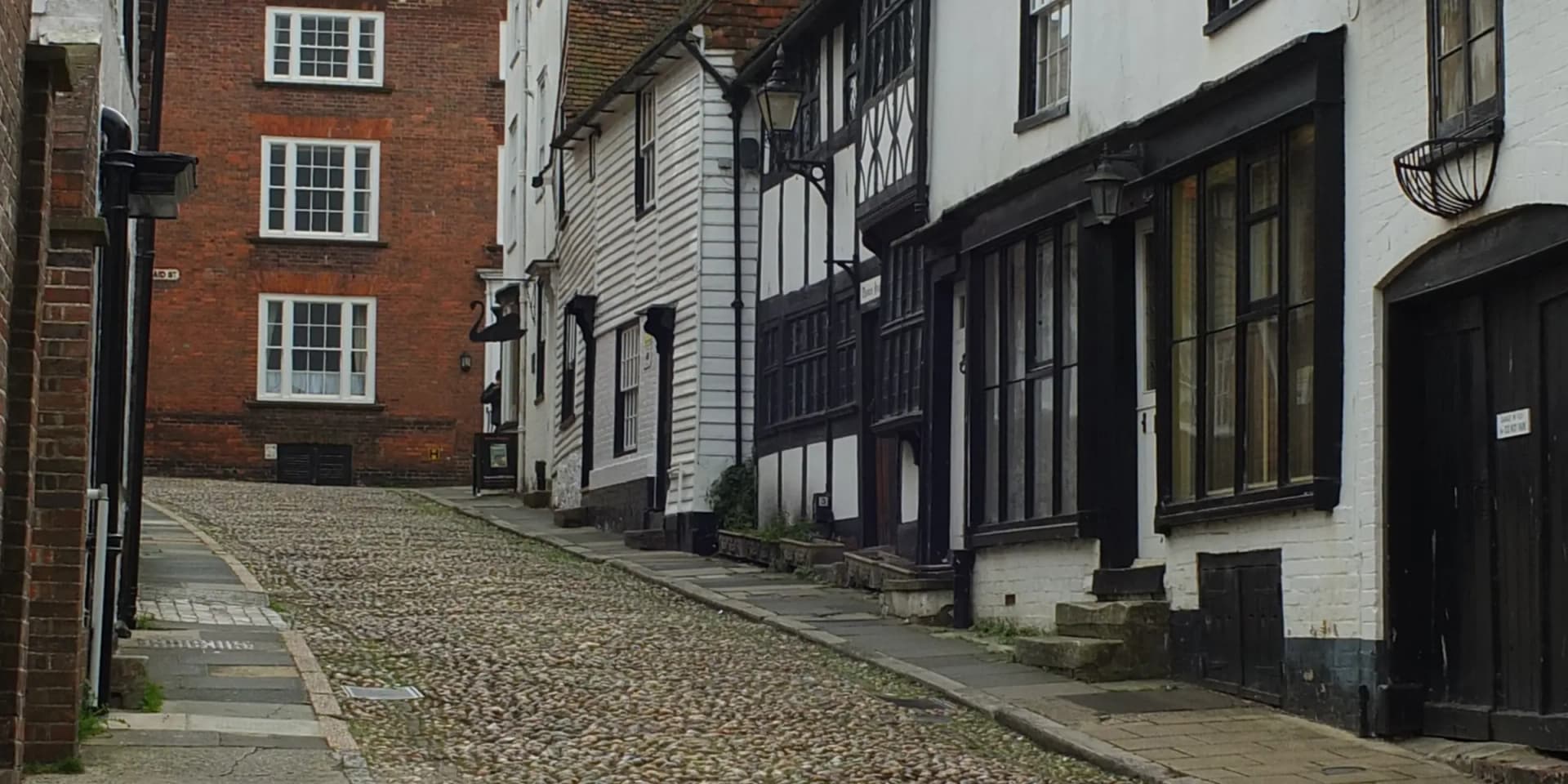
Rye is a small hilltop town in East Sussex, built on a sandstone outcrop above the Romney and Rother marshes near the Kent border. It was once a working Cinque Port with the sea at its foot; a series of medieval storms silted up the harbour and shifted the coastline nearly two miles away, leaving the town stranded above the marsh it used to command. What that left behind is one of the best-preserved medieval town cores in England: cobbled streets, timber-framed houses, a surviving town gate and a church with the country's oldest working turret clock. It is a proud working town, not a stage set, and it is easy to see in half a day and hard to leave in one.
History & Heritage
A Cinque Port left behind by the sea
Rye's name most likely comes from the Old English word for island, from a time when the town stood on a promontory nearly surrounded by tidal water. It became a limb of the Cinque Ports confederation by 1189 and, with neighbouring Winchelsea, was raised to a full 'Antient Towne' by Edward I in 1289, obliged to supply ships and mariners to the Crown in return for trading privileges. By the 1330s Rye and Winchelsea together provided half of all the ships the Cinque Ports owed the king, with Rye supplying the larger share. Violent storms in the thirteenth century, especially in 1287, redirected the River Rother and began silting up the harbour; over the following centuries the sea retreated nearly two miles, and the working port slowly became the inland hill town visitors find today. The town walls and the Landgate, the sole survivor of Rye's four fortified gates, date from the fourteenth century, built after French raiders burned much of the town in 1377.
Smugglers, writers, and the old town
The retreat of the sea did not end Rye's connection to the water; it just changed its character. From the late seventeenth century, high customs duties on wool and other goods made smuggling a serious trade across Kent and Sussex, and the Hawkhurst Gang, the most notorious and violent of the smuggling gangs, is long associated with the Mermaid Inn on Mermaid Street, whose cellars date to 1156 beneath a building rebuilt in 1420. Two centuries later Rye's quiet, crooked streets drew a different kind of visitor. Henry James bought Lamb House on West Street in 1899 and wrote some of his major late novels there before his death in 1916; the novelist E.F. Benson took the house on afterwards, and the view from its garden room is generally credited with inspiring the fictional town of Tilling in his Mapp and Lucia novels, with Lamb House itself becoming 'Mallards'. The house passed to the National Trust in 1950 and is open to visitors through the summer season.
The town today
Rye's old town is compact enough to walk in an hour and rewarding enough to fill a full day: Mermaid Street's cobbles and timber-framed houses, St Mary's parish church with its sixteenth-century turret clock mechanism and tower view over the marsh, Ypres Tower on the site of the town's oldest surviving defensive building, and a High Street and Mint thick with antique dealers, galleries and independent shops. It is a real town with roughly 4,800 residents, not just a museum piece, and locals are quick to correct anyone who calls it a village. A short walk or a Stagecoach bus takes you out across the marshes to the wide sand dunes at Camber, while Rye Harbour Nature Reserve lies down the other bank of the Rother, the other half of a visit that many people who only book a half day never get to see.
Wildlife & Nature
Birdlife
Breeding terns, avocets and oystercatchers at Rye Harbour
Rye Harbour Nature Reserve, a couple of miles south of the town on the shingle and saltmarsh flats where the River Rother meets the sea, is a Sussex Wildlife Trust reserve of shingle, saline lagoon and reedbed known for breeding terns, avocets and oystercatchers, watched from a series of accessible birdwatching hides.
Spring and summer for breeding activity; the reserve and its hides are open year-round