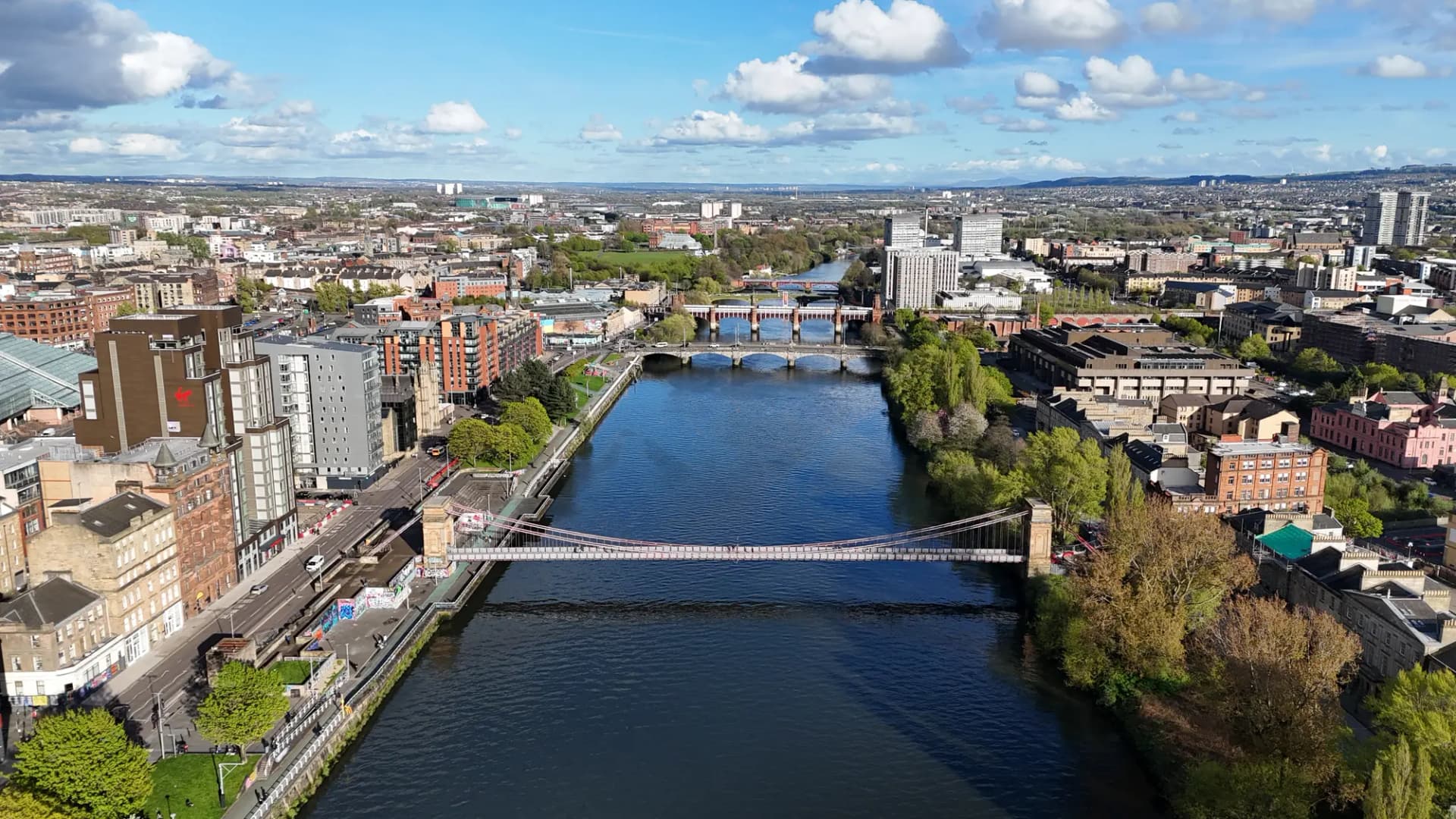
About Glasgow
The history, geography, and character of Glasgow.
History & Heritage
Highlights
The Kelvingrove Art Gallery and Museum, free and genuinely eclectic, from a Dali Christ to a suspended Spitfire; Mackintosh at the Willow, the restored Willow Tea Rooms and the most complete Mackintosh interior currently open to the public; Glasgow Cathedral and the dramatic Victorian Necropolis on the hill behind it; the Riverside Museum and the Tall Ship Glenlee on the Clyde; the West End's Ashton Lane and Byres Road; the Barras Market and BAaD in the East End; and a live music scene anchored by King Tut's Wah Wah Hut and the Barrowland Ballroom, plus the January Celtic Connections festival across the city's venues.
The mercantile city
Glasgow's city centre and Merchant City exist because of trade: tobacco and sugar fortunes in the eighteenth century built the merchants' grid of streets still named for that era, and the nineteenth-century shipbuilding boom on the Clyde, at its height the busiest shipbuilding river in the world, paid for the sandstone tenements, warehouses and civic buildings that give the centre its scale and grandeur. The wealth was real, and so was the poverty it sat beside; Glasgow's history is not a single clean story of prosperity, and the city's museums, particularly the People's Palace's social history collection (currently closed for a long-delayed refurbishment, so not visitable at the time of this build) and the Riverside Museum, tell that fuller version.
Mackintosh and the Art Nouveau city
Charles Rennie Mackintosh was born in Glasgow's Townhead district in 1868 and trained and worked in the city his whole career, designing tea rooms for the entrepreneur Kate Cranston, private houses, and the Glasgow School of Art building that made his international reputation. That building has been catastrophically damaged twice by fire, in 2014 and again in 2018 during restoration, and remains closed to the public with its future rebuild plan still under discussion. The Lighthouse, Mackintosh's former Glasgow Herald building and later Scotland's design and architecture centre, closed in 2020 and was leased in 2025 as a climate-tech hub rather than reopening as a visitor attraction. That leaves Mackintosh at the Willow, the restored Willow Tea Rooms on Sauchiehall Street, as the fullest Mackintosh interior genuinely open to visitors in the city today.
The West End and the East End
The West End, built up around the University of Glasgow's move to Gilmorehill in the 1870s, is the city's café, bar and independent-shop quarter: Ashton Lane's cobbled restaurant strip, Byres Road's shops, the Botanic Gardens and Kelvingrove Park. The East End tells a different, older Glasgow story: the Barras Market, trading since 1921, the Barrowland Ballroom next door with its neon sign and famous sprung dance floor, and Glasgow Cathedral and the Necropolis a short walk further west. Both ends of the city are essential to understanding it; treating the centre and the West End as the whole story misses half of what makes Glasgow distinct.
A music city
Glasgow's live music scene has an outsized reputation for a city of its size, built on small, serious venues: King Tut's Wah Wah Hut, where Oasis were famously signed to Creation Records after a 1993 gig, the Barrowland Ballroom, consistently rated by touring musicians among the best rooms in Britain to play, and a wider network of pub and club venues supporting a genuine grassroots scene. Celtic Connections, the folk and roots music festival that takes over roughly eighteen venues across the city each January, is the clearest annual expression of how seriously Glasgow takes music, and one of the best reasons to visit in the depths of a Scottish winter.
Wildlife & Nature
Birdlife
Herons and waterbirds along the River Kelvin
Grey herons, moorhens and mallards work the River Kelvin through Kelvingrove Park and the Botanic Gardens, with occasional kingfisher sightings reported along the quieter stretches towards Dawsholm Park.
Early morning, year-round, along the Kelvin Walkway