About Edinburgh
The history, geography, and character of Edinburgh.
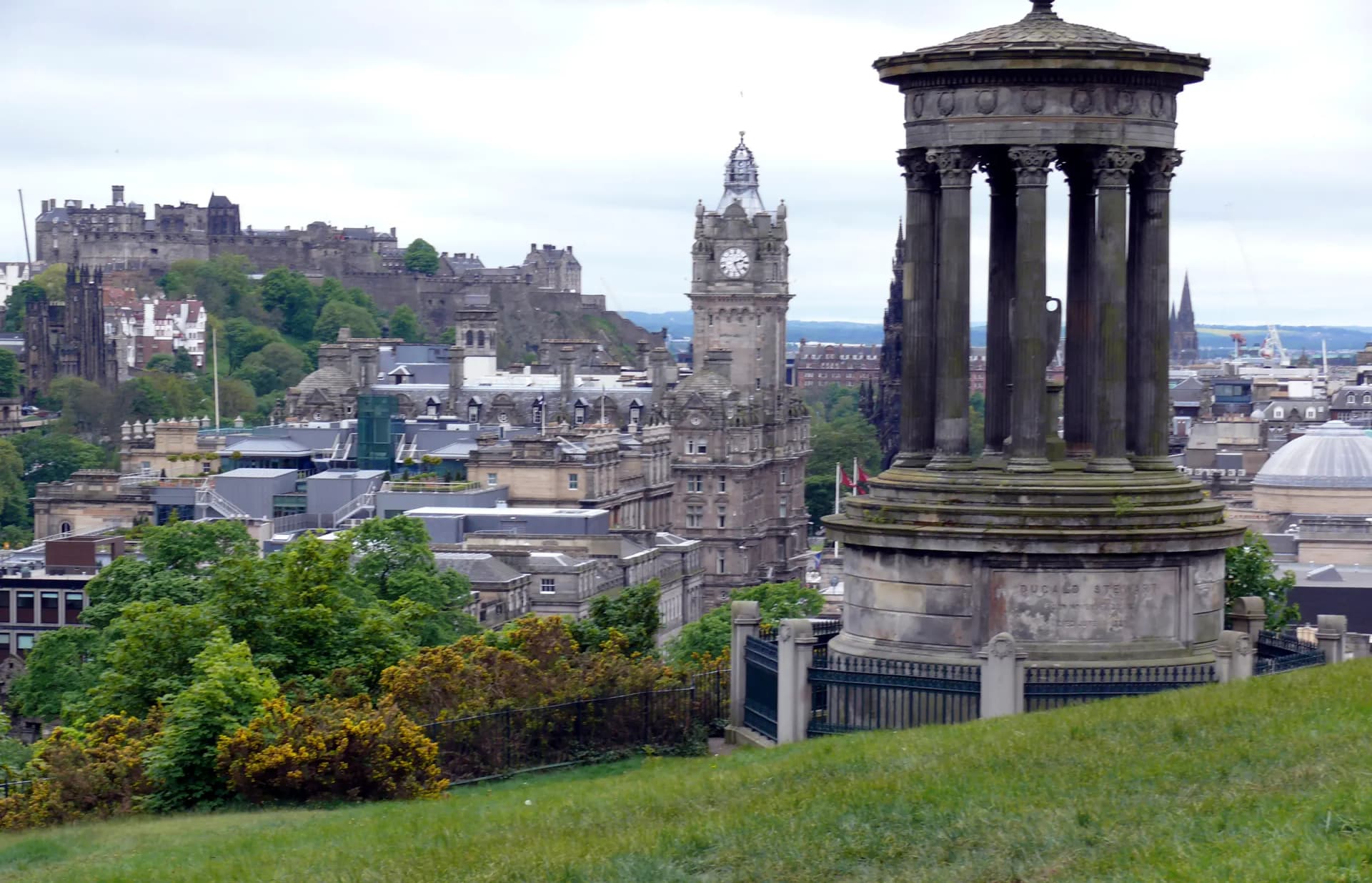
Edinburgh has been Scotland's capital since the fifteenth century, and it wears its two-town structure openly: the medieval Old Town stacked down a ridge of volcanic rock from the Castle to Holyrood, and the Georgian New Town laid out across the valley from 1767 to James Craig's competition-winning plan. Together they form a UNESCO World Heritage Site, but the city is not a museum: it is home to the Scottish Parliament, a university whose students remake the population every September, a festival economy that roughly doubles the city each August, and neighbourhoods, Stockbridge, Bruntsfield, Portobello, Leith, that keep their own weekly rhythms regardless of what the Royal Mile is doing. The nickname Auld Reekie ('Old Smoky') dates from the coal-smoke centuries; the geology is older still, with the Castle rock, Calton Hill and Arthur's Seat all remnants of a volcanic system some 350 million years old, which is why a genuine hill walk with crags, lochs and skylarks starts a twenty-minute walk from the Parliament's front door.
History & Heritage
Highlights
Edinburgh Castle on its crag, holding the Honours of Scotland and the Stone of Destiny, with the One O'Clock Gun still fired daily except Sunday; the Royal Mile running down the Old Town ridge to the Palace of Holyroodhouse; Arthur's Seat, a 251-metre extinct volcano inside the city, free and open around the clock; the Georgian New Town, Dean Village's riverside mill buildings and Stockbridge's Sunday market; Leith's docks, now one of Scotland's best eating quarters with Michelin-starred kitchens beside thirty-year seafood institutions; and August, when the Fringe, the International Festival, the Tattoo and the Book Festival run simultaneously and the city becomes the world's largest stage.
The Festival City
The International Festival was founded in 1947 to reunite post-war Europe through art; eight uninvited companies turned up the same year and performed anyway, and the open-access Fringe they accidentally founded is now the largest arts festival in the world. August in Edinburgh also brings the Royal Edinburgh Military Tattoo on the Castle Esplanade and the Book Festival at the Edinburgh Futures Institute, and the year ends with Hogmanay, a multi-day New Year festival the city treats with August-level seriousness. Locals have a complicated relationship with all of it: the standard move is to complain about August at length, then quietly book tickets for a dozen shows.
Leith and the neighbourhoods
Leith was Scotland's great port and a separate burgh until 1920, and it has never fully conceded the point; the accent, the history and The Shore's waterfront make it the city's most distinct quarter, and its kitchens, from The Kitchin's bonded warehouse to Fishers' watchtower, have made the old docks a food destination in their own right. Stockbridge, once a milling village on the Water of Leith, runs on its Sunday market, its charity-shop circuit and St Stephen Street's browsing; Dean Village, a five-minute walk from the West End, preserves the gorge-bottom mill settlement almost intact. The Water of Leith Walkway strings them together, which is the most pleasant urban geography lesson in Scotland.
Wildlife & Nature
Birdlife
Swans and waterfowl at St Margaret's Loch and Dunsapie Loch
Holyrood Park's two accessible lochs hold mute swans, geese and assorted waterfowl in genuinely close view, five minutes from the palace gates.
year-round
Birdlife at Duddingston Loch
The wilder loch on the park's south side is a long-standing bird sanctuary; herons and wintering wildfowl are regulars, best viewed from the Duddingston village side.
Autumn and winter for wildfowl numbers
Skylarks over Arthur's Seat
The park's open grassland keeps breeding skylarks in song above the hill through the warmer months, an oddly rural soundtrack for a capital city.
Spring and early summer
Flora
Gorse across Holyrood Park
The gorse bloom turns whole flanks of the park yellow and scents the air with coconut on warm days, the signature of the Edinburgh spring.
Spring, roughly April to June
The Royal Botanic Garden's living collection
Seventy acres holding one of the world's richest living plant collections, from the rock garden to the Chinese hillside, free to walk.
Rhododendrons in spring; colour season in October