About Canterbury
The history, geography, and character of Canterbury.
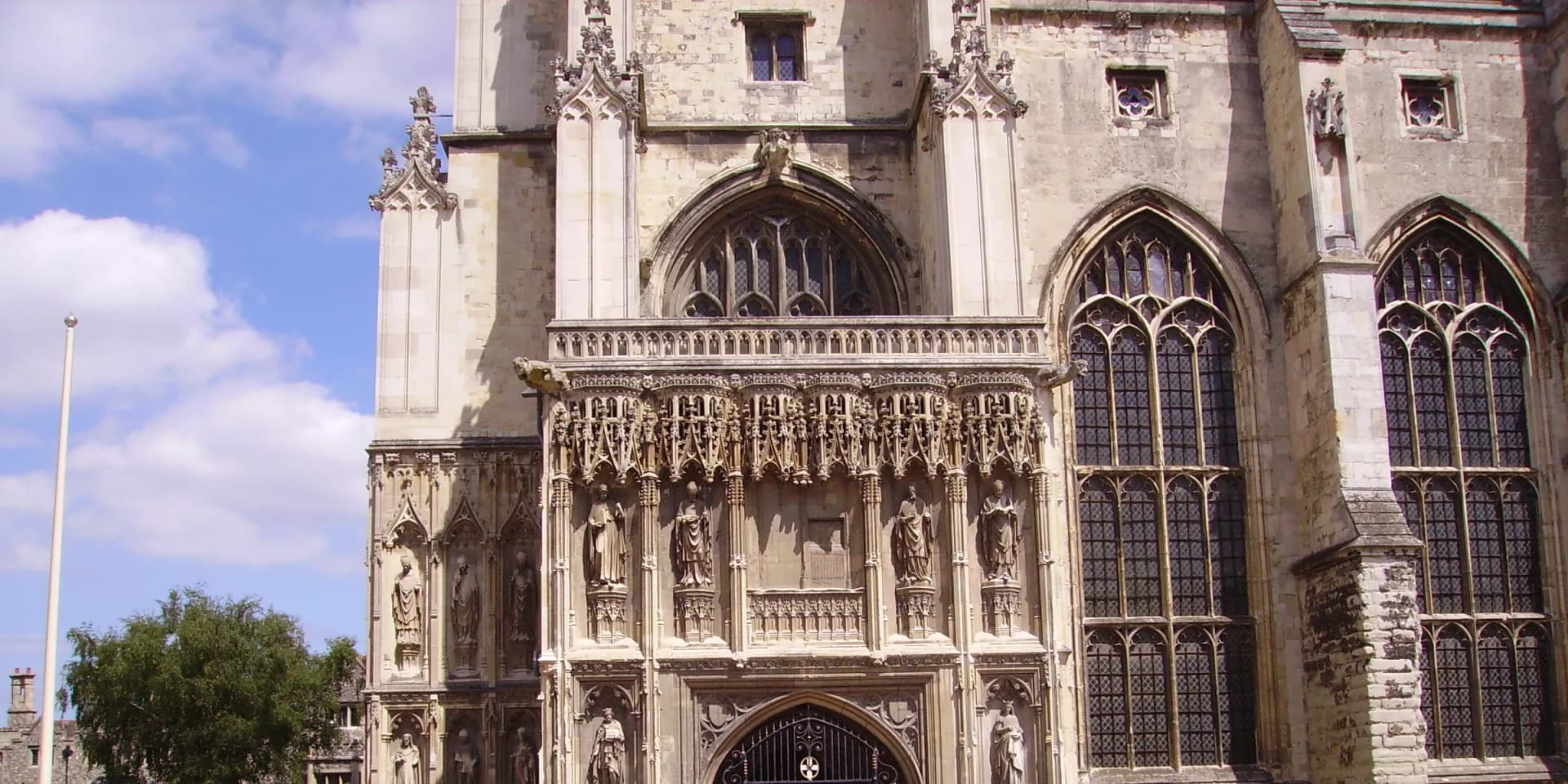
Canterbury: a working cathedral city and UNESCO World Heritage Site in East Kent. Canterbury has been a place of pilgrimage since St Augustine founded its cathedral and abbey in 597 on a mission from Pope Gregory the Great. Thomas Becket's murder in the cathedral in 1170 turned the city into one of medieval Christendom's most important pilgrimage sites, the same journey Chaucer's fictional pilgrims are making in the Canterbury Tales. The cathedral, the ruined St Augustine's Abbey and the ancient St Martin's Church together form Canterbury's UNESCO World Heritage Site. Beyond the precincts, the city is a genuine working place: the River Stour runs through the middle of the old town, the medieval Westgate still carries traffic through its twin towers, and two universities keep Canterbury younger and livelier than a heritage-town reputation alone would suggest.
History & Heritage
Highlights
Canterbury Cathedral, seat of the Archbishop since 597 and site of Thomas Becket's murder in 1170; a UNESCO World Heritage Site shared by the Cathedral, St Augustine's Abbey and St Martin's Church; the Westgate, built around 1379-80, England's largest surviving medieval city gate; the River Stour running through the old town, with punting trips from two independent operators; a compact, walkable old town inside the surviving medieval city walls; and a genuine university city, home to Canterbury Christ Church University and the University of Kent.
History
Canterbury's recorded history stretches back to the Roman town of Durovernum Cantiacorum, whose remains lie beneath the Roman Museum on Butchery Lane. St Augustine's arrival in 597 established both the Cathedral and the Abbey, and Canterbury became the centre of the English church. The murder of Archbishop Thomas Becket in the Cathedral in 1170, on the orders (later disputed as to how directly) of Henry II, made Becket's shrine one of the most visited pilgrimage sites in medieval Europe until Henry VIII ordered its destruction in 1538 during the Dissolution of the Monasteries, which also emptied St Augustine's Abbey. The city's medieval walls and the surviving Westgate gatehouse, built around 1379-80, date from a period when Canterbury needed genuine defences; the Westgate later served as the city gaol. Wartime bomb damage in 1942 exposed the Roman townhouse remains now displayed in situ at the Roman Museum.
Wildlife & Nature
Birdlife
Nightingales at Blean Woods
Nightingales singing in the scrub at Blean Woods RSPB reserve.
Through late April and May
Nightjars at Blean Woods
Nightjars at dusk at Blean Woods.
Dusk, in early summer
Lesser spotted woodpecker
Britain's rarest breeding woodpecker, recorded at Blean Woods.
Not confirmed in current research; see _research.json
Garden birds at Westgate & Dane John Gardens
Breeding and visiting birds using the mature trees at Westgate Gardens and Dane John Gardens.
Not confirmed in current research; see _research.json
Flora
Bluebells at Blean Woods
Bluebells carpeting parts of Blean Woods' ancient woodland.
Spring
Heath fritillary butterflies at Blean Woods
Heath fritillary butterflies on the wing at Blean Woods.
Mid-June to mid-July
Wildflower meadow and heritage fruit trees, Franciscan Gardens
A wildflower meadow and heritage fruit trees planted since 2000 at Franciscan Gardens.
Not confirmed in current research; see _research.json
Riverside trees, Westgate Gardens and the Stour
Mature riverside trees along Westgate Gardens and the Stour.
Not confirmed in current research; see _research.json