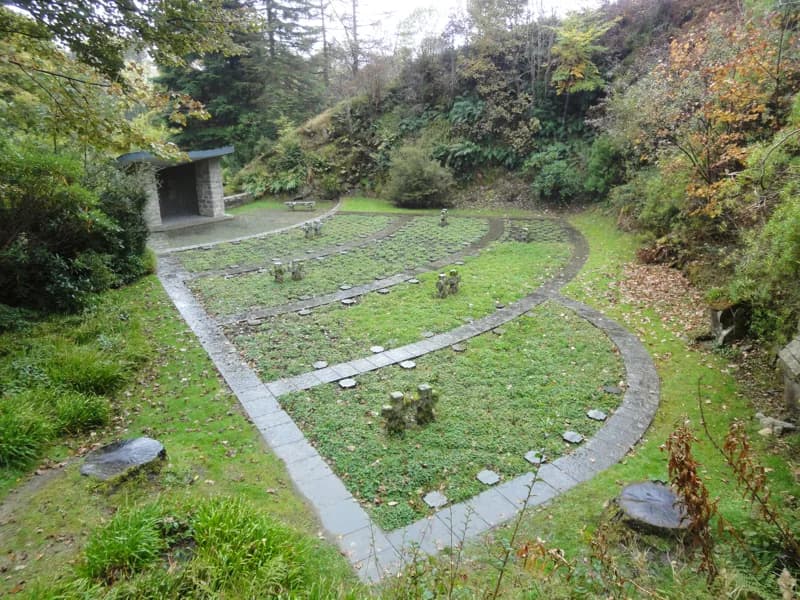
Glencree German War Cemetery
About
Ten kilometres west of Enniskerry, up the Glencree valley road, there is a small granite quarry that was turned into a cemetery in 1961 and holds the remains of 134 German dead of both world wars, most of them airmen and sailors washed up on the Irish coast or brought down over neutral Ireland. It is laid out in curved terraces of flat stone markers on grass, with a covered stone shelter at the head of it, and it is completely quiet: no ticket, no gate, no interpretation beyond a plaque. It sits beside the Glencree Centre for Peace and Reconciliation, in the old barracks that later served as a reformatory and then, during the Emergency, as a refuge. The drive up from Enniskerry is worth the trip on its own, but the cemetery is the reason to stop, and it is one of the few places within reach of the village where nobody is taking photographs.
Photos
Highlights
- ✓Curved terraces of flat granite markers set into a former quarry, opened in 1961
- ✓The remains of 134 German dead of the First and Second World Wars
- ✓The Glencree Centre for Peace and Reconciliation next door, in the old barracks
- ✓The Glencree valley road itself, one of the best drives out of Enniskerry
Tips
- →Free and always open. There is a small parking area on the road; do not block the gate.
- →It is a war grave. Quiet clothes, quiet voices, and no drones.
- →About 10km and 15 minutes' drive from Enniskerry on a narrow mountain road. There is no bus.
- →Combine it with the run up over the Sally Gap if the weather is clear, but not in ice or fog.
Best Season
More Attraction Activities
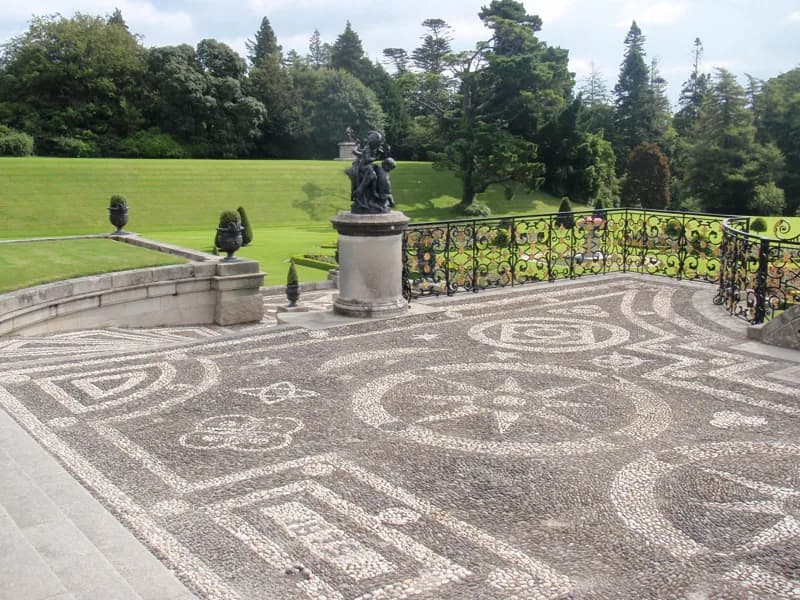
Powerscourt House & Gardens
The Palladian house and its 47 acres of Italian terraces, Japanese gardens and walled garden, twenty minutes uphill from the Square. Separate site and ticket from the waterfall.
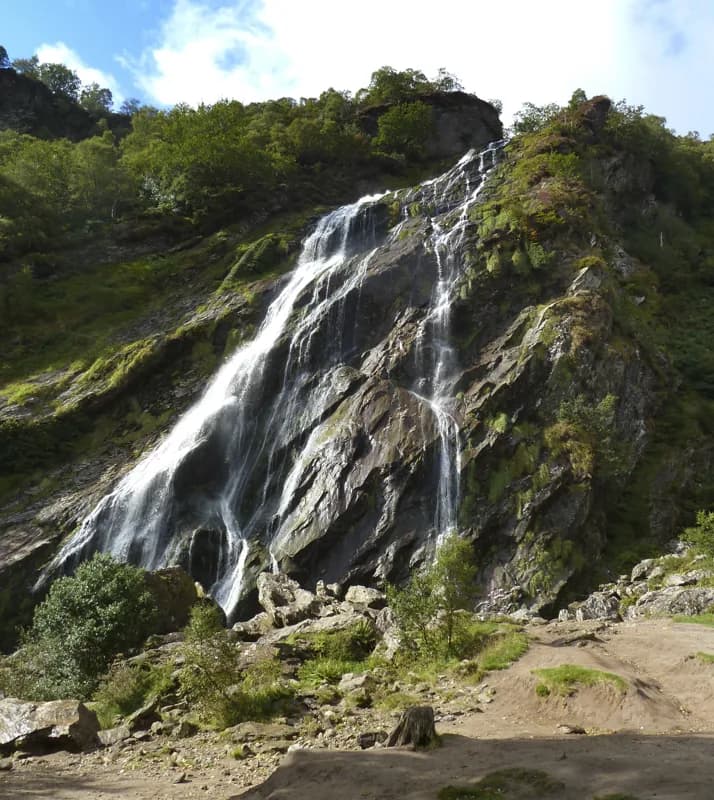
Powerscourt Waterfall
Ireland's highest waterfall at 121 metres, in a parkland meadow with picnic tables, a playground and barbecue stands. A separate site and a separate ticket from the gardens.
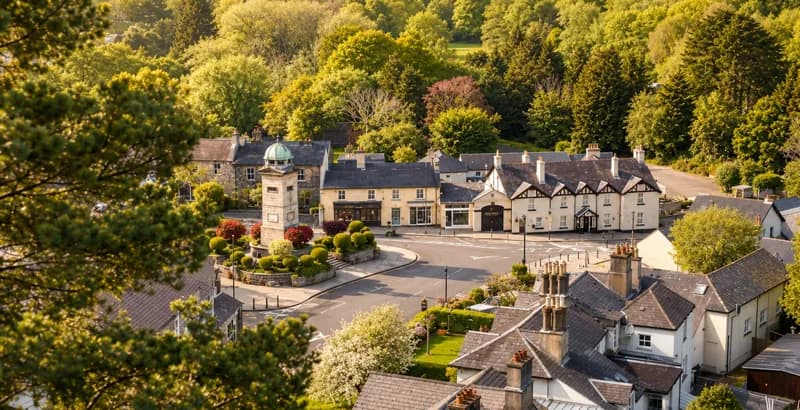
The Square and the Clock Tower
The triangular estate-village square, ringed by mock-Tudor terraces and pivoting on an 1843 granite clock tower with an 1860 copper cupola.