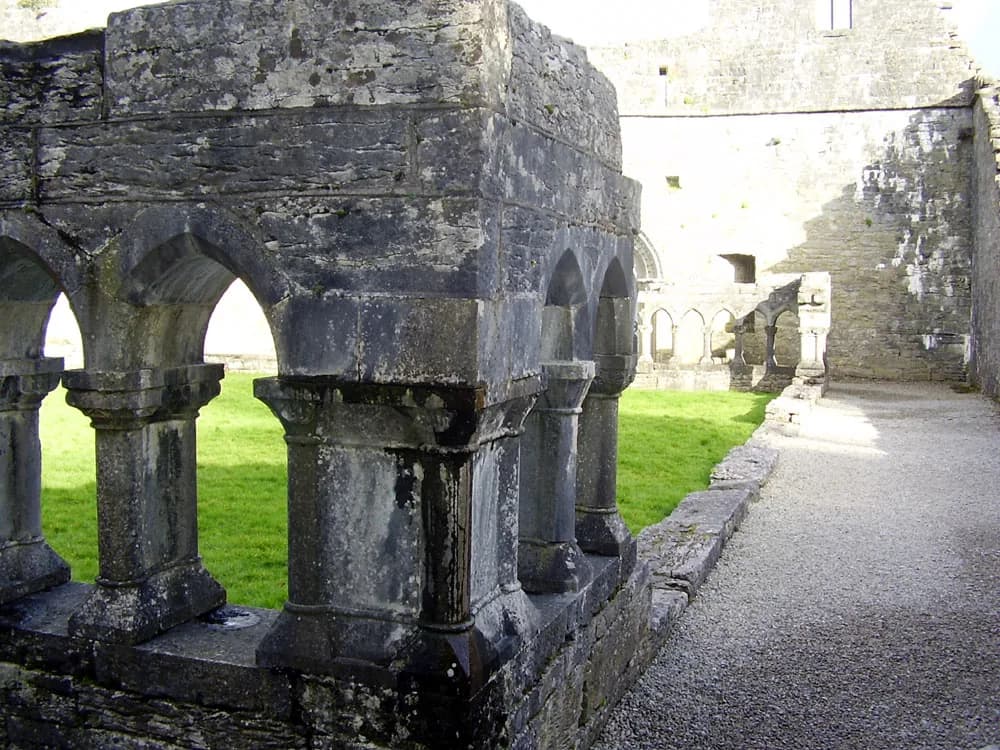
Cong Abbey and the Royal Abbey cloister
About
A state-owned national monument in the care of the Office of Public Works, free and unguided, sitting in the middle of the village rather than out on a headland somewhere. An earlier monastery was founded on the isthmus in the seventh century by Saint Feichin, whose name the village carries; the Augustinian house whose ruins you walk through was founded in the twelfth century by Turlough O'Connor, King of Connacht, and the church is recorded as burning in 1114 and again in 1137. Rory O'Connor, the last High King of Ireland, is said to have spent his final years here. The Office of Public Works is precise about what survives: the north and south walls and the east gable of the church, and the north-east part of the cloister, are original, and most of the rest is later reconstruction. The carved doorways are the thing to look at. The Cross of Cong, the processional cross made for this house around 1123, is not here: it is in the National Museum of Ireland in Dublin.
Photos
Highlights
- ✓The original north-east corner of the cloister arcade
- ✓The carved Romanesque doorways
- ✓The yew walk leading out toward the river
- ✓Free and open all year, no ticket, no gate
Tips
- →This is an unguided OPW site with uneven stone, steps and no handrails; the Office of Public Works says so explicitly and asks visitors to take care.
- →Walk straight through the cloister and keep going for the Monks' Fishing House; it is a two-minute walk further along the river.
- →Early morning is the only quiet time in July and August.
Best Season
More Attraction Activities
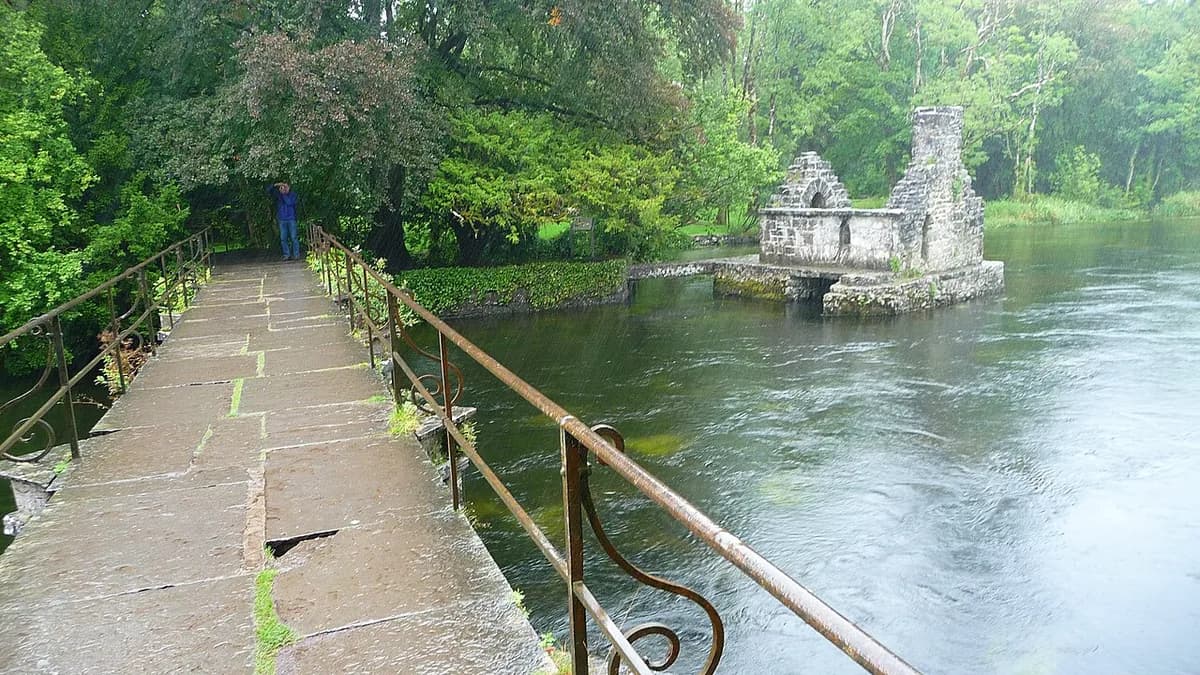
The Monks' Fishing House
A roofless stone fishing hut built out over the Cong River, part of the abbey's national monument.
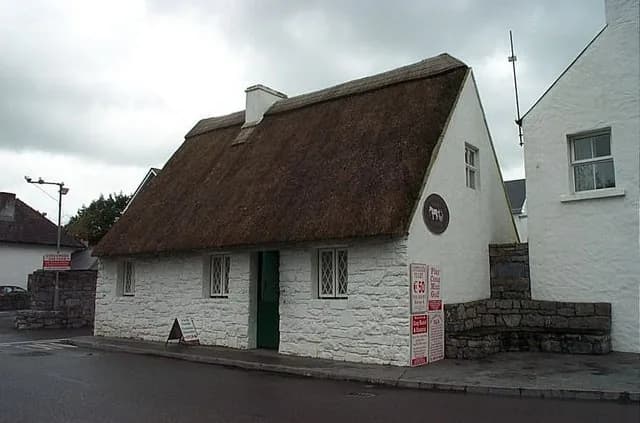
The Quiet Man Museum
A replica of the film's White O'Morn cottage, with original artefacts and a wall of 1951 newspaper cuttings.
Ireland's School of Falconry
Private hour-long hawk walks through the Ashford estate woodland, bookable by non-residents in limited daily numbers.