About Dartmouth
The history, geography, and character of Dartmouth.
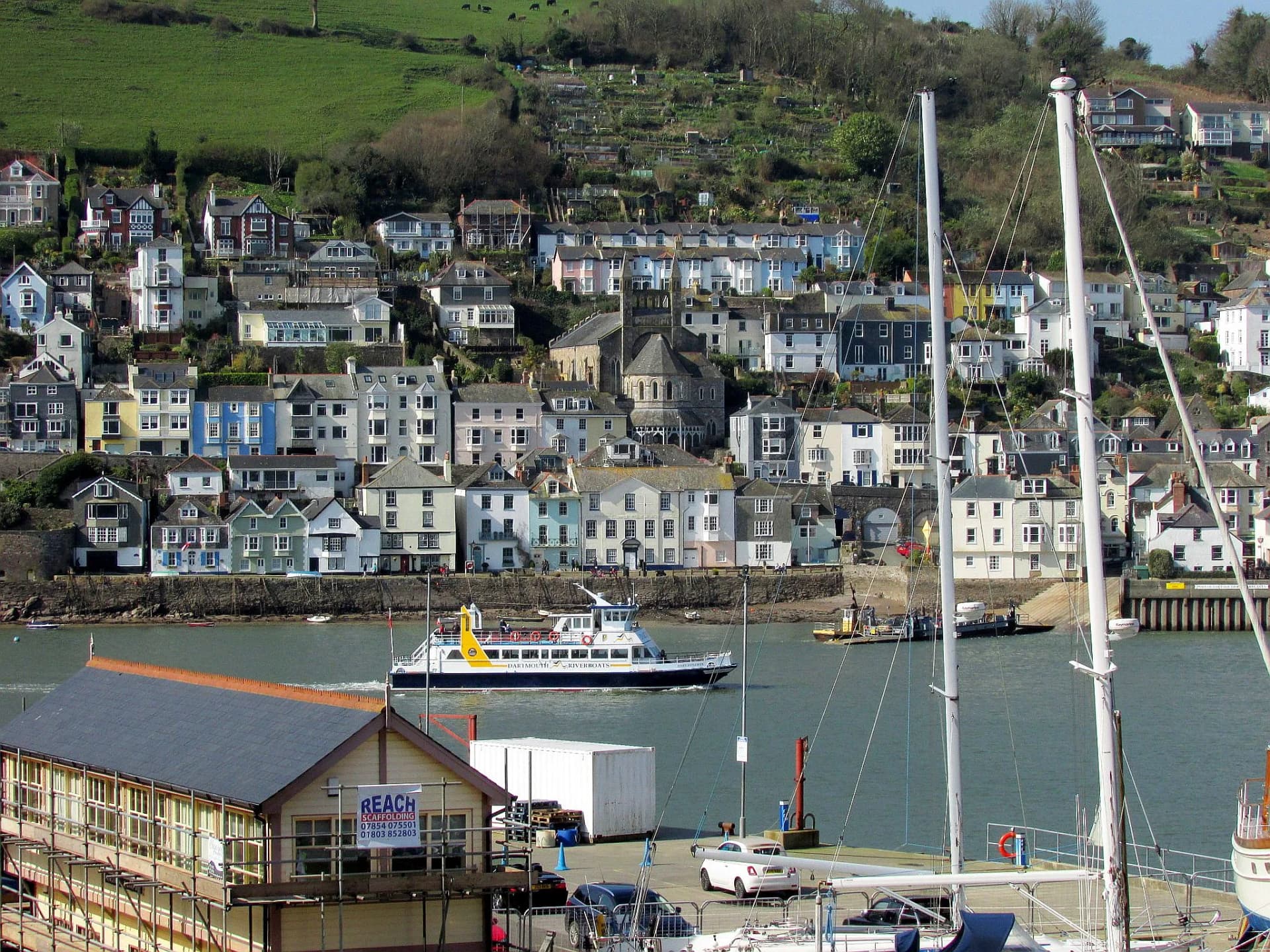
Dartmouth is a small port town on the west bank of the River Dart in South Devon, a short way inside the river mouth, built up a steep valley side so that most streets are either along the water or straight up the hill. Kingswear faces it across the river, and between the two the ferries never really stop. The Dartmouth meant here is the Devon one: not Dartmouth in Nova Scotia, not Dartmouth in Massachusetts, and not the college in New Hampshire. What the town is known for, by its own account and everyone else's, is the river: two castles at its mouth, a quay of old merchants' houses, a naval college on the hill, and a summer that runs from the music festival in May to Regatta at the end of August.
History & Heritage
A port at the mouth of the Dart
English Heritage's history of Bayard's Cove Fort tells the early story briefly: the deep, sheltered anchorage made the place, crusading fleets assembled in the estuary in 1147 and 1190, and from the 13th century the harbour town that grew south along the water was being called Dartmouth. It became the main base for the wine trade with south-west France. When the Hundred Years' War made the coast dangerous, the town paid for its own defences: a small fort at the mouth in the 1380s, a gun tower and an iron chain across the river a century later, and the fort at Bayard's Cove in the early 1500s.
The Mayflower at Bayard's Cove
Discover Dartmouth, the town's tourism body, says the Mayflower and the Speedwell put into Dartmouth in August 1620 and left from Bayard's Cove for America; the Speedwell began to leak out at sea, both ships went back to Plymouth, and the Mayflower sailed on alone. Bayard's Cove today is a short cobbled quay with houses on one side and the river on the other, the old fort at its far end, and plaques that mark the Pilgrims' call.
The naval college
Britannia Royal Naval College dominates the hill north of the town. The Britannia Association, which runs the public tours, says Dartmouth and the river have been the home of initial officer training for the Royal Navy since 1863. It is a working military establishment: the public can go in only on a booked tour, with photo ID for everyone over 16.
Two banks of one river
Kingswear, on the east bank, is where the heritage steam railway from Paignton ends, and it is a separate village with its own pubs and walks; the ferries make it feel like part of the same place. The Higher Ferry, a cable ferry, has its own history going back to an 1829 floating bridge designed by James Meadows Rendel, by the operator's account, and the Lower Ferry is a float pushed across by a tug. Upriver, the Dart winds past Dittisham and Greenway to Totnes; the river is tidal, which is why the Totnes cruise times change every day.
Wildlife & Nature
Marine Life
Wildlife on the river
The steam railway's river cruises list dolphins, seals, herons, egrets, buzzards and kingfishers among what passengers may see on the Dart; none is guaranteed.
Spring to autumn on the cruises