Plan Your Visit
Everything you need to know before you head out: weather, what to pack, the best seasons, and useful links.
Looking for a day plan?
Half-day highlights, full-day explorer, rainy day plan, and weekend escape: all mapped out step by step.
Weather & What to Bring
Weather
Brighton sits on the English Channel coast in East Sussex, in the mild, relatively dry and sunny south-east of England. It has a temperate maritime climate, changeable but rarely extreme, with mild damp winters, warm rather than hot summers, and a good deal of sunshine by British standards, since the Sussex coast is one of the sunnier parts of the country. The sea keeps temperatures moderate year-round, but the seafront is exposed and can be noticeably windier and cooler than a few streets inland, and Channel storms drive rough seas in autumn and winter. For a visitor the practical picture is simple: reasonably kind weather by British standards, best from late spring to early autumn, with a wind off the sea to plan for on the front.
Packing Checklist
- ✓Waterproof jacket (essential year-round)
- ✓Layers: temperature can change quickly
- ✓Comfortable walking shoes
- ✓Camera: the views are worth it
- ✓Sunscreen: yes, even in United Kingdom
Best Time to Visit
March - May
The city wakes up and May goes off: Brighton Festival, Brighton Fringe and the Great Escape run through the month, so book beds early. The Downs are good for walking before the summer crowds arrive.
Spring is when Brighton comes back to life, and May is the busiest and best of it. Brighton Festival, one of England's largest arts festivals, runs alongside the open-access Brighton Fringe for most of the month, and the Great Escape brings hundreds of new bands into the city's small venues in the middle of May. Between them they make May the single most crowded and most expensive time to find a room, so book well ahead. Away from the festivals it is a fine, quieter time for the Royal Pavilion, the Lanes and a walk up onto the Downs at Devil's Dyke before the summer beach crowds build. Pack layers and a light waterproof for changeable Channel weather.
June - August
Peak season: the beach, the pier and North Laine fill on warm weekends, and Pride in early August is the biggest weekend of the year for beds and buses. Volk's Railway and the seafront are at their best.
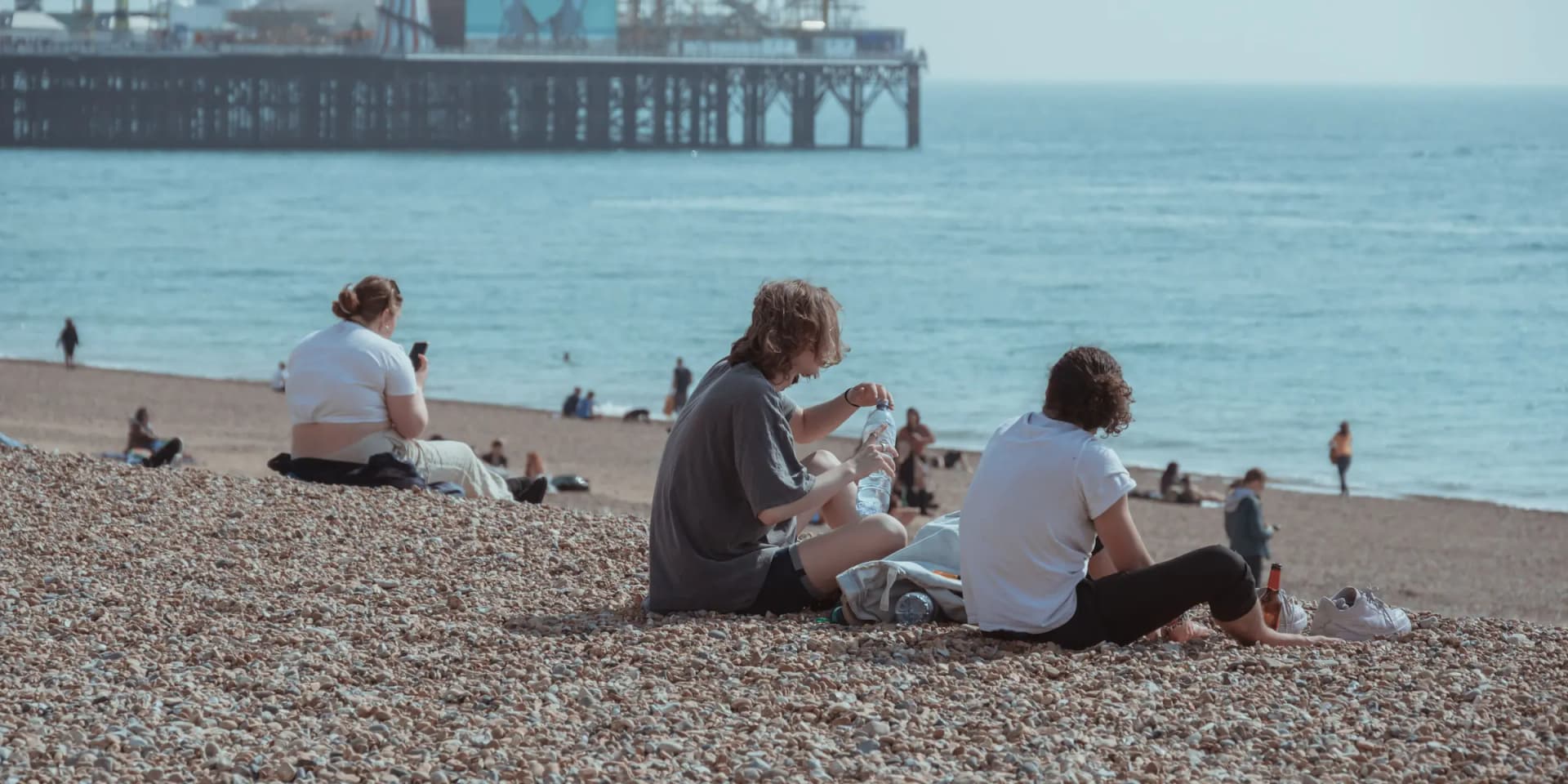
Summer is Brighton at full volume. The shingle beach, the Palace Pier and North Laine fill with day-trippers from London on any warm weekend, the seafront bars and the terraces come into their own, and Volk's Electric Railway runs its full timetable along the front. Brighton and Hove Pride, in early August, is the single biggest weekend of the year, and accommodation and trains around it book out well in advance. It is the best stretch for the beach, a seafront seafood lunch and a long evening out, but expect queues for the popular tables and higher prices through the school holidays. Start the big attractions early and keep the beach for the afternoon.
September - November
A strong shoulder season. The crowds thin after the summer holidays, and from late October the starling murmurations begin over the piers at dusk, one of the best reasons to be on the seafront.
Autumn is a rewarding time to have more of Brighton to yourself. The crowds thin noticeably once the summer holidays end and the students return, the city settles into a more local rhythm, and the seafront, the Lanes and North Laine are easier to enjoy. From late October the starling murmurations begin to build over the West Pier ruin and the Palace Pier at dusk, gathering into tens of thousands by late autumn, and they are one of the best reasons to be on the promenade as the light goes. The Downs are good for crisp, clear walking, though the first autumn storms can turn the sea rough, so keep an indoor plan like the Pavilion or the i360 in reserve.
December - February
Quiet, cold and often windswept, with a smaller crowd of locals and weekenders. The murmurations peak, and the indoor draws, the Pavilion, the museums and the seafood, come into their own.
Brighton in winter is quiet, cold and often windswept, with a smaller base of locals and weekenders rather than day-trip crowds. The starling murmurations over the piers peak in these months and are the clearest reason to brave the seafront at dusk. It is a good time for the indoor city: the Royal Pavilion and Brighton Museum without the summer queues, Sea Life on a wet afternoon, and a long lunch at one of the historic seafood rooms or a theatrical afternoon tea. Burning the Clocks, the winter-solstice lantern parade, has traditionally lit up the shortest day, though its format has been in flux, so check before planning a trip around it. Come for the lights, the murmurations and a warm room rather than the beach.