About Wexford Town
The history, geography, and character of Wexford Town.
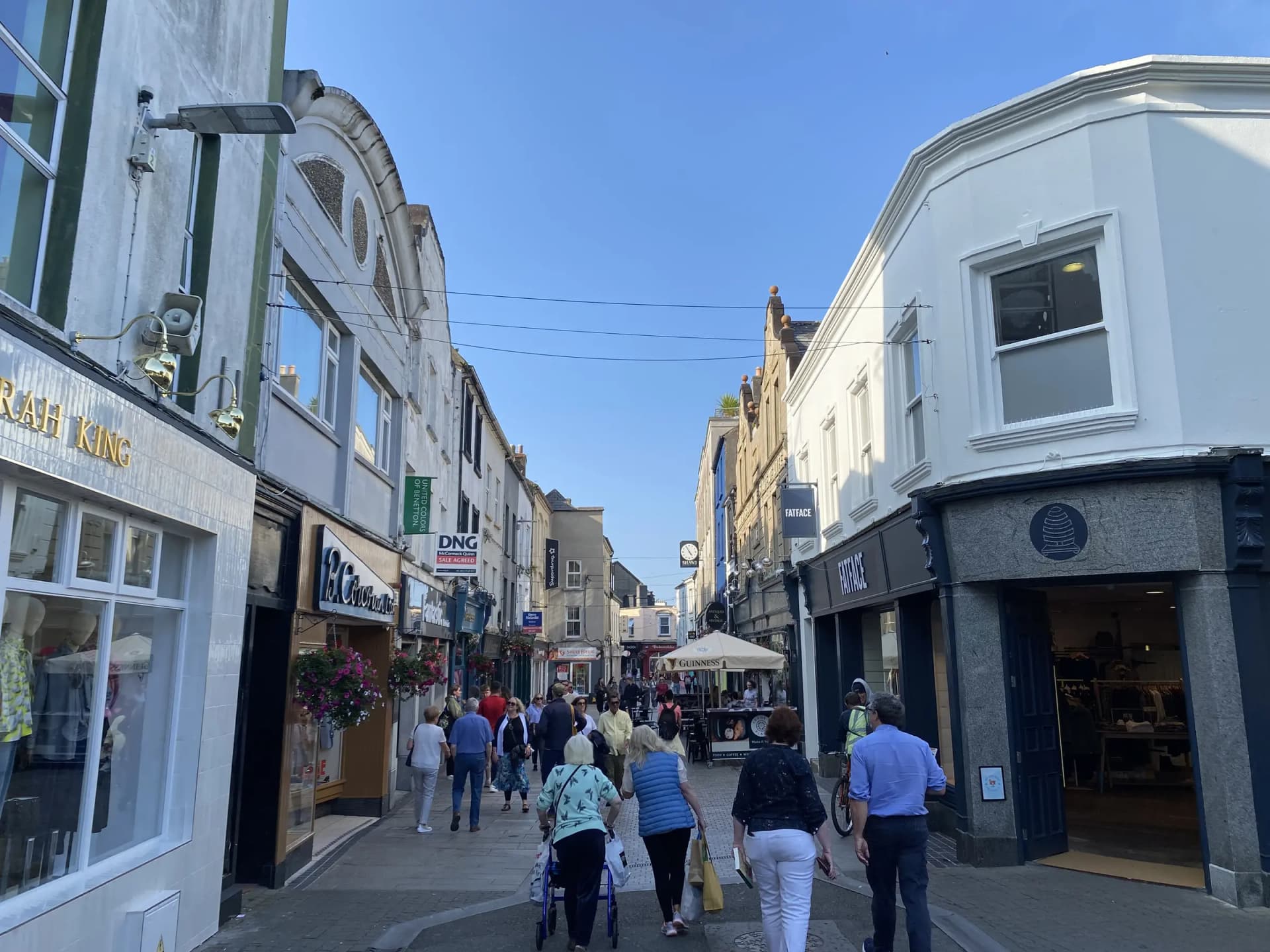
Wexford Town grew up on the south bank of the River Slaney, where it widens into Wexford Harbour on Ireland's south-east coast. The Vikings founded it around 800 AD as Waesfjord, the harbour of the mudflats, and the town's Main Street still follows the curving line they laid out along the old waterline, with narrow lanes such as Keyser's Lane dropping down to the quay in the same pattern. Today it is County Wexford's county town, home to just over 21,500 people, a working harbour, and, for two and a half weeks every October, one of Europe's more distinctive opera festivals.
History & Heritage
A Viking town you can still walk
Wexford's Norse founders named it Waesfjord; the Irish name, Loch Garman, comes from an older and separate legend rather than a translation. What makes Wexford unusual among Irish towns is how much of the original street pattern survives in daily use rather than as a museum reconstruction: Main Street's long curve follows the old shoreline, and lanes like Keyser's Lane still run steeply down toward Crescent Quay exactly as they did over a thousand years ago. The Normans later built a stone wall around the town in roughly a C-shape after the 1169 invasion, and expanded the settlement north to found Selskar Abbey and Westgate, both of which still stand at the edge of the old walled town. Oliver Cromwell's forces besieged and took Wexford in October 1649, an episode locals reference matter-of-factly rather than glossing over; roughly 300 people are recorded as having drowned in the harbour trying to escape. The town's Bullring square is linked to a contested story from that siege, though historians disagree on the details, so it is worth treating as local folklore rather than settled fact.
Harbour and setting
Wexford Harbour is a shallow, tidal estuary where the River Slaney meets the Irish Sea, and the town sits directly on its south bank. The harbour's shallow, mudflat-heavy character, the very thing the Vikings named the settlement after, has shaped the town's relationship with the water ever since: it favours smaller fishing boats over deep-draught shipping, and the wide, flat North Slob and South Slob on either side of the estuary were reclaimed from the harbour in the 19th century, now farmland and, on the North Slob, an internationally important wintering ground for wildfowl. The town itself sits in Ireland's south-east corner, a region long known regionally as the Sunny South East, roughly 140km and about two hours' drive south of Dublin via the M11.
The John Barry connection
A bronze statue of Commodore John Barry has stood on Crescent Quay since 1956, gifted to Wexford and delivered by the USS Charles S. Sperry. Barry was born in Tacumshane, a few miles outside Wexford town rather than in the town itself, and went on to become the first flag officer commissioned into the United States Navy under George Washington, remembered there as the father of its navy. President John F. Kennedy laid a wreath at the statue during his 1963 visit to Ireland. It is one of the clearer, more specific threads connecting this particular Irish town to American history, rather than a generic Irish-American heritage claim.
Wexford Festival Opera
Founded by Dr Tom Walsh in 1951, Wexford Festival Opera has spent seventy-five years building a reputation for staging rare and neglected operas rather than the standard repertoire, drawing an international audience of singers, conductors and opera enthusiasts to the town every October. The festival is staged at the National Opera House on High Street, opened in 2008 on the site of the former Theatre Royal and formally designated Ireland's National Opera House in 2014; it holds a 771-seat main theatre, the O'Reilly Theatre, and a smaller 176-seat venue, the Jerome Hynes Theatre. The Wexford Spiegeltent Festival, a live music and comedy programme on Wexford Quay, runs alongside the opera festival each October, giving the town its busiest and most distinctive fortnight of the year.
Wildlife & Nature
Marine Life
Wexford Harbour mudflats
Wexford Harbour and the Slaney estuary are shallow and mudflat-heavy, the very feature that gave the town its Norse name, and the mudflats support wading birds and wintering wildfowl along the shoreline, most notably at the North Slob.
Autumn and winter, on a falling or low tide along the quayfront and North Slob
Birdlife
Greenland white-fronted geese and Brent geese
The North Slob, reclaimed farmland just north of the town on the harbour's edge, is an internationally important wintering ground for Greenland white-fronted geese and Brent geese, alongside Bewick's swans and wigeon.
Winter, roughly October to April
Wexford Wildfowl Reserve's wider bird count
Over 260 bird species have been recorded at Wexford Wildfowl Reserve on the North Slob, including 29 duck species and 42 wader species across the year, managed by the National Parks and Wildlife Service.
Year-round, with the widest variety in winter