About Waterford
The history, geography, and character of Waterford.
Waterford is the oldest city in Ireland, founded as a Viking longphort on the south bank of the River Suir in 914 AD. Eleven hundred years of continuous occupation have left a layered city: a compact medieval core known as the Viking Triangle, Georgian terraces along the Mall, and the Crystal industry that gave the modern city its global association. Locals call this place the Déise.
History & Heritage
Viking Founding
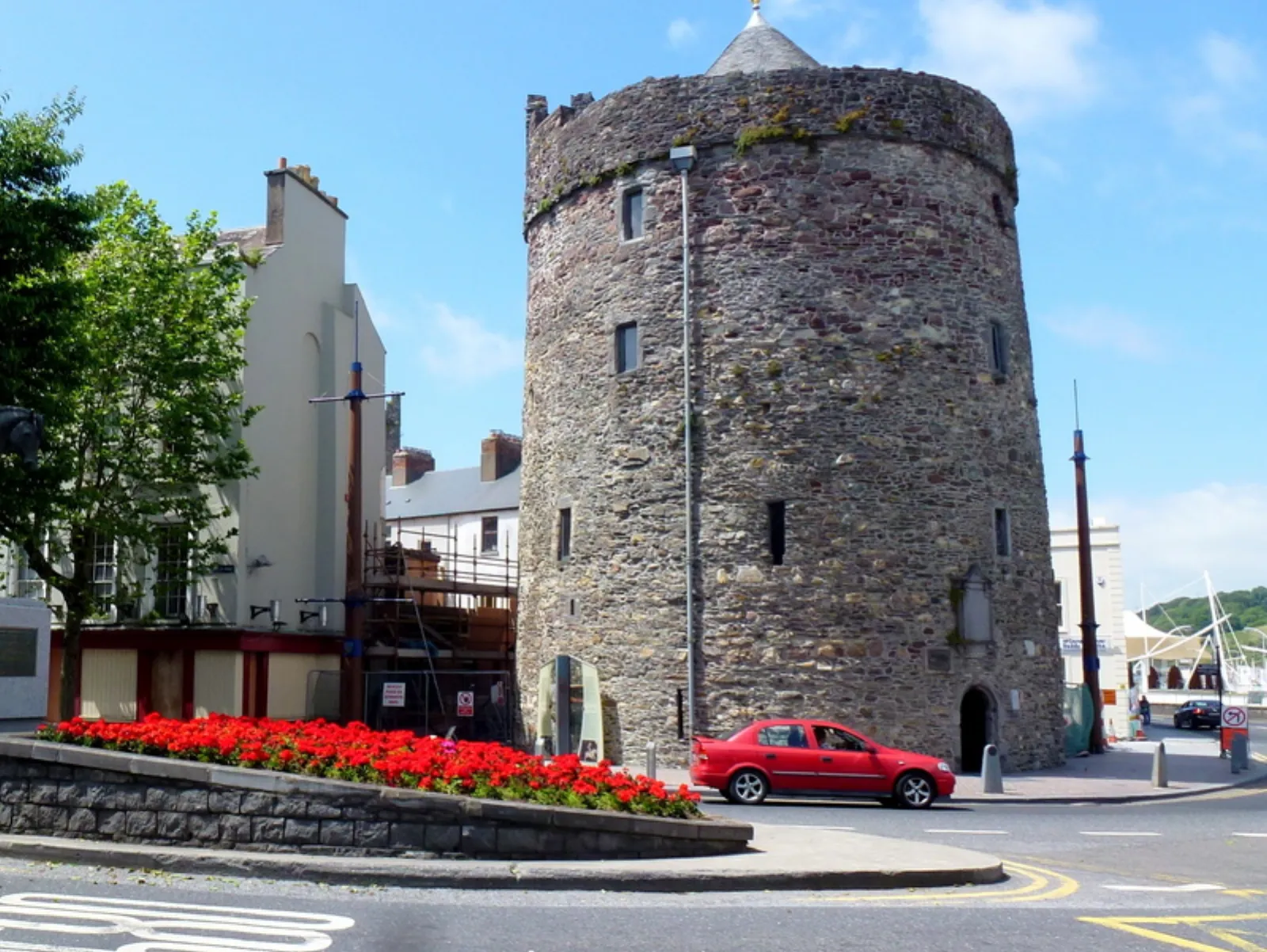
Vikings established a longphort here in 914 AD under the leadership of Ottir Iarla and his successor Ragnall, after earlier raids on the Suir valley. The choice of site was strategic: the city sits at the confluence of the Suir, the Nore, and the Barrow, the three sister rivers that drain most of southeast Ireland. Reginald's Tower at the apex of the Viking Triangle is named after Ragnall and traditionally dated to that early Viking period, though the present stone fabric is 12th-century.
Norman Period
Strongbow took the city in 1170, the first major Norman conquest in Ireland, and married Aoife of Leinster in Reginald's Tower the following year. The Normans rebuilt the walls and the cathedral and gave Waterford its first royal charter in 1215. The Medieval Museum on Cathedral Square holds the city's documentary record from this period, including the Great Charter Roll of 1373 and the Cloth-of-Gold Vestments worn at the medieval cathedral.
Cromwell and the Georgian Rebuild
Cromwellian forces sacked Waterford in 1649. Recovery came over the next century with a Georgian rebuilding programme led by John Roberts, who designed both the Anglican Christ Church Cathedral (1773) and the Catholic Holy Trinity Cathedral (1793) within a five-minute walk of each other. Roberts also designed the Bishop's Palace on the Mall, now part of the Waterford Treasures museum complex.
The Crystal Industry
George and William Penrose founded the Waterford Crystal works in 1783 in a former glassworks on the Mall. The company was wound down in the 1850s and refounded in 1947 by the Czech-born industrialist Charles Bacik. The refounded company was the dominant manufacturer of luxury cut crystal in the world for half a century. Production moved overseas in 2009 when the parent company entered receivership; the heritage workshop on the Mall today produces a smaller volume of show pieces and runs the visitor experience.
The Déise
Waterford people identify as Déiseach, plural Déisigh, after the ancient Gaelic kingdom of Déisi Muman that occupied this part of the south east in the early Christian period. The Déise identity is strongest in sport: Waterford GAA wears blue and white and the county hurling team has been a top-tier presence for decades. The Irish-speaking Gaeltacht na nDéise survives in the southwest of the county, around Ring and An Rinn.
Wildlife & Nature
Flora
Magnolia
Mount Congreve Gardens at Kilmeaden, eight kilometres southwest of the city, holds a huge magnolia collection. The bigger trees come into flower from late February through April.
March - April
Rhododendron
Mount Congreve's rhododendron walk peaks in May, with the larger species running into early June. Many of the rhododendrons were grown from seed brought back by Frank Kingdon-Ward and other 20th-century plant hunters.
May - June