About Skerries
The history, geography, and character of Skerries.
History & Heritage
The Rocky Islands
Skerries takes its name from the Old Norse sker, a rocky island or reef, pluralised in Irish as na sceirí. Five islands lie off the coast: Shenick, with its Martello tower and a low-tide sand crossing; Colt and St Patrick's further out; and Rockabill, the Cow and the Calf, four miles offshore with a lighthouse of 1860 and the largest breeding colony of roseate terns in Europe. Red Island, closest of all, is a tied island joined to the town and now laid out as a public park. The islands are not scenery here so much as the reason the town exists, and the names for them are old.
Fishing Port and Resort
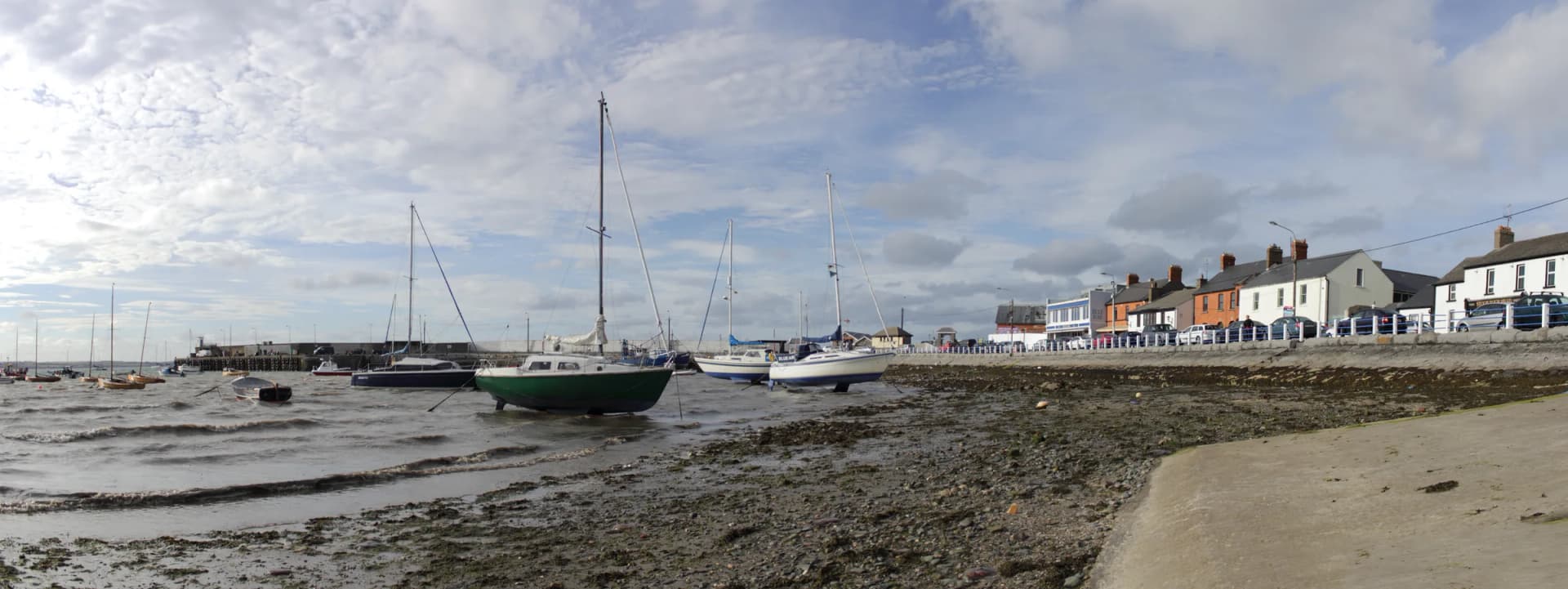
For centuries Skerries was a working fishing harbour and, in the 18th and 19th centuries, a noted centre of hand embroidery. Both industries declined in the early 20th century and the town reinvented itself as a resort. In the late 1940s the Quinn family, founders of the Superquinn supermarket chain, built a holiday camp on Red Island with 250 bedrooms under one roof and a ballroom that drew the showbands; it ran until the early 1970s and was demolished in the 1980s, leaving the headland as parkland. The trains that once brought the holidaymakers now bring the commuters, but the harbour still lands fish and the town still fills up on a fine day.
The Mills and Holmpatrick
On the hill behind the town stand the Skerries Mills: two windmills, a four-sail and the five-sail Great Windmill, and a watermill, all restored and turning. Flour was milled on this site for the medieval monastery of Holmpatrick, and the mills worked into the 20th century before falling idle and being brought back to life from the late 1900s. It is the only property in Ireland with three national monuments, and its courtyard hosts the Saturday farmers market. The mills, more than any single building, are how Skerries pictures itself; the five-sail windmill is the town's emblem alongside the goat.
A Town That Swims
Skerries is a serious sea-swimming town, not a paddling one. The Springboards and the Captains, two deep-water bathing spots on Red Island, have been in use since at least 1929, named for a diving board long since gone. The Frosties, the year-round cold-water crew, swim off them every day, hurricanes aside, and the town's open-water races, the Island Swim, the Round the Head and the South Strand Swim, carry old trophies and are still contested. Add the sailing club, the dinghy fleet and the locally designed Measle, and the water is the centre of the town's social life as much as its sport.
St Patrick and the Goat
Legend has it that St Patrick lived for a time on St Patrick's Island off Skerries, with a goat for company, and that when the islanders stole and ate the goat he struck them dumb until they confessed, leaving them bleating like goats in the meantime. The goat became the town's emblem, and it turns up everywhere, from the crest to a dessert on a harbour menu. Behind the legend is real history: a monastery on Church Island plundered by the Vikings in 797 in one of their earliest recorded raids on Ireland, and a synod held on St Patrick's Island in 1148. Skerries has been a place people landed at for a very long time.
Wildlife & Nature
Marine Life
Grey and harbour seals
Seals haul out on the rocks around the Skerries islands and are regularly seen from the sea tours and from the coastal walk. Grey seals breed along this coast, and the calmer waters off the islands are a reliable spot to see them.
Year-round
Birdlife
Roseate terns
The Rockabill islands hold the largest breeding colony of roseate terns in Europe, alongside common and Arctic terns in their thousands. The colony is a protected site managed with BirdWatch Ireland, and the birds work the water off the coast through the summer.
May to early August
Cormorants, shags and gulls
Cormorants and shags dry their wings on the rocks around the harbour and the islands, alongside the resident gulls and the waders that work the strands. A common year-round coastal sight.
Year-round
Flora
Marram grass and gorse
Marram grass binds the dunes behind the South Strand, and gorse flowers bright yellow along the Red Island and Barnageeragh cliffs in spring. The exposed, salt-laden coast favours hardy, low-growing maritime plants.
Gorse in spring; dune grasses year-round