About Limerick
The history, geography, and character of Limerick.
Limerick is the largest city in Ireland's Mid-West, standing on the River Shannon where the country's longest river reaches the tide on its way to the Atlantic estuary. It grew from a Norman city on King's Island, spread into one of Ireland's finest Georgian quarters in the eighteenth century, and today is known as the rugby heartland of the country, the home of Munster Rugby at Thomond Park. Its Irish name, Luimneach, means bare marsh, and locals call it the Treaty City after the Treaty of Limerick signed here in 1691. It is a compact, walkable city with deep medieval and Georgian history, a serious market-and-food culture, and a strong sense of its own renewal.
History & Heritage
Medieval Limerick on King's Island
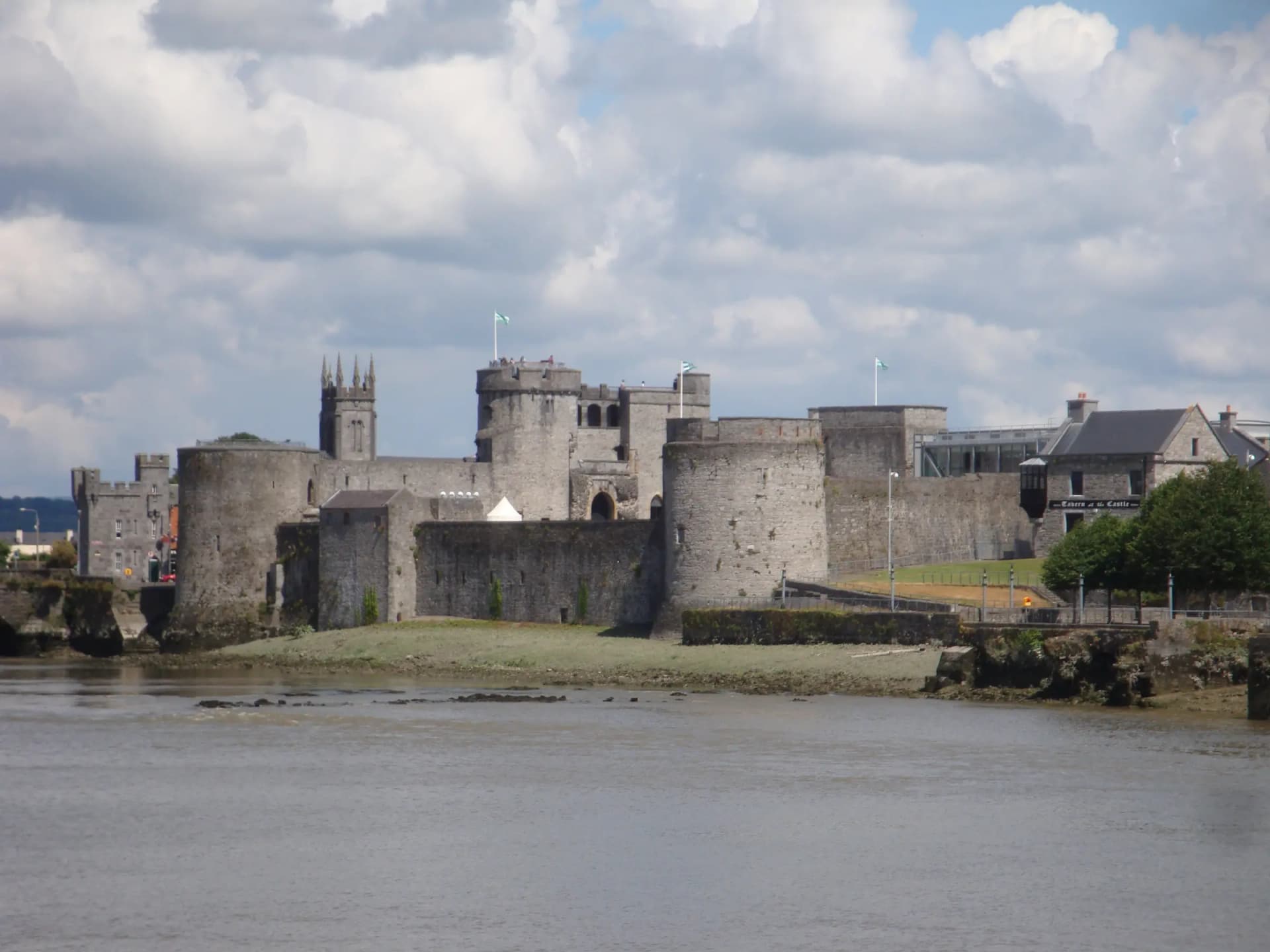
The oldest part of Limerick sits on King's Island, where the Shannon and the Abbey River meet, the Norman core of the medieval city. King John's Castle, an early-thirteenth-century fortress built on the orders of King John, still dominates the riverside with its curtain walls and drum towers, and a short walk away is St Mary's Cathedral, founded in 1168 and the oldest building in the city still in continuous daily use. Across Thomond Bridge on the far bank stands the Treaty Stone, the block of limestone linked to the Treaty of Limerick of 1691, which ended the Williamite war in Ireland and gave the city its civic nickname. Together the castle, the cathedral and the Treaty Stone make up a medieval quarter that can be seen comfortably on foot in a morning.
The Georgian city
In the second half of the eighteenth century Limerick spread south from the medieval island into Newtown Pery, a planned Georgian grid that gives the city the finest Georgian architecture outside Dublin. The O'Connell Street spine runs through it, and the ordered terraces around Pery Square, with the People's Park at their centre, are the showpiece. Restored townhouses now hold No.1 Pery Square, the People's Museum at No. 2, and the Limerick City Gallery of Art, and the streetscape rewards a slow wander. This is the elegant, ordered face of Limerick that surprises many first-time visitors, a world away from the medieval stone of King's Island a few streets north.
Rugby heartland and a market city
Limerick is the rugby heartland of Ireland. Munster Rugby play at Thomond Park on Cratloe Road, a ground with a fearsome reputation and a place in sporting folklore, not least for the day Munster beat the All Blacks here in 1978, and on a match day the whole city revolves around the ground. Alongside the rugby runs a serious food culture, anchored by the Milk Market off Cornmarket Row, a covered market trading since the 1850s that fills on a Saturday with bread, cheese, coffee, hot food and the whole city passing through. The city's food heritage runs deep: Limerick was long a bacon-curing centre, which earned it the affectionate nickname Pigtown, celebrated each autumn in the Pigtown culture and food series.
The Shannon and a city renewed
Limerick sits at the tidal head of the Shannon, and the river is central to the city's character: it rises and falls by around six metres on a spring tide along the quays, and tumbles over rock at Curragower Falls beneath the castle. The city also carries a more recent story of renewal. For decades Limerick fought an unfair media reputation, the tired Stab City stereotype that outlets eventually withdrew and apologised for, and the misery framing borrowed from Angela's Ashes. Locals talk about that history in the past tense and about regeneration in the present, and the confident, revived city centre bears them out. Limerick is also the natural base for the wider Mid-West, with County Limerick day trips to Adare, Foynes and Newcastle West and the Shannon Estuary within easy reach.
Wildlife & Nature
Marine Life
Atlantic salmon on the Shannon
The Shannon is one of Ireland's great salmon rivers, and Atlantic salmon run the river through and above the city on their way upstream. The tidal water at Limerick, tumbling over Curragower Falls beneath the castle, is part of that river system, a reminder that the Shannon is a living river as well as the city's centrepiece.
The salmon run is generally spring into summer
Shannon Estuary dolphins and birds
Downstream of the city the Shannon widens into a major estuary that holds a resident group of bottlenose dolphins and, in winter, internationally important numbers of wildfowl and wading birds on its mudflats. The estuary is reached from the city on a County Limerick day trip toward Foynes, rather than in the city itself, but it is part of the Shannon's wider natural story.
Dolphins in summer; wintering birds from autumn to spring