Drink
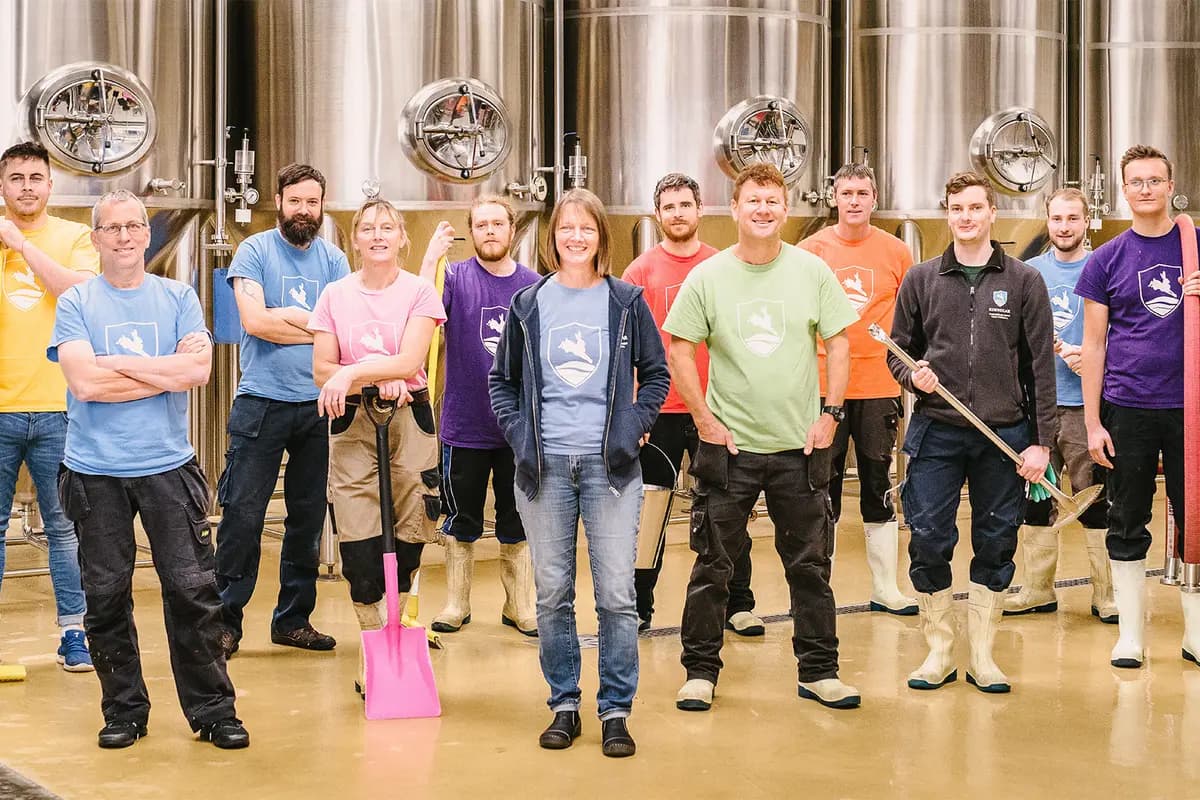
Kinnegar Brewing
Donegal's best-known independent brewery, now brewing in Letterkenny.
Known for: Donegal Lager
Everything you need to know before you head out: weather, what to pack, the best seasons, and useful links.
Half-day highlights, full-day explorer, rainy day plan, and weekend escape: all mapped out step by step.
Letterkenny sits inland on the River Swilly rather than directly on the coast, but it still gets the full Donegal weather: a temperate oceanic climate with high humidity, frequent rain spread right through the year, and roughly twenty days of snowfall between December and March. Summers rarely climb past the mid-20s Celsius and winter days rarely fall below freezing, but the wind off the surrounding hills can make it feel colder than the thermometer suggests.
Local producers, markets, and makers worth a stop before you leave Letterkenny.
Donegal's best-known independent brewery, now brewing in Letterkenny.
Known for: Donegal Lager
Drink
Food
The Cathedral Quarter street feast lands in late May, and the Swilly walk is at its best before the summer traffic builds on the approach roads.
Spring is a working-town season in Letterkenny rather than a tourist one, and that suits it. The Cathedral Quarter Street Feast usually runs in late May on Church Lane, a genuinely local afternoon of street food and live music rather than anything staged for visitors. The Port Bridge and Ballyraine loop along the River Swilly is quiet before the summer, good for an hour's walk without much company. Daylight stretches out fast through April and May, and the drive out to Glenveagh National Park is at its clearest before the peak-season queues start at the visitor centre. St Eunan's Cathedral is worth timing around Easter if choral music is your thing, though check the parish for exact service times before planning around it.
Earagail Arts Festival takes over the Regional Cultural Centre and venues across the county for two weeks in July; the Donegal International Rally fills the town's hotels in June.
Summer is Letterkenny's busiest stretch by some distance. The Donegal International Rally, based in the town since the 1970s, brings tens of thousands of spectators to the county in June and books out every hotel bed for miles, so plan well ahead if the rally dates overlap with a visit. The Earagail Arts Festival runs across the back half of July, with a strong programme at the Regional Cultural Centre alongside events further out in Gaoth Dobhair, Gola Island and beyond. It's also the best stretch to use Letterkenny as a base for Glenveagh, Fanad Head and Inishowen, since the days are long enough to get out and back in comfort. Kinnegar Brewing's taproom is a good wet-weather backup, which this being Donegal in summer, is not a purely theoretical concern.
Quieter roads, the museum and cultural centre come into their own, and the Donegal Harvest Rally passes through in October.
Autumn strips away the rally and festival crowds and leaves Letterkenny as itself: a working county town with a genuinely good indoor offer for a wet afternoon. The Donegal County Museum and the galleries at the Regional Cultural Centre are the obvious calls when the weather turns, and Newmills Corn and Flax Mills, just outside town, closes for the season in early October so an autumn visit needs to land before then. The restaurant scene holds up well through the shoulder season, since Letterkenny's kitchens serve a resident population all year rather than only a summer crowd. The light on the cathedral spire on a clear October evening is better than most visitors expect from a county town.
The Christmas lights switch-on at Market Square marks the start of the season; the Cathedral is at its most atmospheric for midnight Mass.
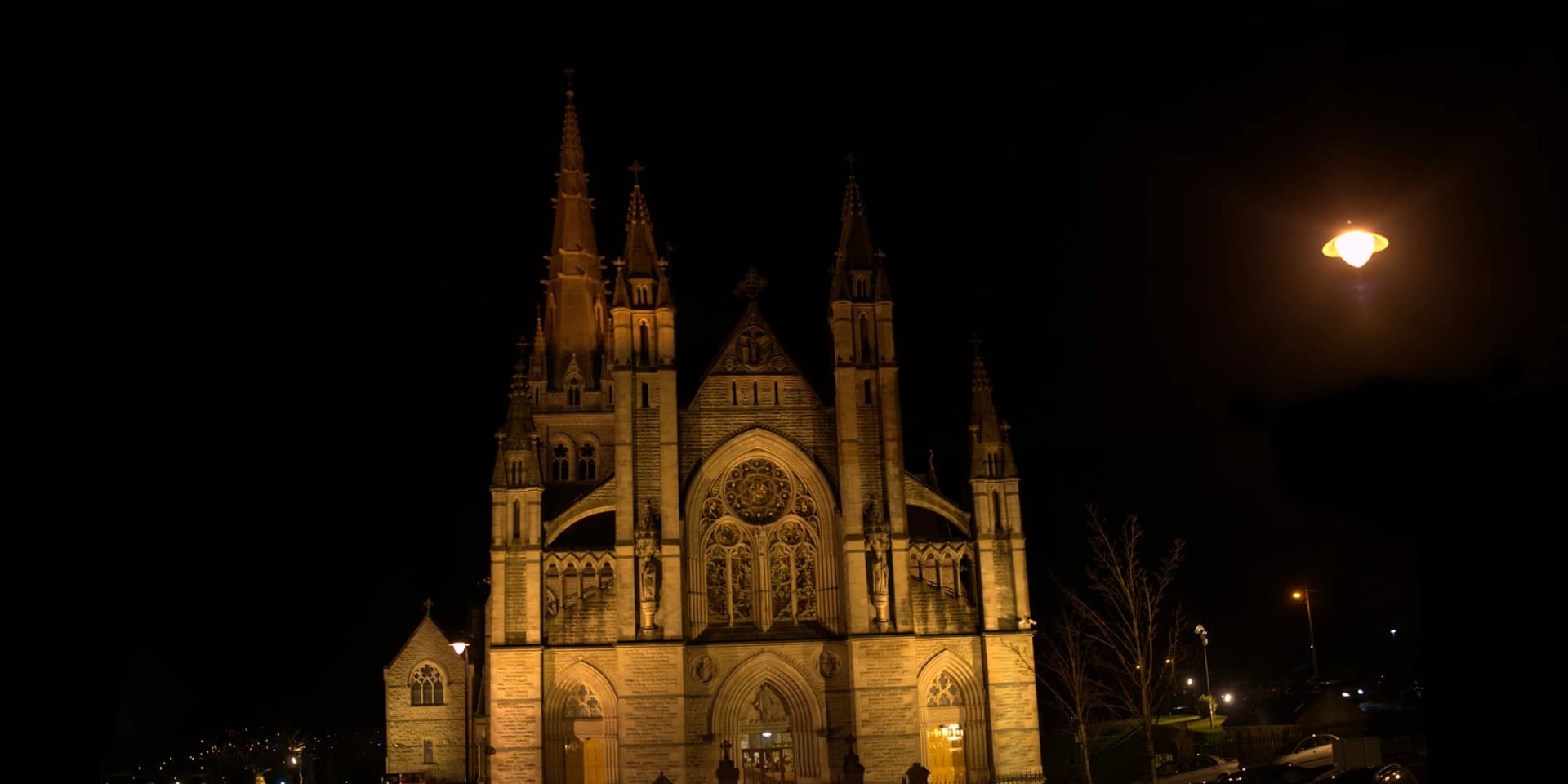
Winter in Letterkenny centres on Market Square, where the Christmas lights switch-on usually lands in late November and marks the unofficial start of the season for the whole county. St Eunan's Cathedral, floodlit against a dark hillside, is worth a look even if you have no service to attend. Main Street's restaurants and pubs do steady trade through December regardless of visitor numbers, which is the advantage of a town built around residents rather than tourists. Roads out to Glenveagh and the peninsulas can be affected by wind and occasional snow in this window, so check conditions before a day trip, and book ahead for the Christmas Day carvery crowd at any of the main hotels.