Home baking and local produce
Market
Killarney Country Market
A weekly Friday-morning market of local baking, produce and craft in the town centre.
Known for: Home baking and local produce
Hours: Fridays 10:00-14:00
Everything you need to know before you head out: weather, what to pack, the best seasons, and useful links.
Half-day highlights, full-day explorer, rainy day plan, and weekend escape: all mapped out step by step.
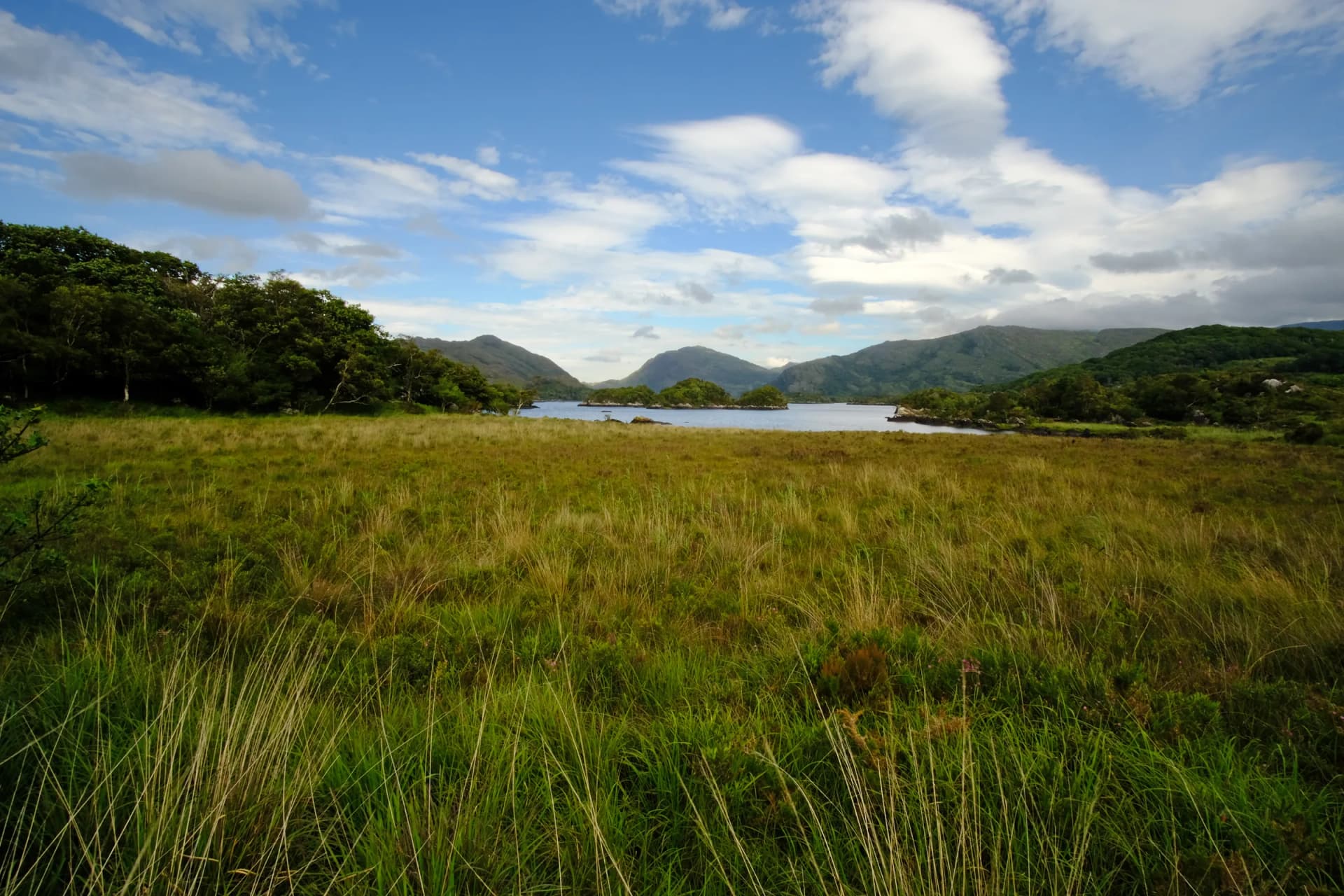
Killarney sits inland at the foot of the MacGillycuddy's Reeks, Ireland's highest mountains, in a temperate oceanic climate that is mild and very wet. The mountains wring the moisture out of the Atlantic air, so the Killarney valley is one of the wetter parts of Ireland, with well over 1,200 mm of rain a year and rain on roughly 200 days. Temperatures are gentle and rarely extreme: January averages about 6°C and July about 15°C. The lakes and the woods hold the damp, so mist on the water and low cloud on the Reeks are common, especially morning and evening.
Local producers, markets, and makers worth a stop before you leave Killarney.
Home baking and local produce
A weekly Friday-morning market of local baking, produce and craft in the town centre.
Known for: Home baking and local produce
Hours: Fridays 10:00-14:00
Hand-made Irish-butter toffee
Hand-made, small-batch toffee using Irish butter, sold through Killarney craft shops and delis.
Known for: Hand-made Irish-butter toffee
A town-centre café and chocolatier known for handmade truffles, including Baileys and Guinness flavours.
Known for: Handmade chocolate truffles
Hours: Daily 7:00-18:00
Shoulder season before the summer coaches. The park is at its greenest, the waterfalls are full from winter rain, and the rhododendron the park is fighting is in flower (an invasive, not an attraction). Good walking before the heat and the crowds.
Spring is the park before the tour buses find it again. The Owengarriff is in full spate after the winter rain, so Torc Waterfall is at its loudest, and the oak woods at Muckross and Reenadinna are coming back into leaf. It is the best walking window of the year: the Old Kenmare Road, the lake paths to Ross Castle and the Muckross peninsula are quiet, the midges are not out yet, and the light is long. One honest note for spring visitors: the purple flush you will see taking over parts of the woods is Rhododendron ponticum, an invasive the National Parks and Wildlife Service spends heavily clearing every year, not a native bloom to seek out. Come for the native woods instead, and for the gardens at Muckross House, which hit their stride as the season turns.
Peak season. The Gap of Dunloe and the lake boats run all day, the jaunting cars are busy, and the town is at its most crowded. Book the boat-and-coach trips and accommodation well ahead; this is also festival season.
Summer is Killarney doing the thing it was built for. The classic day is the Gap of Dunloe: a jaunting car or a walk up through the pass between the Reeks and the Purple Mountain, then the open boat back across the Upper Lake, Muckross Lake and Lough Leane to Ross Castle, a route that has run since the Victorians. The lake cruises to Innisfallen go all day, the bike-hire shops empty out for the park loops, and the jaunting cars line up near the cathedral. It is also the busiest the town gets: July brings the Killarney Racing Festival out at Ballybeggan, the streets are full, and a bed in town can be hard to find on a race weekend. Book the Gap trip and your accommodation ahead, start the popular walks early, and keep a wet-weather plan, because a Kerry summer is not a guarantee of sun.
The signature season. The red deer rut runs late September into late October (peak around the second week of October), the oak woods turn copper, and the summer crowds thin. The best time to be in the park.
Autumn is the season Killarney is really for. From late September into late October the native oak woods turn, the bracken on the lower slopes goes copper, and the park fills with the sound of the red deer rut: stags roaring across the valleys and clashing for the herd, with the peak usually around the second week of October. Killarney holds Ireland's only wild herd of native red deer, and Knockreer, the Muckross peninsula and the Killarney House parkland are among the most reliable places in the country to see and hear it, from a respectful distance. The summer coaches have thinned, the light goes gold and low through the trees, and the misty mornings on Lough Leane are the postcard the town has sold for two hundred years. Bring a waterproof and good boots; autumn is also when the rain returns in earnest.
Quiet, wet and atmospheric, lifted by Christmas in Killarney through November and December, when the town centre goes full festive. The park is empty and beautiful; some boat and Gap operators wind down for the season.
Winter empties the park and fills the town. Christmas in Killarney takes over the centre from mid-November, with the streets lit, a festive market and a programme that has become one of the bigger Christmas draws in the southwest, so the town is busy again for all the indoor reasons. The park, by contrast, is at its quietest and most striking: the oak woods bare, the lakes steel-grey, Ross Castle and Muckross Abbey standing alone without a queue. Some of the seasonal operators, the open Gap boats and a share of the jaunting cars, wind down or run on demand through the deep winter, so check before you plan a lake day. This is the season for the long lunch and the trad pub: Killarney keeps music going year-round, and a wet Kerry afternoon is exactly what the fire in the back bar is for.
Check Met Eireann for the latest Killarney forecast before you head out.
Met Eireann
Plan your train journey to Killarney. Check live departures, fares, and route options on the national Irish Rail network.
Irish Rail
Plan your journey to Killarney by train, bus, or car.
Transport for Ireland
Detailed transport options for reaching Killarney by train, bus, car, taxi, or bicycle.
TravelPlan.guide