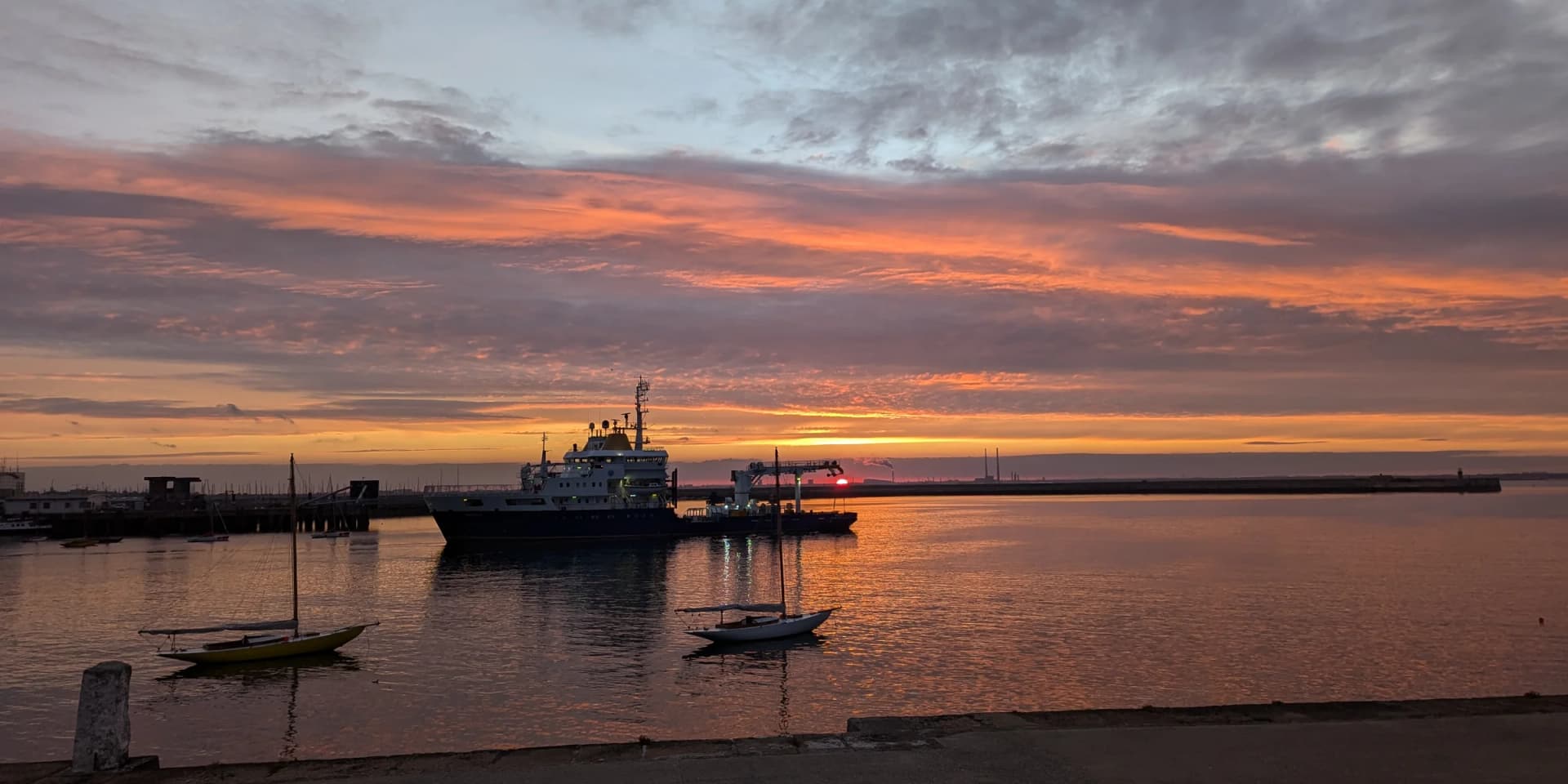
About Dún Laoghaire
The history, geography, and character of Dún Laoghaire.
Dún Laoghaire is the south-coastal Dublin town locals still call Dunleary, twelve kilometres from the city centre on the south side of Dublin Bay. The harbour was built between 1817 and the 1840s; the two granite piers are the longest in Ireland and the East Pier remains a working evening promenade for joggers, parents with buggies, and sea swimmers heading to the Forty Foot. The town held the name Kingstown for ninety-nine years before being restored to its Irish form in 1920.
History & Heritage
The Harbour and the Piers
Construction on the harbour began in 1817, driven by a need for a deep-water refuge for ships waiting out the weather at the entrance to Dublin Bay. The two granite piers were built across the following three decades to an asymmetric layout; the West Pier is the longer of the two. Both are built of unmortared granite quarried from Dalkey Hill, brought down on a horse-drawn railway whose alignment gave the present coastal path its local name, the Metals. The pier-end lighthouses were lit in the mid-19th century and the East Pier bandstand was added later in the Victorian period.
The Kingstown Decades
George IV visited the town in September 1821 and the name Kingstown was conferred shortly afterwards. The name lasted ninety-nine years and the Victorian and Edwardian period was the town's peak as a fashionable south-Dublin seaside resort. Sea bathing was already well established by then; the Forty Foot, named after the 40th Foot regiment formerly stationed in the area, has been a swimming spot since well before the town's Victorian heyday. The People's Park opened to the public in 1890. The town reverted to the Irish form of its name in 1920 as one of the symbolic acts of the independence period.
Joyce at Sandycove
James Joyce spent six nights in September 1904 in the Martello tower at Sandycove Point, then occupied by Oliver St John Gogarty. The tower would become the setting for the opening chapter of Ulysses, published in 1922. The tower is now a free museum run by volunteers. The Forty Foot bathing place is forty yards from the tower door; the swimmers who appear at the very start of the novel are the same swimmers who appear there every morning today.
The End of the Ferry
A ferry sailed between Dún Laoghaire and Holyhead in Wales from 1835 until 2014, peaking in the late 1990s with 1.7 million passengers a year on the Stena HSS, the world's largest fast-ferry at the time. Passenger numbers collapsed after the abolition of duty-free shopping in the late 1990s and the rise of low-cost air travel. The final sailing was in September 2014. The custom-built HSS terminal on St Michael's Pier has stood largely empty since, used occasionally for events and council meetings. The harbour pivoted to cruise calls in its place; 2026 will see more than seventy cruise-ship visits.
Today
The harbour is now a yacht-club and cruise port, with the RNLI lifeboat station and the Irish Coast Guard maintaining a year-round presence on the East Pier. dlr LexIcon opened on the seafront in 2014 as the new central library and cultural centre. The Sunday CoCo Market draws fifty independent producers to the People's Park every week. Dún Laoghaire-Rathdown County Council, the local authority, has invested heavily in walking and cycling infrastructure along the coast. The town is a 25-minute DART ride from Dublin city centre and remains one of the most-used day-trip destinations on the southern line.
Wildlife & Nature
Marine Life
Harbour porpoise
Small dark-backed cetaceans, surfacing in pairs or small groups offshore from the pier ends. Dolphin sightings also turn up a few times a year on calm-water days.
Spring and summer
Birdlife
Brent geese
Pale-bellied Brent geese overwinter in the inner harbour and along the West Pier after migrating from Arctic Canada. Peak counts in November and December.
October to April
Cormorants and shags
Both species drying their wings on the granite pier walls and harbour rocks is a common year-round harbour sight.
Year-round