About Cashel
The history, geography, and character of Cashel.
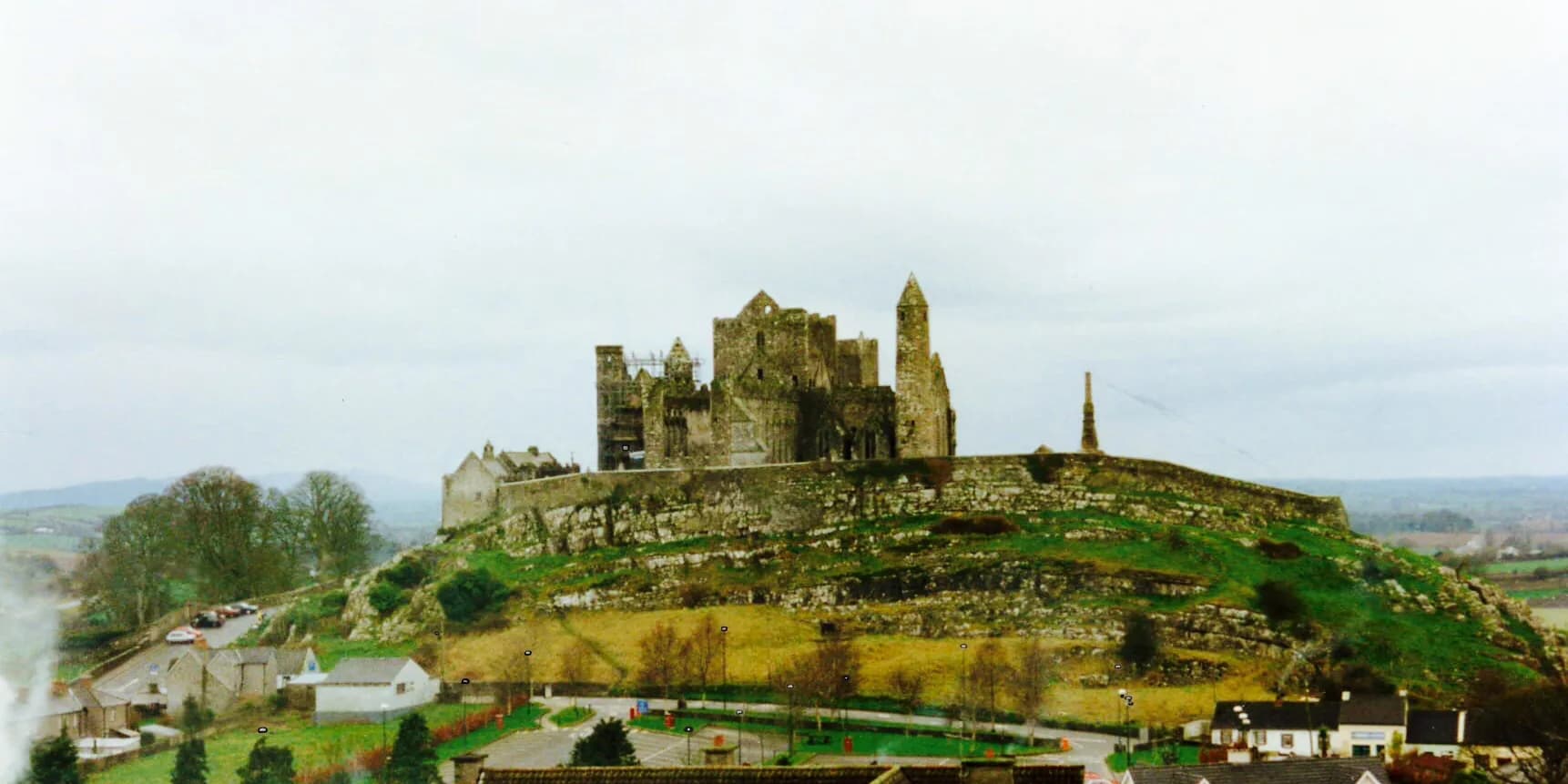
Cashel is a small town in south Tipperary that the whole world of medieval Ireland seems to have passed through. The reason is the Rock, a limestone outcrop rising out of the Golden Vale that was the seat of the kings of Munster before it became one of the great ecclesiastical sites of the country. The town below it is a single long main street of pubs, cafes and the reopened Georgian palace, set in the rich dairy farmland that gives the area its food. Most visitors come for an hour at the Rock; the ones who stay find a town with deep history and good eating that rewards the afternoon.
History & Heritage
Cashel of the Kings
The name Cashel comes from the Irish Caiseal, a stone ringfort, and the fort is the Rock that dominates the town. For around four hundred years it was the royal seat of the Eoghanachta, the kings of Munster, and tradition holds that St Patrick came here in the fifth century and baptised the king, losing the tip of his crozier through the king's foot in the process without the king crying out, thinking it was part of the rite. Around the year 1101 the king of Munster, Muirchertach Ua Briain, granted the Rock to the church, a shrewd move that denied it to his rivals, and from then on it was an ecclesiastical rather than a royal centre. The Synod of Cashel met here in 1101 and again in 1172, reshaping the Irish church. The title Cashel of the Kings, or the City of the Kings, has stuck ever since.
The Rock and what stands on it
What you climb to today is the work of the centuries after the church took over. The round tower, the oldest surviving building on the Rock, dates from around the early 12th century. Cormac's Chapel, consecrated in 1134, is one of the finest Romanesque churches in Ireland, with carved heads, blind arcading and the remains of rare medieval wall paintings, and it is shown on a separate guided tour to protect it. The roofless Gothic cathedral that dominates the silhouette was built through the 13th century. The Hall of the Vicars Choral, restored, houses the original St Patrick's Cross, with a replica standing outside. The whole complex, managed by the OPW, is among the most complete medieval ecclesiastical sites in the country, and the view from it across the Golden Vale explains why the kings chose the spot.
The Golden Vale and its food
Cashel sits in the Golden Vale, the broad belt of rich limestone pastureland that runs across south Tipperary, Limerick and north Cork, the best dairy land in Ireland. That farmland is why the area is known for its food, above all Cashel Blue, Ireland's original farmhouse blue cheese, made by the Grubb family near Fethard since the 1980s and named for the town. The Vale is Tipperary at its most productive, and the produce shows up on the cheeseboards and menus of the town's restaurants, from the Michelin-starred Bishop's Buttery at the Cashel Palace to the gastropub plates at Mikey Ryan's. For a town of its size, Cashel eats very well.
The town and the tradition
Below the Rock, Cashel is a quiet market town on what was for centuries the main Dublin to Cork road, until the M8 motorway bypassed it in 2004 and handed the long main street back to the locals. The Cashel Palace, a Georgian archbishop's residence, reopened in 2022 as a five-star hotel after years closed. At the foot of the Rock is Bru Boru, the Comhaltas heritage centre, which keeps the living tradition of Irish music going with its summer seisiun of trad music, song and dance. The Folk Village and the Heritage Centre hold the town's social history. This is Tipperary, the Premier County, hurling country to its core, and the town carries its long past lightly rather than as a museum piece.
Wildlife & Nature
Birdlife
Jackdaws and rooks
The Rock of Cashel is alive with jackdaws and rooks, which nest in the cracks and ledges of the round tower, the cathedral walls and the ruined gables. Their calls are part of the sound of a visit, and they wheel around the towers at dusk in large numbers. A common but characterful presence on the medieval stone.
Year-round, busiest at dusk
Golden Vale farmland birds
The pasture and hedgerows of the Golden Vale around the town hold the common birds of Irish farmland: rooks and crows over the fields, robins and finches in the hedges, and buzzards increasingly seen overhead in recent years as the species has recovered across Tipperary. The walk out to Hore Abbey and the High King Loop pass through this farmland.
Year-round