About Whitstable
The history, geography, and character of Whitstable.
Whitstable: a working oyster town on the Kent coast. Whitstable sits on the north Kent coast where the River Swale meets the wider Thames Estuary, about 8km north of Canterbury. Its identity has been tied to oyster harvesting since Roman times, and the town's harbour, opened in 1832 to a design by the railway engineer Robert Stephenson, is still a genuine working harbour rather than a marina. The Domesday Book recorded it in 1086 as Witenestaple. The Canterbury and Whitstable Railway, which opened in 1830 and connected the town to Canterbury, is remembered locally as the Crab and Winkle line and is credited as one of the world's first regularly scheduled steam-hauled passenger and freight railways; its route now forms part of a walking and cycling trail of the same name. Whitstable's five wards, Tankerton, Seasalter, Chestfield, Swalecliffe and Gorrell, wrap a compact centre most visitors can walk in twenty minutes end to end: the harbour and its fish stalls, the High Street and Harbour Street's independent shops, and the seafront path east toward Tankerton Slopes, where the grass gives way to The Street, a shingle spit that surfaces at low tide and disappears completely at high water. Novelist W. Somerset Maugham spent part of his childhood in the town, and actor Peter Cushing lived and is buried here.
History & Heritage
Highlights
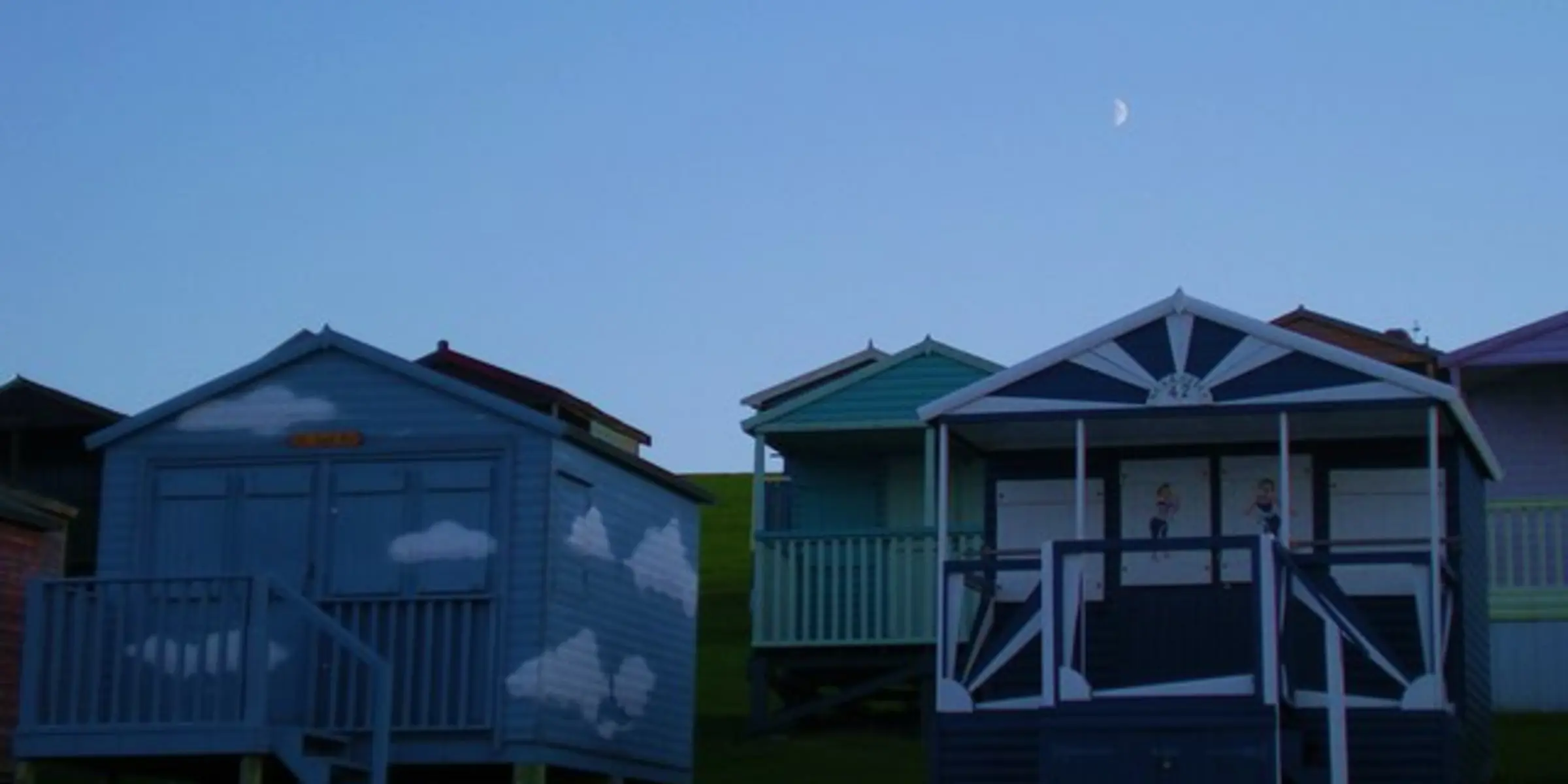
A genuine working harbour, opened in 1832 to a Robert Stephenson design, still landing fish and oysters; the Whitstable Native oyster and a food scene built around it, from a Michelin-starred pub at Seasalter to a High Street counter that seats barely eight people; Tankerton Slopes and The Street, a tidal shingle spit that appears and disappears with the tide; weatherboard fishermen's huts on Island Wall, some now converted to unusual overnight stays; Whitstable Castle, an octagonal 1789 tower turned manor house with landscaped gardens; the Whitstable Rocks Oyster Festival each September, the town's biggest weekend of the year.
Wildlife & Nature
Marine Life
Native oysters (Ostrea edulis) farmed in beds off the harbour and at Seasalter
Farmed in beds off Whitstable's harbour and at Seasalter, the species this whole town's identity and food economy is built around.
Traditionally in season across the autumn and winter months, in the months containing an "r", though farmed oysters are available for longer
Seals occasionally reported in the estuary and around the harbour mouth
An occasional, unpredictable sighting around the harbour mouth rather than a guaranteed one.
year-round
Wading birds along the mudflats and shingle at low tide, including at Tankerton Slopes and The Street
Best looked for on the exposed mud and shingle when the tide is out, since that is when they feed.
Low tide, year-round
Birdlife
Skylarks and other grassland birds at Duncan Down Local Nature Reserve
Found in the chalk grassland habitat of Duncan Down Local Nature Reserve, just south of the town.
Spring, as the reserve's wildflowers and skylark activity pick up through April and May
Wading and estuary birds along the foreshore at low tide
Visible along the foreshore as the tide exposes mud and shingle feeding grounds.
Low tide, year-round
Flora
Hog's Fennel, a nationally scarce plant found on Tankerton Slopes
A nationally scarce plant that makes Tankerton Slopes a locally significant wildlife site in its own right.
year-round
Chalk grassland wildflowers at Duncan Down Local Nature Reserve
Part of the chalk grassland habitat that also supports skylarks and other grassland birds at the reserve.
Spring, as the reserve's wildflowers come into bloom