About Sligo
The history, geography, and character of Sligo.
Sligo is the county town of County Sligo, sitting where the short Garavogue River runs from Lough Gill out to Sligo Bay on Ireland's northwest coast. Its Irish name, Sligeach, means "abounding in shells", a reference to the shellfish once gathered at the river mouth. With a population of just over 20,600 at the 2022 census, it's the largest town in the northwest and functions as a proper regional centre, with its own university hospital, an ATU campus, a working port history, and a live cultural calendar, not a sleepy stopover on the way to somewhere else. It's most widely known as the place that shaped W.B. Yeats, whose maternal family were Sligo merchants and who is buried a short drive north at Drumcliffe, beneath the flat-topped limestone ridge of Benbulben that dominates the skyline from many points in town.
History & Heritage
History
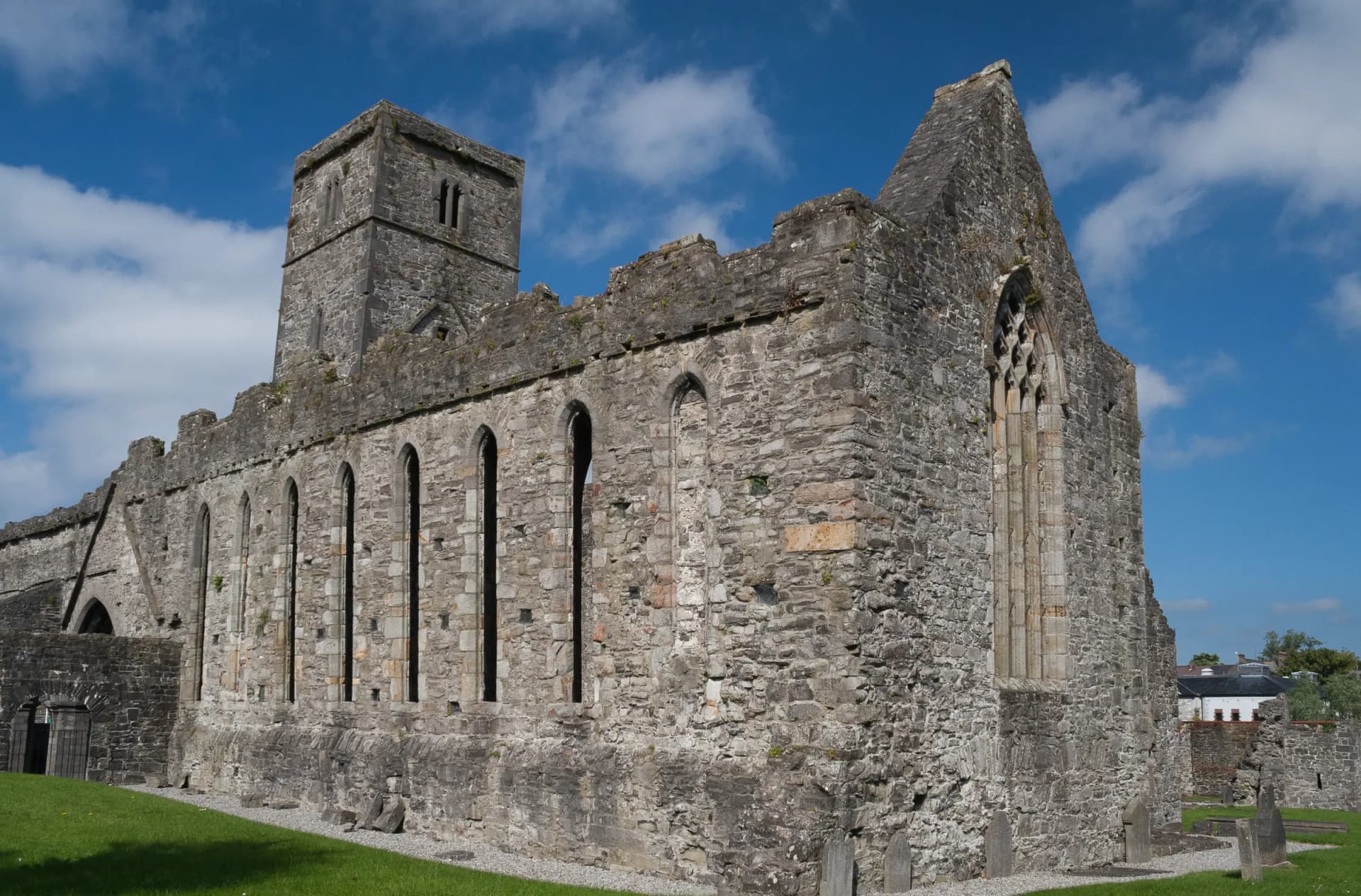
Sligo was founded as a Norman town in 1245 by the knight Maurice Fitzgerald, who built Sligo Castle at the lowest crossing point of the Garavogue. Unusually for a Norman foundation, it stayed under native Irish control, principally the O'Conor Sligo family, for most of the medieval period, and the town endured dozens of raids while continuing to prosper as a trading port. Sligo Abbey, the Dominican priory still standing in the town centre, dates to this era and survived a 1414 fire and deliberate destruction in 1642 during the Confederate Wars, later serving as a burial ground during the 1832 cholera epidemic and the Great Famine, when more than 30,000 people emigrated through Sligo port between 1847 and 1851.
Yeats and Sligo
W.B. Yeats wasn't born in Sligo, but his mother's family, the Pollexfens, were Sligo merchants and shipowners, and he spent much of his childhood here on family visits. The county's landscape runs through his poetry: Lough Gill and its Lake Isle of Innisfree, the woods at Hazelwood, and Benbulben itself, under which he chose to be buried at Drumcliffe churchyard. His epitaph, carved on the headstone at his own instruction, reads "Cast a cold eye / On life, on death. / Horseman, pass by!" The town runs an annual Yeats International Summer School each July, now in its sixties, and The Model gallery holds the Niland Collection, which includes work by his brother, the painter Jack B. Yeats.
A Growing Food Scene
Sligo's food scene has broadened out in recent years from its seafood-and-pub-food base. Rockwood Parade, the riverside terrace off the Garavogue, has become the town's informal restaurant row, home to Eala Bhán and Hooked among others, both built around locally landed fish. Newer arrivals like Bia Bao's Asian cooking and Montmartre's French menu sit alongside long-standing institutions such as Hargadon Bros, a Victorian pub trading continuously on O'Connell Street since the 1900s. The Sligo Food Trail, a network of local producers and food businesses, runs a weekly farmers market at ATU Sligo on Saturday mornings.
Surf Country on the Doorstep
Sligo Town itself sits on a tidal river estuary rather than open beach, but it's the natural base for a genuinely strong surf coast. Strandhill, about 8 minutes southwest, has beginner-friendly beach breaks and a cluster of surf schools; Rosses Point and Mullaghmore to the north offer everything from family beaches to some of Europe's biggest rideable big-wave swells at Mullaghmore Head, which draws experienced surfers rather than beginners. This coastal access, alongside the inland walking around Lough Gill and the Ox Mountains, gives Sligo an outdoorsy, all-weather character that shapes the town even though its own streets are set back from the open sea.
Wildlife & Nature
Marine Life
Cummeen Strand wintering waders and wildfowl
Cummeen Strand, the tidal mudflat and sandflat system right by the town where the Garavogue meets Sligo Bay, is a designated Special Protection Area and Special Area of Conservation for wintering waders and wildfowl, including brent geese.
Autumn and winter
Seals
Seals are regularly seen in Sligo Bay and around Coney Island; local boat operators run dedicated seal-watching trips from the harbour.
Year-round, on a seal-watching boat trip from the harbour
Birdlife
Wintering waders and brent geese
Cummeen Strand supports large numbers of wintering waders and brent geese and is protected under both national and EU designations.
Autumn and winter, on Cummeen Strand