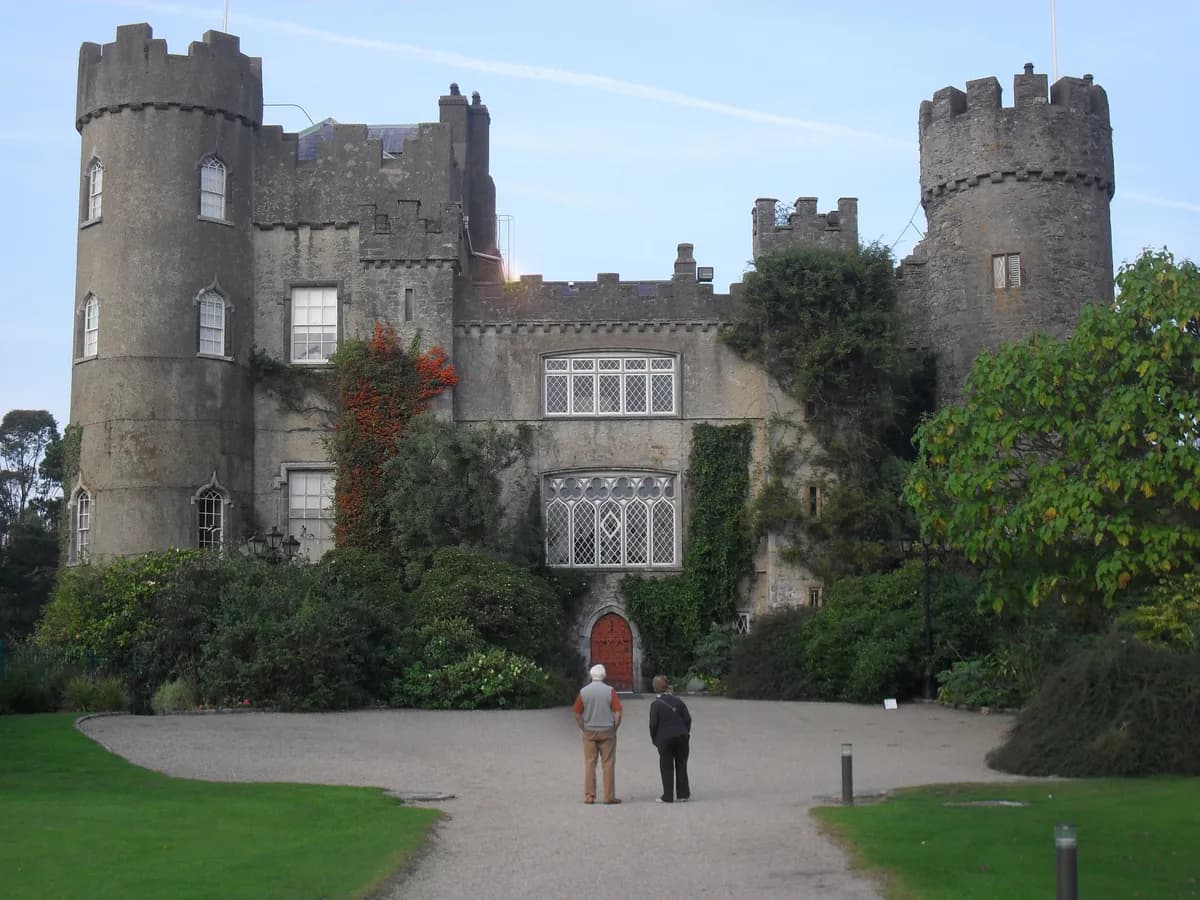
About Malahide
The history, geography, and character of Malahide.
Malahide is a seaside village and affluent suburb on Dublin's northside, about 15km from the city centre. It has been a settlement since Viking times, but today it is best known for the castle, the village restaurant scene, and a stretch of coastline that gives Dublin its best excuse to leave the city for the day.
History & Heritage
Early History
The name Malahide derives from the Irish 'Mullach Íde', meaning 'the hill of Íde'. The area has been settled since prehistoric times, and Viking traders used the estuary as a sheltered harbour from the 9th century onwards. The Broadmeadow Estuary gave the settlement its strategic value long before the Talbots arrived.
The Talbots and the Castle
In 1185, King Henry II granted the lands of Malahide to Richard Talbot, a Norman knight. The Talbot family held the castle and its estates for nearly 800 years, through wars, plantations, and political upheaval. They lost the estate briefly during the Cromwellian period (1649-1660) when Miles Corbet took possession, but regained it after the Restoration. The last Talbot to live there was Milo Talbot, a noted botanist whose plant collection forms the core of the castle's walled garden. He died in 1973, and the estate was sold to Dublin County Council in 1975.
The Castle Today
Now managed by Fingal County Council, Malahide Castle and Gardens is one of the most visited heritage attractions in Ireland. The castle itself has been restored and offers guided tours of the medieval great hall, Victorian drawing rooms, and the extensive art collection. The 260-acre parkland is free to enter and is the green lung of the community, used daily by walkers, runners, dog owners, and families.
Village Life
Malahide village has evolved from a quiet fishing settlement to one of Dublin's most desirable addresses, but it has kept its village identity. The Main Street, Church Road, and the Green form a compact centre with independent shops, restaurants, and pubs that gives the place a sense of community that many Dublin suburbs have lost. The marina, completed in 2001, added a new dimension to the waterfront.
The Estuary
The Broadmeadow Estuary, which forms the western boundary of Malahide, is a Special Protection Area and a Ramsar wetland site of international importance. It is home to wintering populations of Brent geese (arriving from Arctic Canada each October), as well as oystercatchers, redshank, and other wading birds. The estuary also supports a rich intertidal habitat of mudflats, saltmarsh, and sand dunes.
Wildlife & Nature
Marine Life
Brent Geese
Light-bellied Brent geese arrive from Arctic Canada each October and winter on the estuary mudflats until April. The Broadmeadow Estuary is one of the most important wintering sites in Ireland, with thousands of birds at peak season.
October to April. Best viewed at low tide from the estuary path.
Birdlife
Estuary Wading Birds
The estuary supports oystercatchers, redshank, curlew, and other wading birds year-round. It is designated a Special Protection Area and Ramsar wetland site of international importance.
Year-round, best at low tide.
Exotic Butterflies
The Butterfly House at Malahide Castle contains hundreds of exotic butterfly species from around the world, flying freely in a heated tropical glasshouse.
Year-round (indoor attraction).