About Ballina
The history, geography, and character of Ballina.
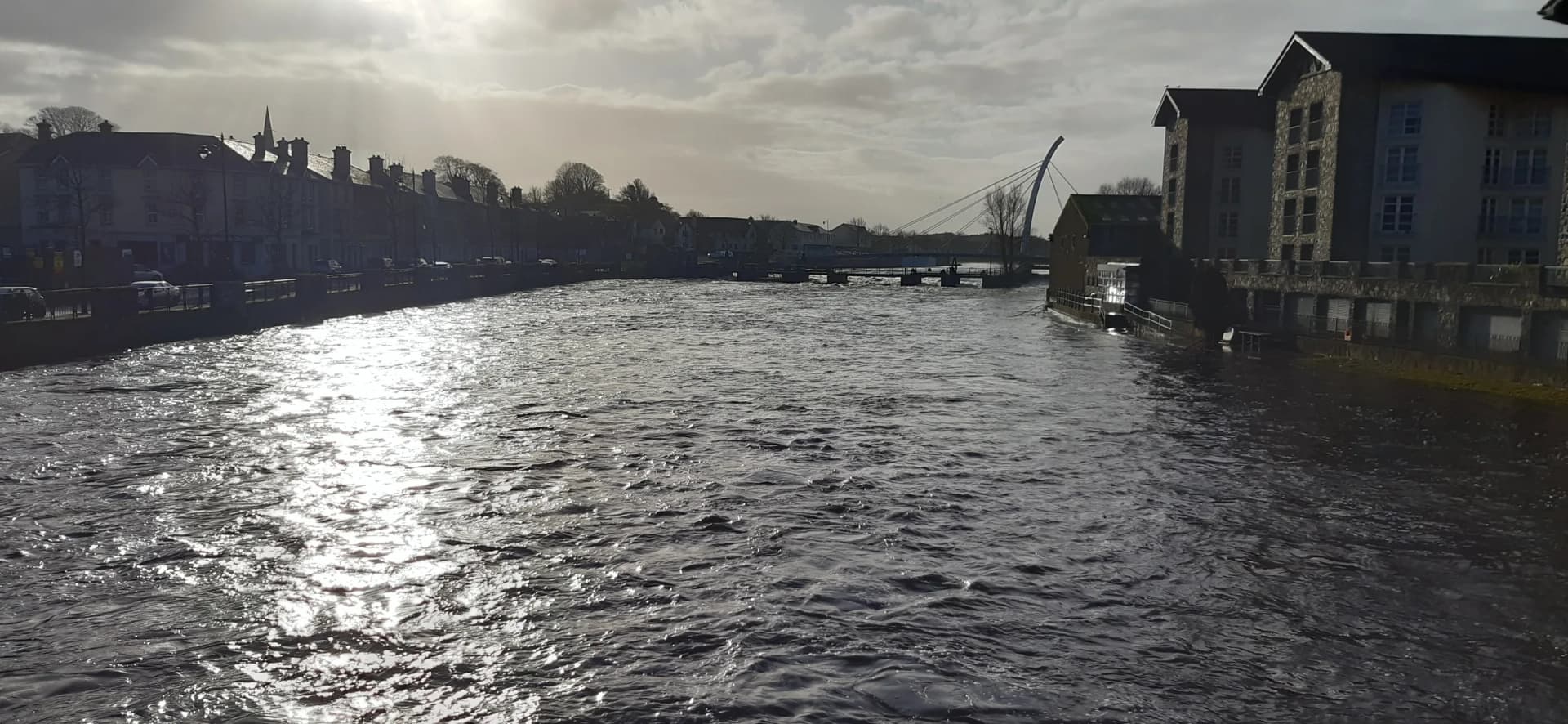
Ballina sits on the tidal River Moy in the north of County Mayo, the largest town in the region and the natural base for the whole of North Mayo. Its Irish name, Béal an Átha, the mouth of the ford, records what it has always been: a crossing point on a great river. The Moy made the town, first as a market and milling centre and then as one of the most prolific salmon rivers in Ireland, with the Ridge Pool running through the very centre of the streets. Add a free museum of national importance, a President's birthplace, a castle in a forest and a cathedral on the water, and Ballina is a working Mayo town with far more to it than a passing driver would guess.
History & Heritage
The River and the Salmon
Everything in Ballina runs back to the Moy. The river comes down off the Ox Mountains and Lough Conn, drops over the weir in the centre of town, and forms the Ridge Pool, a short fly-only stretch that is one of the most productive pieces of salmon water in Ireland. Anglers stand casting here in the middle of the town, in sight of the shops and the cathedral, which is why Ballina calls itself, with a fair claim, the Salmon Capital of Ireland. The season runs from February to the end of September, with the summer grilse run from June the high point. Even if you never fish, the sight of the river working through the heart of the town is the thing that makes Ballina what it is.
The Year of the French and a President
Ballina has produced more history than a town its size has any right to. In 1798, the Year of the French, General Humbert's small French army landed at nearby Killala in support of the United Irishmen, took Ballina, and marched inland before the rising collapsed at Ballinamuck; the Humbert monument in the town still marks it. A century and a half later the town produced Mary Robinson, born here in 1944, who became the first woman President of Ireland and later the United Nations High Commissioner for Human Rights. Her Victorian childhood home was bought to become the Mary Robinson Centre, a museum project that has yet to open its doors, and she remains a reminder that Ballina has a habit of punching above its weight.
Jackie Clarke and the Red-Brick Town
The town's other great inheritance is The Clarke Museum of Irish History, built on the Jackie Clarke Collection, the single most important private collection of Irish historical material in public hands, and it is free. Jackie Clarke was a Ballina fishmonger and salmon smoker, the same family that still runs Clarke's smokery on O'Rahilly Street, and over a lifetime he quietly amassed more than 100,000 items: proclamations, posters, rare books and letters from the likes of Michael Collins and Michael Davitt. The collection is displayed in a restored red-brick Victorian bank on Pearse Street, one of a streetscape of handsome 19th-century brick fronts that give the heart of Ballina its character.
The North Mayo Base
Ballina is the practical base for the wilder edge of North Mayo, and most visitors use it exactly that way: a town to sleep, eat and stock up in between days out. To the north, the cliffs at Downpatrick Head and the prehistoric Céide Fields run along a dramatic stretch of the Wild Atlantic Way; the long Atlantic strand and the Edwardian seaweed baths at Enniscrone are about 10 km north; and the medieval friaries of Rosserk and Moyne stand on the Moy estuary just out of town. Belleek Woods, on the edge of Ballina itself, gives the town a forest of its own. It is a town that rewards stopping rather than passing through, and a good place to base a few days in the northwest.
Wildlife & Nature
Marine Life
Atlantic salmon
The Moy is one of the most prolific salmon rivers in Ireland, and the Atlantic salmon is Ballina's defining species. The fish run in from the sea to spawn, with the spring run from February and the much larger grilse run, young salmon back from the ocean for the first time, filling the river from June. The Ridge Pool in the town centre is the best place in Ireland to watch them being fished for.
Summer (the grilse run from June) for numbers
Sea trout
Alongside the salmon, the Moy and its estuary hold runs of sea trout, the migratory form of brown trout, which come in from Killala Bay through the summer. They are a quarry for anglers in their own right and part of what makes the Moy system one of the great game fisheries of the west.
Summer
Mammals
Otter
Otters work the length of the Moy through the town and out into the estuary, and the quiet riverside paths of Belleek Woods are one of the better places to see one, usually early or late in the day. They are a protected species and a good sign of the health of the river.
Early morning or dusk, year-round
Birdlife
Grey heron
Grey herons stand sentry along the Moy and the weir, fishing the same water as the anglers. They are a constant of the riverside in Ballina, easily seen from the bridges and the Belleek Woods paths.
Year-round
Kingfisher
The flash of a kingfisher low over the water is one of the rewards of a quiet walk along the Moy or in Belleek Woods. They are present year-round but easily missed; watch the riverbanks where the trees overhang the water.
Year-round; easiest in still conditions
Flora
Belleek mixed woodland
Belleek Woods is a mixed woodland of beech, oak, ash and conifer wrapped around the Moy on the edge of town, billed by Mayo County Council as one of the largest urban forests in Europe, and the green heart of Ballina. The beech and oak give the best of the autumn colour, and the woodland floor carries spring flowers before the canopy closes in.
Autumn for colour; spring for wildflowers and birdsong