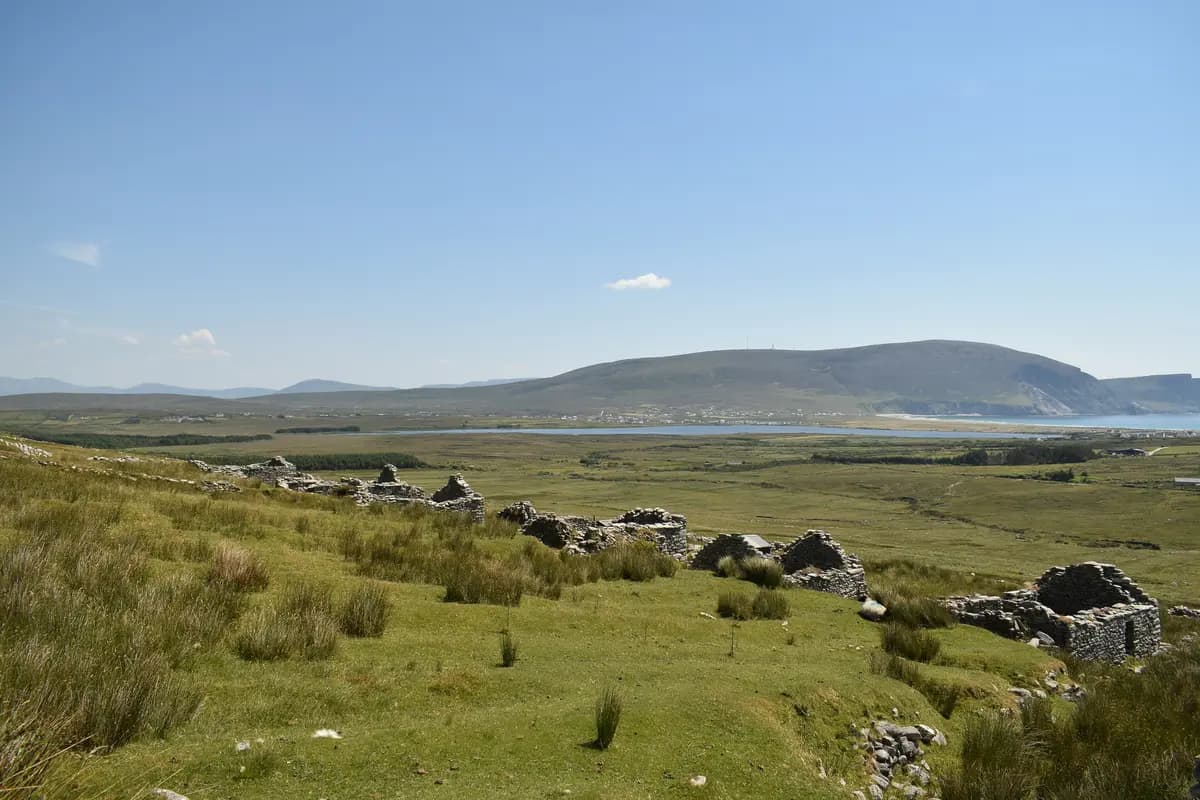
The Deserted Village, Slievemore
About
Around 80 abandoned single-room stone houses strung along the southern slope of Slievemore mountain, left empty as families moved to the coastal village of Dooagh during the Great Famine of the 1840s. The upland settlement kept a working life for decades after: teenage boys and girls would take cattle up to graze around the empty houses each summer, a practice called booleying, reportedly into the 1940s. It is freely accessible on foot and one of the starkest, best-preserved famine landscapes in Ireland.
Photos
Highlights
- ✓famine-history
- ✓free-access
- ✓photography
- ✓booleying-tradition
Tips
- →The ground is uneven and can be wet underfoot; sturdy shoes are worth it in any season.
- →There is no visitor centre on site; the Achill Archaeological Field School has published research on the village if you want more depth.
Best Season
More Attraction Activities
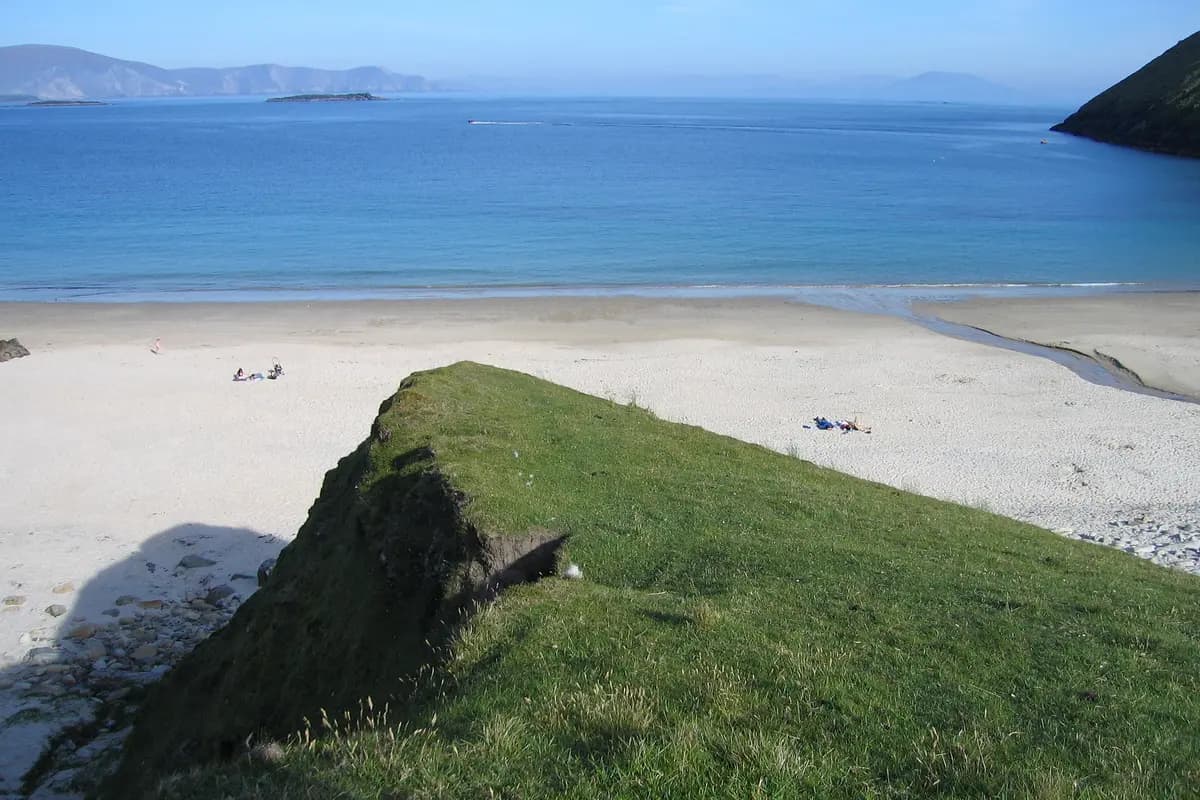
Keem Bay
Blue flag beach at Achill's western tip, framed by Croaghaun and a former basking shark fishery.
Keel Beach (Trawmore / Keel Sandybanks)
Keel's long sandy blue flag beach, backed by the Cathedral Cliffs of Minaun, the island's watersports hub.
Achill Island Golf Club
Links golf course at Keel, dune-backed with the Cathedral Cliffs of Minaun behind it.